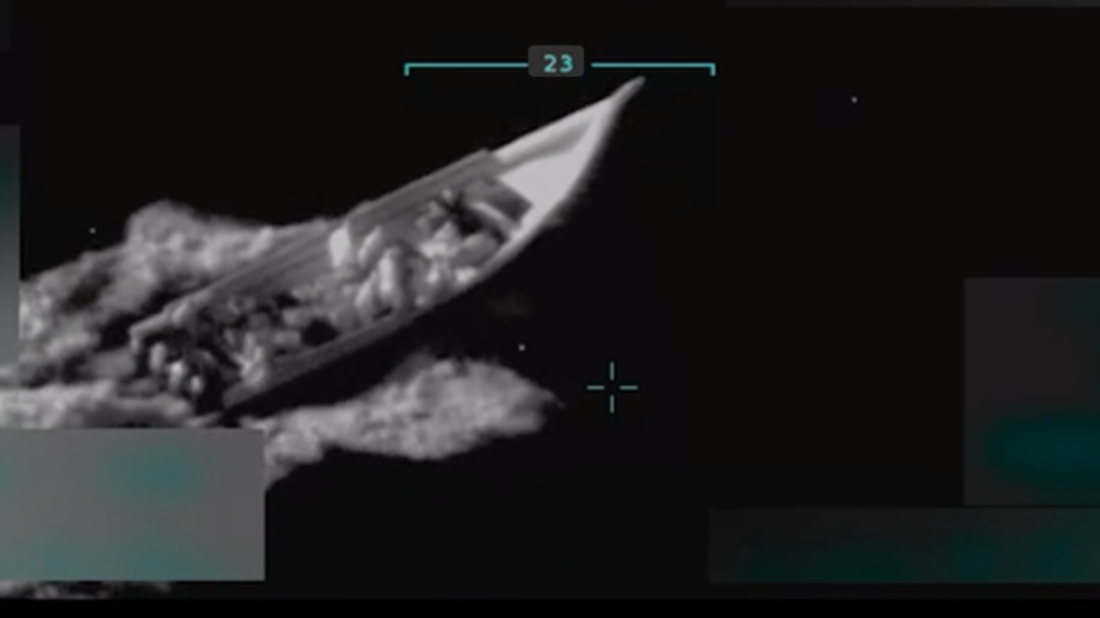
U.S. forces carried out a precision strike on a suspected transnational drug vessel in the southern Caribbean, killing all 11 people aboard, President Donald Trump and the Pentagon confirmed on Tuesday.
The strike, first announced by Trump at the White House, targeted the Venezuela-based Tren de Aragua criminal network, which Washington designated a foreign terrorist organisation earlier this year.
“The strike occurred while the terrorists were at sea in international waters transporting illegal narcotics, heading to the United States,” Trump said in a statement posted online. “The strike resulted in 11 terrorists killed in action. No U.S. forces were harmed. Let this be a warning to anybody thinking about bringing drugs into the United States. Beware.”
A senior defence official said more details will be released later, describing the attack as a significant operation against a “designated narco-terrorist organisation.” Secretary of State Marco Rubio also confirmed the strike, saying the vessel had departed from Venezuela.
The operation marks a sharp departure from the traditional U.S. approach to counter-narcotics missions in the region, which usually involve interdictions by the Coast Guard and arrests under bilateral legal frameworks with regional partners. Instead, this was a direct military strike, underscoring Washington’s intensifying stance on transnational crime networks.
A show of force in the Caribbean
The strike comes as the U.S. Navy and Marine Corps expand their presence in the Caribbean amidst rising tensions with Caracas and growing concerns about Venezuela’s alleged ties to criminal groups. Around 5,000 sailors and Marines are currently deployed in the region under a White House-directed mission.
The Iwo Jima Amphibious Ready Group, with the embarked 22nd Marine Expeditionary Unit, is operating near Puerto Rico. Its flagship, USS Iwo Jima (LHD-7), is joined by USS Fort Lauderdale (LPD-28) and USS San Antonio (LPD-17). Over the weekend, Marines trained alongside Puerto Rico’s National Guard, including jungle exercises and disaster response drills.
Two guided-missile destroyers – USS Jason Dunham (DDG-109) and USS Gravely (DDG-107) – along with cruiser USS Lake Erie (CG-70) are also in Caribbean waters, while USS Sampson (DDG-102) has been sighted near the Panama Canal. Some of these vessels are carrying Coast Guard law enforcement detachments, highlighting the dual military-law enforcement nature of the mission.
Strategic backdrop
The deployment marks the first time in months that a U.S. amphibious ready group with embarked Marines has deployed from American shores, following readiness challenges within the amphibious fleet. It also reflects the administration’s strategy of projecting strength in the region, combining counter-narcotics operations with deterrence against hostile actors.
Trump has sharpened rhetoric against Venezuelan leader Nicolás Maduro, accusing his government of shielding criminal networks. By striking at Tren de Aragua directly at sea, Washington signals its readiness to use military force against groups it labels narco-terrorists — setting a precedent for how future operations in the Caribbean may unfold.










What is your opinion on this topic?
Leave the first comment