Daily Brief: 5 takeaways from day 3 of UNGA
Here’s your AnewZ Daily Brief for 25 September 2026, with five key developments from the third day of the 81st United Nations General Assembl...
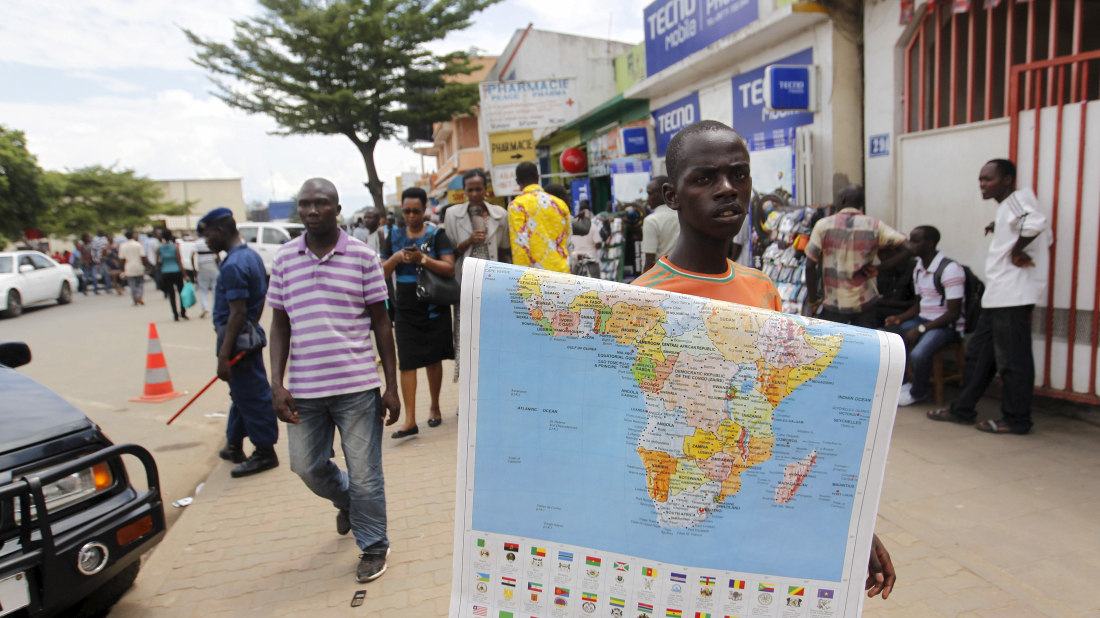
The African Union has endorsed a campaign to end the use of the Mercator map, saying it distorts Africa’s true size and reinforces outdated stereotypes.
First drawn in the 16th century for navigation, Gerardus Mercator’s projection enlarges landmasses near the poles such as Greenland and North America, while shrinking Africa and South America.
AU Commission deputy chairperson Selma Malika Haddadi told Reuters the map gave a false impression of Africa as “marginal” despite being the world’s second-largest continent with more than a billion people.
Campaign to ‘Correct the Map’
The push is led by advocacy groups Africa No Filter and Speak Up Africa. They urge governments and global organizations to adopt the 2018 Equal Earth projection, which reflects countries’ true proportions.
“The current size of the map of Africa is wrong. It’s the world’s longest misinformation and disinformation campaign,” said Moky Makura, executive director of Africa No Filter.
Identity and education
Speak Up Africa co-founder Fara Ndiaye said the Mercator shaped how Africans saw themselves, especially children in classrooms. She said the campaign is promoting Equal Earth as the standard across African schools and hopes it will become the default for international bodies too.
AU’s position
Haddadi said backing the campaign fit the AU’s goal of “reclaiming Africa’s rightful place on the global stage,” adding it ties into wider calls for reparations for colonialism and slavery.
Beyond Africa
The Mercator projection remains widely used, including in schools and on tech platforms. Google Maps switched to a 3D globe on desktop in 2018, though Mercator is still default on mobile.
The World Bank said it already uses Equal Earth or Winkel-Tripel for static maps and is phasing out Mercator in digital products. A request has also been sent to the UN’s geospatial committee for review.
Support extends beyond Africa. Dorbrene O’Marde of CARICOM’s Reparations Commission endorsed Equal Earth as a rejection of the Mercator’s “ideology of power and dominance.”

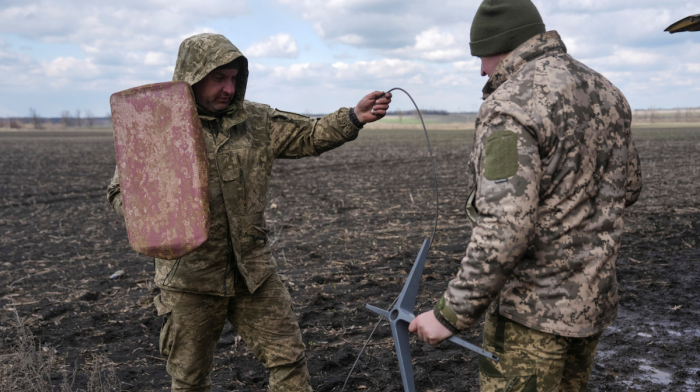
As the Ukraine war is highlighted by some leaders during the United Nations' 81st General Assembly meeting in New York, Russian forces attacked the Ukrainian capital Kyiv early on Thursday with ballistic missiles, killing two people and injuring six, Mayor Vitali Klitschko said.
Shipping traffic through the Strait of Hormuz remained low on Thursday, as Iran reiterated that it will neither enter into new negotiations with the United States nor re-open the Strait as long as its conditions are not met, despite recent indirect talks in New York mediated by Qatar.
U.S. Secretary of State Marco Rubio is set to meet Russian Foreign Minister Sergey Lavrov in New York on Wednesday, as Washington pushes for an end to the war in Ukraine and Kyiv and Moscow continue to strike energy infrastructure.
The 81st UN General Assembly continues in New York on Wednesday, with another day of high-level speeches and diplomatic meetings. The wars in the Middle East and Ukraine, global security and international cooperation remain at the centre of discussions.
The 81st UN General Assembly has wrapped up its third day in New York on Thursday, with world leaders delivering high-level speeches and holding diplomatic meetings.
Here’s your AnewZ Daily Brief for 25 September 2026, with five key developments from the third day of the 81st United Nations General Assembly in New York.
Finland and Sweden deployed fighter aircraft on Thursday after a group of Russian military planes was detected over the Gulf of Finland, the Finnish Air Force reported on Friday (25 September).
Xi Jinping touched down at Joint Base Andrews in Maryland on Wednesday evening to a welcome that was fairly unprecedented. President Donald Trump was there on the tarmac to greet him personally, which is something no sitting U.S. president had done for a visiting foreign leader in six decades.
The U.S. Senate narrowly rejected a resolution on Thursday that would have required President Donald Trump to end the war in Iran or seek congressional authorisation, as Democrats sought to put Republicans on the record over the increasingly unpopular conflict ahead of November's midterm elections.
U.S. President Donald Trump welcomed Chinese President Xi Jinping to the White House on Thursday, 24 September, for talks focused on trade, artificial intelligence, Taiwan and the war with Iran.
You can download the AnewZ application from Play Store and the App Store.
What is your opinion on this topic?
Leave the first comment