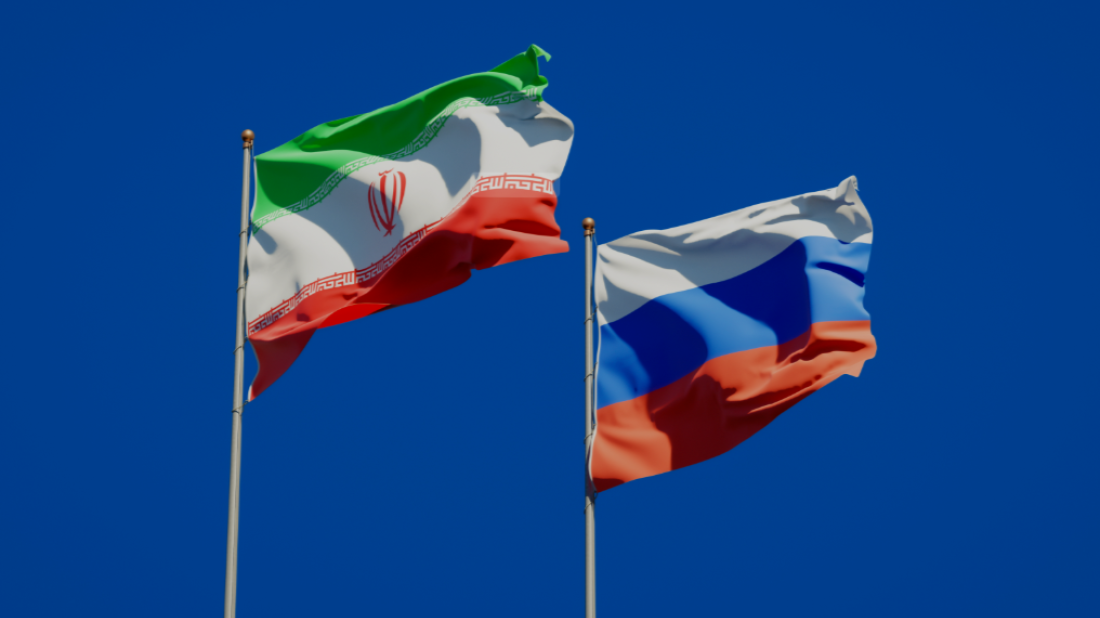
With just forty days to go until the deadline (18 Oct) by the European troika of Germany, France and the UK (E3) to apply for reactivation of the UN nuclear sanctions on Tehran, Ali Larijani, the top advisor to Iran’s supreme leader met with Russian President Vladimir Putin in Moscow on Sunday.
The Kremlin said in a statement escalation of tension in West Asia and diplomatic settlement of Iran’s nuclear issue topped the agenda of the talks between Larijani and Putin.
“The Russian side expressed support for stabilizing the situation in the region and resolving any issues pertaining to Iran's nuclear program via political means.”
“At the instruction of the Supreme Leader of Iran, Ayatollah Ali Khamenei, Ali Larijani presented the views of the Islamic Republic on the current escalation in the Middle East and, notably, surrounding Iran's nuclear program,” it added.
The surprise meeting took place as unconfirmed media reports suggested Tehran and the European troika are planning to meet in a European capital to discuss Iran’s nuclear programme and the snapback of sanctions.
The snapback also termed the trigger mechanism can reinstall the sanctions which were terminated by the UN Security Council Resolution 2231 in 2015 endorsing the nuclear agreement (JCPoA) the same year in Vienna between Iran on one side and the E3+3 (China, Russian and US) on the other.
Iran says the Joint Comprehensive Plan of Action (JCPOA) is no longer legally binding after the US joined Israel’s military aggression in June and bombed three major nuclear sites in Iran. Tehran says it does not welcome the snapback either and wants a diplomatic solution.
In a post on his X account on Sunday, Foreign Minister Araghchi said he wrote a letter “addressed to the United Nations Security General (UNSG), President of the Security Council, EU High Rep Kaja and members of the UN Security Council and outlined why the E3 lacks any legal, political, and moral standing to invoke the mechanisms of the JCPOA and UN Resolution 2231 (2015).”
“Through their actions and statements, including providing political and material support to the recent unprovoked and illegal military aggression of the Israeli regime and the US; rejection of the main pillars of the JCPOA; and their longstanding and ongoing failure to uphold their commitments, the E3 have relinquished their role as “Participants” in the JCPOA, making any attempt to reinstate terminated UNSC Resolutions null and void.
In the meantime, resumption of the nuclear talks between Iran and US is in limbo. Their negotiators were scheduled to meet in mid-June in Muscat, Oman to discuss Iran’s alternative proposal to a US proposal on nuclear enrichment.
However, their sixth round of indirect talks were unexpectedly disrupted by Israel’s airstrikes on Iran. Ever since, Iran has laid down a condition for future talks with the US demanding guarantees that it would not be attacked again in the middle of negotiations.
Oman mediated the indirect talks between Iranian and US negotiators, but it appears that Iran has been in contact with other regional countries with close ties with Washington. Following the 24 June ceasefire, there were initial signs suggesting Saudi Arabia may function as an intermediary.
However, recent positive developments in Tehran-Cairo relations, frequent meetings and repeated telephone calls between Iranian and Egyptian foreign ministers hint at Cairo’s likely mediatory role to bring Iran and US back to the negotiating table by meeting Iran’s condition.
Iran’s standoff with E3, US, and Israel over its nuclear program has an additional dimension. In the run-up to the Israel-US attacks, a resolution tabled by US-E3 at the quarterly meeting of the Governing Board of the International Atomic Energy Agency (IAEA) in June in Vienna held Iran in non-compliance of its nuclear obligations.
Iran strongly rejected the resolution as politically motivated, said it served as a pretext for Israel’s invasion and retaliated by suspending its cooperation with the UN nuclear watchdog over its “inaction” and failing to condemn the attacks on its nuclear facilities under the agency’s monitoring. Then, the International Atomic Energy Agency (IAEA) inspectors departed Iran.
Foreign Minister Araghchi in an interview with a Chinese TV channel in Beijing during his participation at the ministerial meeting of the Shanghai Cooperation Organization last week said Iran’s cooperation with the IAEA will continue but under new terms and stricter oversight.
In his new post on the threat by European powers to resume UN nuclear sanctions, he said, the E3 “cannot and should not be allowed to undermine the credibility of the UN Security Council by abusing a Resolution to which they themselves have not been committed”.
“As stressed in my letter, “Iran has shown that it is capable of defeating any delusional 'dirty work' but has always been prepared to reciprocate meaningful diplomacy in good faith”, said Araghchi referring to the letter he wrote to the UN Security Council and the UN secretary general.
The very fact that Tehran dispatched the close aide to Ayatollah Seyed Ali Khamenei to meet the Russian president amid its standoff with E3, US and IAEA is significant at least in two respects: Larijani was Iran’s chief nuclear negotiator with E3 in mid 2000s, and Russia is a permanent UN Security Council member-state which possesses the power to veto any resolution, including one proposing renewed sanctions on Iran in October.
Meanwhile, a trilateral meeting between Iran, Russia and China will take place on Tuesday (22 July) regarding Tehran's nuclear programme and the United Nations snapback mechanism. That's according to the Iranian Foreign Ministry spokesperson Esmaeil Baghaei on Monday.
The U.N. snapback mechanism refers to efforts to reimpose international sanctions on the Islamic Republic.
Then Iran, Britain, France and Germany will hold nuclear talks in Istanbul on Friday (25 July), an Iranian Foreign Ministry spokesperson said early on Monday, following warnings by the three European countries that failure to resume negotiations would lead to international sanctions being reimposed on Iran.
"The meeting between Iran, Britain, France and Germany will take place at the deputy foreign minister level," Esmaeil Baghaei was quoted by Iranian state media as saying.










What is your opinion on this topic?
Leave the first comment