Japan PM Takaichi’s party likely to increase seats in lower house
Prime Minister Sanae Takaichi's Liberal Democratic Party is likely to increase its number of parliamentary seats and gain a majority in the lower hous...
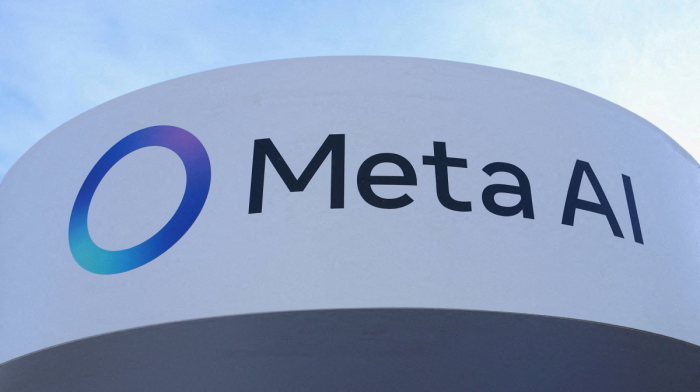
Microsoft announced on Monday that it will begin hosting AI models from Elon Musk's xAI, Meta Platforms, and European startups like Mistral and Black Forest Labs in its own data centers.
At the same time, it introduced a new AI-powered coding agent that can autonomously complete software development tasks.
These announcements came during Microsoft's annual Build developer conference in Seattle. They highlight Microsoft's shift in strategy, working with a broader range of AI companies instead of solely focusing on OpenAI, the creator of ChatGPT, which Microsoft has heavily supported in the past. Microsoft now aims to be a more neutral AI platform provider, expanding its services while managing costs.
CEO Satya Nadella emphasized that the new models from xAI, Meta, and others will have the same performance reliability as OpenAI's models hosted by Microsoft. He described the ability to "mix and match" models as a major advancement for developers.
One of the key highlights was an upgraded version of GitHub Copilot, known as a "coding agent". Unlike earlier versions that simply suggested code snippets, this new agent can take a basic prompt, like a bug report and a plan to fix it, and complete coding tasks independently. It then notifies the user to review the final result. This feature is similar to OpenAI's newly released "Codex" agent.
Microsoft also introduced Azure Foundry, a new service allowing businesses to build their own AI agents using any model they choose. These agents can be customized for specific tasks within a company and are expected to use a mix of models.
The company confirmed it would offer xAI's Grok 3 and Grok 3 Mini, Meta's Llama models, and other models from Mistral and Black Forest Labs. With these additions, Azure now hosts over 1,900 AI models.
Importantly, all these models will run directly within Microsoft’s data centers. This allows the company to guarantee performance and reduce outages, which are common when demand overwhelms AI systems. Microsoft also plans to add more popular models soon to further strengthen its AI offerings.
France’s National Assembly has approved a bill banning access to social media for children under 15, a move backed by President Emmanuel Macron and the government as part of efforts to protect teenagers’ mental and physical health.
The S&P 500 edged to a record closing high on Tuesday, marking its fifth consecutive day of gains, as strong advances in technology stocks offset a sharp selloff in healthcare shares and a mixed batch of corporate earnings.
Sanctions are a long-used tool designed as an alternative to military force and with the objective of changing governments’ behaviour, but they also end up hurting civilian citizens.
A routine military training exercise turned into a major recovery mission this week after a catastrophic mudslide swept through a hillside in West Java, Indonesia.
Residents in Syria’s Kurdish-majority city of Qamishli have stepped up volunteer patrols amid growing pressure from the country’s Islamist-led government, expressing deep mistrust of Damascus despite a fragile U.S.-backed ceasefire.
China has approved the first batch of Nvidia's H200 artificial intelligence chips after Washington allowed limited sales, paving the way for major Chinese technology companies to gain access to processors that remain far ahead of domestic alternatives.
TikTok has reached a confidential settlement in a landmark lawsuit over youth mental health, leaving Meta and YouTube to face a jury in California as the first major trial of its kind gets underway.
China has successfully completed its first metal 3D printing experiment in space, marking a significant step forward in the country’s efforts to develop in-orbit manufacturing capabilities.
A faint hand outline found in an Indonesian cave has been dated to at least 67,800 years ago, making it the oldest known example of rock art and offering new insight into early human migration across Southeast Asia.
New modelling suggests Mars shapes some of Earth’s long-term orbital rhythms, including shorter eccentricity cycles and a 2.4-million-year pattern that vanishes without its gravitational pull.
You can download the AnewZ application from Play Store and the App Store.
What is your opinion on this topic?
Leave the first comment