Day three of the U.S.-Iran conflict: Further strikes and oil price surge
The U.S.-Iran crisis has entered its third day, with further strikes reported across the Middle East and the death toll rising. Oil prices have sur...
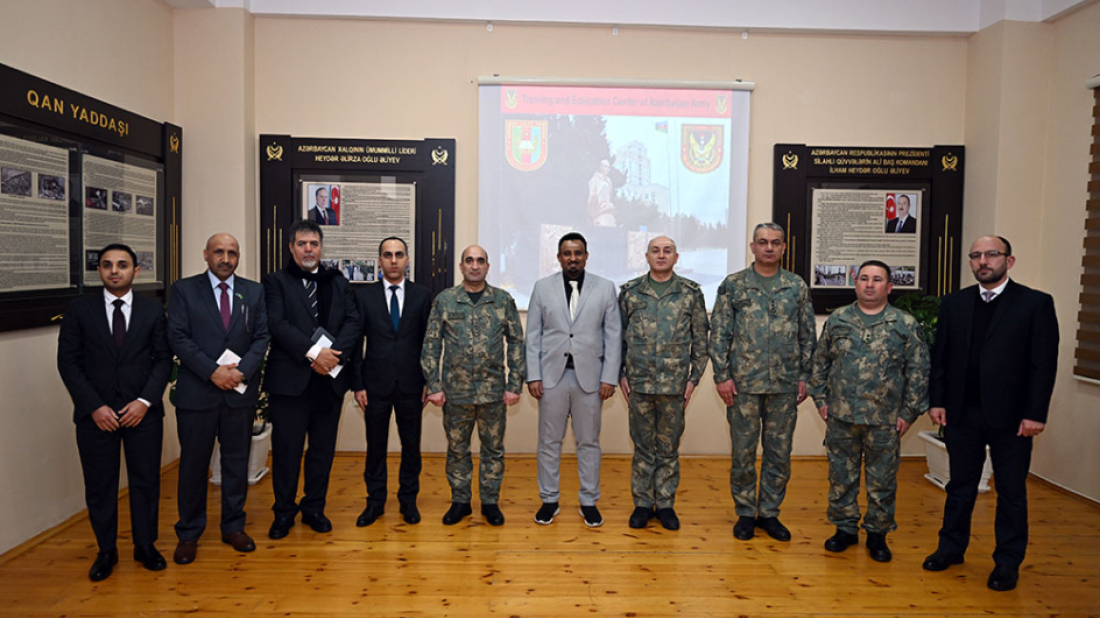
A delegation from Saudi Arabia's Naif Arab University for Security Sciences, led by Abdul Razzaq Al-Murjan, visited Azerbaijan to discuss military education cooperation and reforms.
A delegation led by Abdul Razzaq Al-Murjan, Vice-President for Training at Saudi Arabia's Naif Arab University for Security Sciences and Director of the Cybercrime and Digital Evidence Center, visited Azerbaijan, as reported by the Ministry of Defense to The Azerbaijan State News Agency.
During the visit, Deputy Rector of the National Defense University for Science and Rector of the Military Scientific Research Institute, Major General Arif Hasanov, along with Colonel Nizami Movlanov, Chief of the Training and Educational Center of the Azerbaijan Army, met with the delegation.
The visitors were provided with an in-depth overview of the Azerbaijan Army's educational system and ongoing reforms in military education. The discussions focused on enhancing cooperation between the two nations in military education, alongside addressing other mutual concerns.
As part of the visit, the delegation toured the Azerbaijan Army Training Center, exploring its training camps, shooting ranges, and simulator facilities.

Follow the latest developments and global reaction after the U.S. and Israel launched “major combat operations” in Iran, prompting retaliation from Tehran.
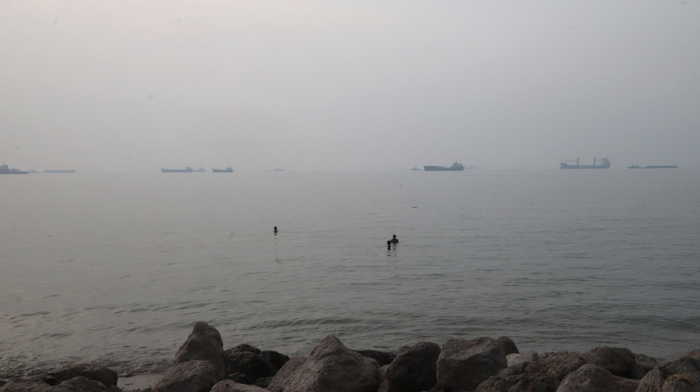
Saudi Arabia’s state oil giant Saudi Aramco closed its Ras Tanura refinery on Monday following an Iranian drone strike, an industry source told Reuters as Tehran retaliated across the Gulf after a U.S.-Israeli attack on Iranian targets over the weekend.
The Kremlin is utilising the recent United States and Israeli military strikes on Iran to validate its ongoing war in Ukraine. Russian officials are pointing to the escalation in the Middle East as evidence that Western nations do not adhere to international rules.
The Middle East crisis intensifies after the deadly attack on Iran's Supreme Leader Ali Khamenei's compound on Saturday that killed him, other family members and senior figures. Iran has launched retaliatory strikes on U.S. targets in the region.
Ayatollah Alireza Arafi has moved into a pivotal constitutional role following the death of Supreme Leader Ayatollah Ali Khamenei, becoming the clerical member of Iran’s temporary leadership council under Article 111 of the Constitution of the Islamic Republic of Iran.
Türkiye and Iran have suspended day-trip passenger crossings at their shared border, Türkiye's trade minister said Monday, as a U.S.-Israeli military campaign against Iran entered its third day.
China’s Foreign Minister Wang Yi has held talks with his Russian counterpart Sergei Lavrov following recent military strikes carried out by the United States and Israel on targets in Iran, as tensions in the Middle East continue to rise.
Uzbekistan has expressed deep concern over the rapid escalation of tensions in the Middle East, urging restraint and diplomatic resolution as the conflict begins to affect civilian aviation and regional security.
As tensions escalate in the Middle East, Kazakhstan is assessing the impact on its trade routes, diplomatic ties and citizens in the region. Analysts say the crisis could test Astana’s ability to balance economic interests, security concerns and foreign policy priorities.
Israel carried out heavy airstrikes on the Hezbollah-controlled southern suburbs of Beirut on Monday (2 March), after the Iran-backed group launched missiles and drones towards Israel in retaliation for the killing of Iran's Supreme Leader Ali Khamenei.
You can download the AnewZ application from Play Store and the App Store.
What is your opinion on this topic?
Leave the first comment