The German broadcaster says energy, trade, transport and regional stability are transforming relations between Baku and Berlin.
Azerbaijan is gaining greater weight on Germany’s strategic map.
That is the central message of an extensive report broadcast by TV Berlin under the title Germany and Azerbaijan – A Partnership in Transition.
The report examined how relations between the two countries are expanding beyond traditional energy cooperation. Trade, transport corridors, digital infrastructure and regional stability are now becoming equally important parts of the partnership.
Azerbaijan’s geography lies at the heart of this shift.
Positioned between Europe, the Caspian Sea and Central Asia, the country serves as a gateway between major markets. At a time when wars, sanctions and geopolitical tensions are disrupting established trade routes, geography is no longer simply about location.
It is about access.
A wider European strategy
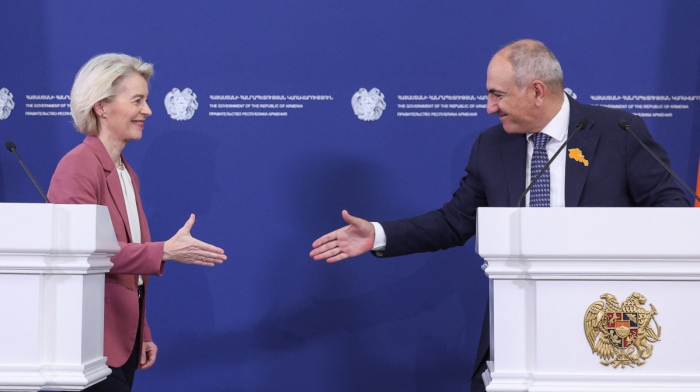
TV Berlin pointed to European Commission President Ursula von der Leyen’s visit to Baku on 1 July 2026 as evidence of Europe’s growing engagement with Azerbaijan.
During talks with President Ilham Aliyev, the two sides discussed energy, transport, digital connectivity and regional cooperation.
The European Commission also announced up to €200 million in grants for connectivity projects across the South Caucasus. Brussels says the package could mobilise as much as €2 billion in public and private investment.
A new EU-Azerbaijan Connectivity Partnership and a high-level dialogue covering transport, energy and digital infrastructure were also announced.
The message was clear.
Europe is looking beyond pipelines. It is looking at the entire corridor.
Political dialogue gains momentum
The broadcaster said political relations between Azerbaijan and Germany have entered a more active phase.
According to the report, President Aliyev has travelled to Germany five times since 2023. These included two visits to Berlin at the invitation of former German Chancellor Olaf Scholz and three visits connected to the Munich Security Conference.
TV Berlin also highlighted German President Frank-Walter Steinmeier’s official visit to Azerbaijan in April 2025, describing him as the first German head of state to make such a visit.
These meetings reflect a wider change.
Dialogue is becoming more frequent. The agenda is becoming broader. And the relationship is becoming less dependent on a single sector.
The Middle Corridor moves closer to Europe
Transport is one of the strongest examples of this change.
The Middle Corridor connects China and Central Asia with Europe through the Caspian Sea, Azerbaijan, Georgia and Türkiye. It offers an alternative to routes passing through Russia and other increasingly uncertain transit zones.
For Germany, an economy built heavily around exports, reliable supply chains are not an abstract geopolitical concern.
They are an economic necessity.
TV Berlin said Azerbaijan’s infrastructure and location give it a central role in the development of this route. The corridor could help move goods between Europe and Asia while reducing exposure to disruptions elsewhere.
But a corridor is more than railway tracks and ports.
It only works when borders are stable, customs systems communicate and political trust survives pressure.
Energy remains a central pillar
Energy cooperation continues to anchor the relationship.
Following Russia’s full-scale invasion of Ukraine, Europe accelerated efforts to diversify its energy supplies. During that period, Azerbaijan increased natural gas exports to Europe through the Southern Gas Corridor from roughly eight billion cubic metres annually to about 13 billion cubic metres.
TV Berlin said German companies now purchase more than three billion cubic metres of Azerbaijani gas each year.
The report argued that this cooperation should not be viewed as replacing one dependency with another.
Its purpose is diversification.
Azerbaijan is also investing in solar and wind power, including offshore wind projects in the Caspian Sea. These developments could eventually support green electricity corridors connecting the South Caucasus with European markets.
Gas shaped the first phase of the partnership.
Renewable energy may shape the next.
Peace could unlock the region
The report also linked economic cooperation to the normalisation process between Azerbaijan and Armenia.
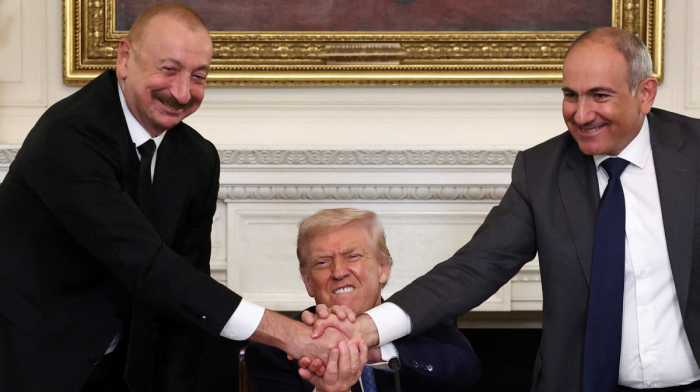
On 8 August 2025, the foreign ministers of the two countries initialled the agreed text of a peace agreement in Washington. The Azerbaijani and Armenian leaders also signed a joint declaration witnessed by US President Donald Trump.
The agreement has not removed every obstacle.
But it has altered the regional calculation.
A lasting settlement could open transport routes, strengthen trade between Europe and Central Asia and make long-term infrastructure investment less risky.
Peace, in this context, is not separate from economics.
It is the foundation beneath it.
Trade beyond energy
Germany is already Azerbaijan’s most important economic partner in the South Caucasus.
Official German figures show that bilateral trade reached approximately €1.7 billion in 2024. German exports to Azerbaijan include machinery, vehicles, industrial equipment, iron and steel products.
TV Berlin said more than 200 German companies operate in Azerbaijan across engineering, construction, logistics, energy and services.
Azerbaijan’s Ambassador to Germany, Nasimi Aghayev, said the partnership delivers practical benefits to both economies.
“Energy security, economic stability, strengthening connectivity between Asia and Europe, and reliable supply chains occupy an important place in Germany-Azerbaijan cooperation,” he said.
Beyond the pipeline
For years, Azerbaijan’s importance to Europe was often measured in barrels and cubic metres.
That picture is now incomplete.
Energy still matters. But so do ports, railways, digital infrastructure and stable borders.
TV Berlin’s report reflects a broader European calculation: Azerbaijan is not only a supplier at Europe’s eastern edge. It is increasingly becoming a connector at the centre of a changing Eurasian map.
The pipeline opened the relationship.
The corridor is widening it.











What is your opinion on this topic?
Leave the first comment