For about three decades after the Soviet collapse, Armenia anchored its foreign and security policy to Moscow.
The genesis of that relationship was in May 1992, when Armenia became a signatory to the original Collective Security Treaty as part of a broader Russian-led security framework. 10 years later, in May 2002, treaty members agreed to transform that arrangement into a more formalised international military alliance, which became known as the Collective Security Treaty Organization (CSTO), rendering Armenia a founding member of the organisation.
Armenia’s partnership with Russia was a pragmatic trade-off: Moscow provided security guarantees, symbolised by its military base in Gyumri, in return for strategic alignment.
This relationship was driven less by ideology than by necessity, as Armenia’s landlocked geography, small population and modest economy made reliance on a powerful external patron a practical choice rather than a purely political preference.
The Deterioration: 2020 and beyond
The deterioration of trust was a sequence of perceived Russian inaction during moments Armenia believed it needed Russia to act.
The first crack in the relationship came during the 2020 Garabagh War (also known as the Second Garabagh War), when another armed conflict broke out between Azerbaijan and Armenia alongside the unrecognised separatist entity in Garabagh, which is a formally recognised region in Azerbaijan.
The 44-day war resulted in a decisive Azerbaijani victory and ended with the signing of the trilateral ceasefire declaration brokered by Russia on 10 November 2020.
The decisive moment came in September 2023, when Azerbaijan restored its full sovereignty over the remainder of Garabagh through what it officially described as a counter-terrorism operation.
The territorial integrity of Garabagh
The circumstances leading to that outcome had developed over several years. The mandate of the approximately 2,000 Russian peacekeepers deployed under the November 2020 trilateral ceasefire declaration was subject to differing interpretations, as the agreement did not explicitly define the scope of their authority.
Their position became increasingly constrained after Armenia recognised Azerbaijan's territorial integrity, including Garabagh, during talks in Prague in October 2022. Then in April 2023, Azerbaijan established a border checkpoint on the Lachin Road, the sole land route connecting Armenia with the region. By the time of the one-day counter-terrorism operation in September, the Russian peacekeepers' room for manoeuvre had become extremely limited.
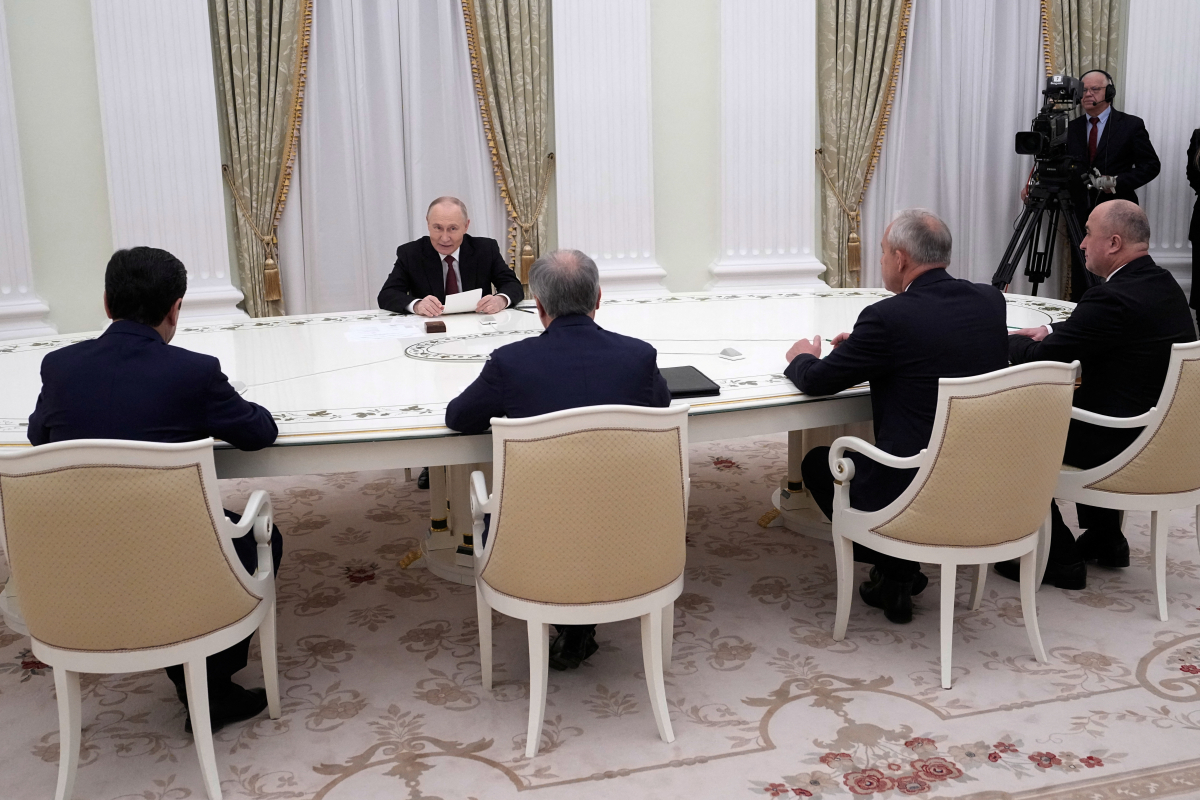
During and after the 2020 war and following the war in 2022, Russian President Vladimir Putin repeatedly stated that while Armenia was a member of the CSTO, Garabagh was internationally recognised as part of Azerbaijan. As a result, he argued, the CSTO's mutual defence obligations did not extend to the region.
Not long after that, Russian President Putin appeared to criticise Armenia’s decision to recognise Garabagh as part of Azerbaijan. Referring to the Prague understandings on mutual recognition of territorial integrity, he suggested that the issue should perhaps have been left for future generations to determine.
The issue remained a source of tension between Moscow and Yerevan. In late 2024, Putin stated that there had been "no aggression against Armenia", a remark that prompted formal protests from the Armenian government.
For Moscow, the stakes extend beyond Armenia itself. Were Yerevan to leave the CSTO, it would join Georgia, Azerbaijan, Ukraine and Uzbekistan as non-Baltic former Soviet republics that have distanced themselves from Russia's security architecture - a development that could further weaken Moscow's influence across the post-Soviet space.
What Russia still provides
Despite the rupture, Russia supplies most of Armenia’s natural gas, with Gazprom controlling critical energy infrastructure and structural dependencies remain formidable:
- Energy dominance: Russia supplies approximately 80–82 per cent of Armenia’s natural gas, with Gazprom controlling critical energy infrastructure.
- Nuclear monopoly: Armenia has zero domestic uranium production or enrichment capabilities. The country’s lone Metsamor Nuclear Power Plant relies solely on Rosatom's TVEL fuel division in Russia. This plant generates about 30-40 per cent of the country’s electricity.
- Operational control: The Metsamor nuclear power plant is a Soviet-era facility. Its critical maintenance, upgrades and safety overhauls are managed exclusively by Russia's state-owned nuclear corporation, Rosatom.
- Trade dependence: Bilateral trade reached a record $12 billion in 2024, with Russia accounting for over 35 per cent of Armenia’s trade turnover, according to the Applied Policy Research Institute of Armenia.
- Remittance flows: Transfers from Armenians working in Russia totalled roughly $800 million in 2024, over half of all remittance inflows.
- Logistics influence: Russian state companies own and operate Armenia’s national railway network, while Armenia also heavily depends on the Russian-controlled Upper Lars highway as its sole overland trade corridor to Eurasian markets.
- Military basing: The 102nd Military Base at Gyumri still houses some 5,000 Russian troops under a lease running until 2044.
- Security guarantee: No other power has offered Armenia a mutual-defence commitment comparable to CSTO Article 4.
What Armenia risks losing
If Moscow were to significantly reduce ties, the risks to Armenia would be acute across multiple domains:
- Energy vulnerability: With about 82 per cent dependence on Russian gas and Gazprom controlling transit infrastructure, Armenia has limited short-term alternatives. Iran supplies the remainder, but scaling that relationship is constrained by infrastructure and sanctions exposure.
- Economic disruption: The $800 million in Russian-sourced remittances represents a substantial share of national income; a disruption would pressure Armenia’s currency and household consumption.
- Trade reversal: Record 2024 trade volumes partly reflect Armenia’s role as a sanctions-evasion channel for Russia; a Russian crackdown could reverse recent GDP growth.
- Security vacuum: The CSTO proved hollow in 2020, 2022 and 2023, yet no replacement security architecture currently exists. A Russian withdrawal from Gyumri would leave Armenia without credible external deterrence until Western military partnerships mature.
What the EU is offering
The EU has moved decisively to deepen engagement, though the scale and nature of that support remain qualitatively different from Russia’s security guarantee:
- Border monitoring: The European Union Mission in Armenia (EUMA), deployed in February 2023 and extended through February 2027, fields more than 200 international observers along the Armenia-Azerbaijan border. Azerbaijan has consistently criticised the mission, arguing that it creates the impression that Armenia requires protection from Azerbaijan. Under the initialled peace agreement, the mission is expected to withdraw from the Armenian side of the interstate border once the treaty is signed and ratified.
- Military assistance: In July 2024, Brussels approved its first-ever assistance measure for the Armenian Armed Forces under the European Peace Facility. A further allocation in January 2025 brought total non-lethal support to €30 million.
- Economic investment: The EU has committed €270 million through its 2024–2027 Resilience and Growth Plan to support business development, connectivity and reform implementation.
- Energy diversification: A Connectivity Partnership concluded in 2024 focuses on grid modernisation and renewable-energy integration to reduce Armenia’s reliance on Russian gas.
- Visa liberalisation: A dialogue launched in September 2024, with an Action Plan delivered in November 2025, offers a pathway toward eventual visa-free travel for Armenian citizens.
- Accession signal: In January 2025, the Armenian parliament approved a bill signalling intent to pursue EU accession, though no formal membership application has yet been submitted.
The strategic positioning
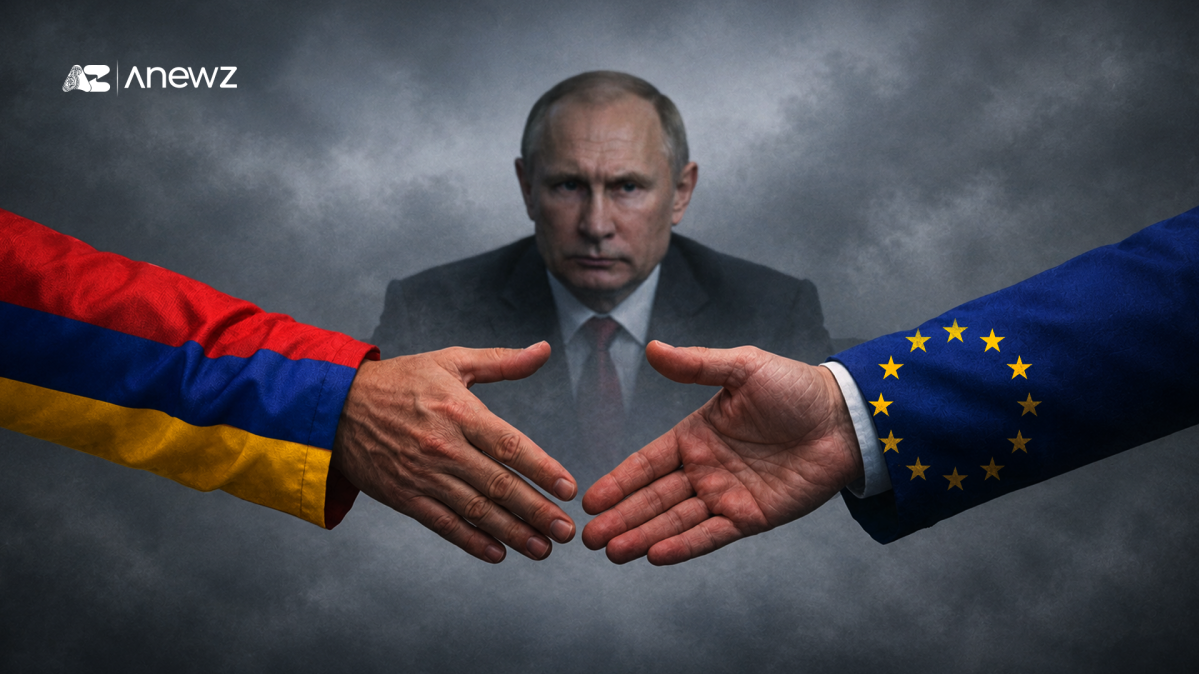
Armenia faces a dilemma. In the short term, Russia retains coercive dominance: it controls the gas, the bases, the remittance flows, and the only kinetic mutual-defence treaty Armenia has. The EU’s support, while significant, remains modest in security terms; €30 million in non-lethal assistance does not replace the Gyumri garrison.
The EU offers institutional integration, rule-of-law conditionality, economic diversification and a path toward association with the world’s largest single market. The visa-liberalisation process, connectivity investments, and Resilience and Growth Plan all point toward structural integration rather than transactional patronage.
As Yerevan is attempting to decouple from its dominant security and economic partner, the question remains: can the EU accelerate its support sufficiently to close that gap? This remains the critical uncertainty.















What is your opinion on this topic?
Leave the first comment