Rally in Tel Aviv calls for return of deceased hostage Ran Gvili
Hundreds of people gathered for a second consecutive week at Tel Aviv’s Hostages Square, on Friday (12 December), to support the family of Master Sg...
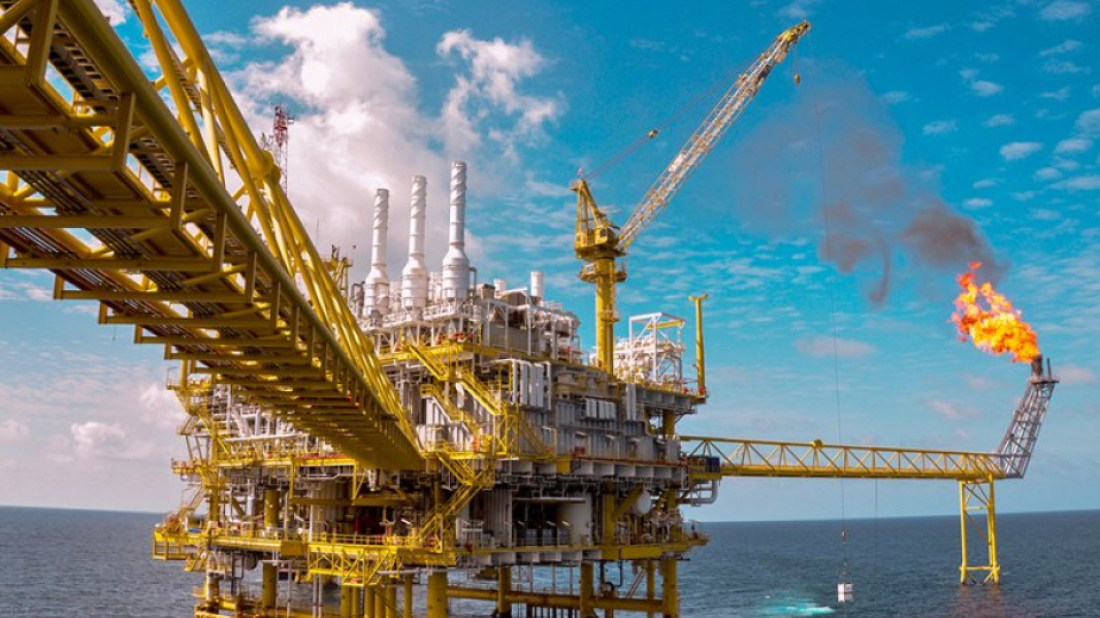
Reports of a two-month halt in Azerbaijani gas supplies to Serbia are false. Despite a technical issue at Shah Deniz Alpha, Shah Deniz Bravo ensures steady exports, with supplies set to resume soon. BP confirms no damage or environmental impact.
Reliable government sources have informed AnewZ that reports of a two-month suspension of gas supplies from Azerbaijan to Serbia are inaccurate. While gas flow has been temporarily reduced due to a technical issue at the Shah Deniz Alpha platform, they assured that the Shah Deniz Bravo platform remains fully operational, ensuring continuity of exports. Supplies are expected to resume very soon.
Earlier, Serbian President Aleksandar Vucic stated that gas flows from Azerbaijan had been halted due to force majeure, impacting the daily delivery of 1.7 million cubic metres of gas. However, government sources dispute his assumption that it will take one or two months for supplies to resume, emphasising that the situation is under control and temporary.
BP confirmed that the issue at Shah Deniz Alpha is isolated, with no damage to the pipeline or environmental impact. As a precaution, operations at the platform were temporarily suspended. However, BP reassured stakeholders that this has not compromised the operational integrity of the Shah Deniz field.
The Shah Deniz Bravo platform continues to operate at full capacity, allowing gas deliveries to Azerbaijan, Türkiye, and European markets to remain largely unaffected. Bulgarian officials reported a brief suspension of contracted gas supplies earlier this week, but these have already resumed.
Azerbaijan’s gas plays a key role in Serbia’s energy security. Serbia consumes over 3 billion cubic metres of gas annually, with 400 million cubic metres contracted from Azerbaijan starting this year. The rest of Serbia’s gas comes from Russia, but the country is under pressure to reduce its reliance on Russian energy supplies as it works towards joining the European Union.
Both government and BP sources assure that efforts are underway to resolve the technical issue at Shah Deniz Alpha as swiftly as possible. The Shah Deniz project remains a critical component of Europe’s energy diversification strategy, ensuring stable and reliable gas supplies to the region.

Japan has lifted a tsunami advisory issued after an earthquake with a magnitude of 6.9 hit the country's northeastern region on Friday (12 December), the Japan Meteorological Agency (JMA) said. The JMA had earlier put the earthquake's preliminary magnitude at 6.7.
Iran is preparing to host a multilateral regional meeting next week in a bid to mediate between Afghanistan and Pakistan.
The United States issued new sanctions targeting Venezuela on Thursday, imposing curbs on three nephews of President Nicolas Maduro's wife, as well as six crude oil tankers and shipping companies linked to them, as Washington ramps up pressure on Caracas.
The resignation of Bulgaria's government on Thursday (11 December) puts an end to an increasingly unpopular coalition but is likely to usher in a period of prolonged political instability on the eve of the Black Sea nation's entry into the euro zone.
An extratropical cyclone has caused widespread disruption across Brazil’s São Paulo state, with powerful winds toppling trees and power lines, blocking streets and leaving large parts of the region without electricity.
Hundreds of people gathered for a second consecutive week at Tel Aviv’s Hostages Square, on Friday (12 December), to support the family of Master Sgt. Ran Gvili, the last remaining Israeli hostage whose body is believed to be held in Gaza.
Turkish President Recep Tayyip Erdoğan and Russian President Vladimir Putin met for a closed-door discussion on the sidelines of the International Forum for Peace and Trust in Ashgabat, Turkmenistan, on Friday.
Kazakhstan has begun redirecting part of its crude exports, sending oil from Kashagan to China as the Caspian Pipeline Consortium (CPC) operates at reduced capacity.
Azerbaijan’s post-conflict reconstruction in Karabakh is attracting international attention. The book by British author Graeme Wilson documents this journey, combining first-hand reporting and digital storytelling to highlight both the region’s restoration and the human stories behind it.
Iran’s top diplomat, Abbas Araghchi, has welcomed the expansion of ties with neighbouring Azerbaijan, stating that Tehran and Baku are committed to building a ‘shared, secure and mutually respectful’ future, local media reported on Friday.
You can download the AnewZ application from Play Store and the App Store.
What is your opinion on this topic?
Leave the first comment