Azerbaijan has rejected Russia’s recent statement on insurance payments related to the downing of an AZAL plane, calling it misleading and an attempt to distort facts.
The Azerbaijani Foreign Ministry has sharply criticised a 4 September statement from the Russian Foreign Ministry regarding the downed Azerbaijan Airlines (AZAL) passenger jet. According to Baku, the remarks are "not only surprising but also misleading to the public".
In a statement, Aykhan Hajizada, the spokesperson for Azerbaijan’s Foreign Ministry, said that Moscow had attempted to blur the lines between two unrelated issues: ongoing insurance payments and Azerbaijan’s official demands for compensation from the Russian government regarding the incident.
“Insurance payments for AZAL and passengers from an insurance company registered in Russia and Azerbaijan's demands for compensation from the Russian government in connection with the downing of the plane are completely different concepts and putting an equal sign between them is fundamentally wrong,” Hajizada said.
He explained that the insurance process has been underway for six months, carried out under the AZAL insurance contract, and concerns compensation for the aircraft and its passengers. These payments are the legal obligation of the insurer and should not be conflated with state responsibility, he noted.
Hajizada added that AZAL was compelled to use a Russian insurer due to the lack of international insurance firms operating in Russia.
“Usually, aircraft insurance is carried out through international insurers. Considering that no international insurance company operates in Russia, the AZAL aircraft was insured through a Russian company,” he clarified.
The Azerbaijani official also hit back at another claim made by the Russian Foreign Ministry spokesperson, who cited the July arrest of 13 Russian citizens in Azerbaijan as a key reason behind deteriorating bilateral relations.
Hajizada dismissed this claim as a distraction, stressing that the real source of tensions lies in Russia's downing of the Azerbaijani passenger plane and the “subsequent behaviour of Russian officials”.
He also pointed to the worsening treatment of ethnic Azerbaijanis inside Russia, describing a pattern of abuse and targeting.
“An additional source of tension was the persecution of Azerbaijanis in Russia based on their ethnicity, the beating and murder of Azerbaijanis in Yekaterinburg,” he said.
Hajizada further criticised what he described as the role of various Russian state bodies in orchestrating actions against Azerbaijan, which he said continue to damage the fragile state of bilateral ties.
What really happened on 25 December
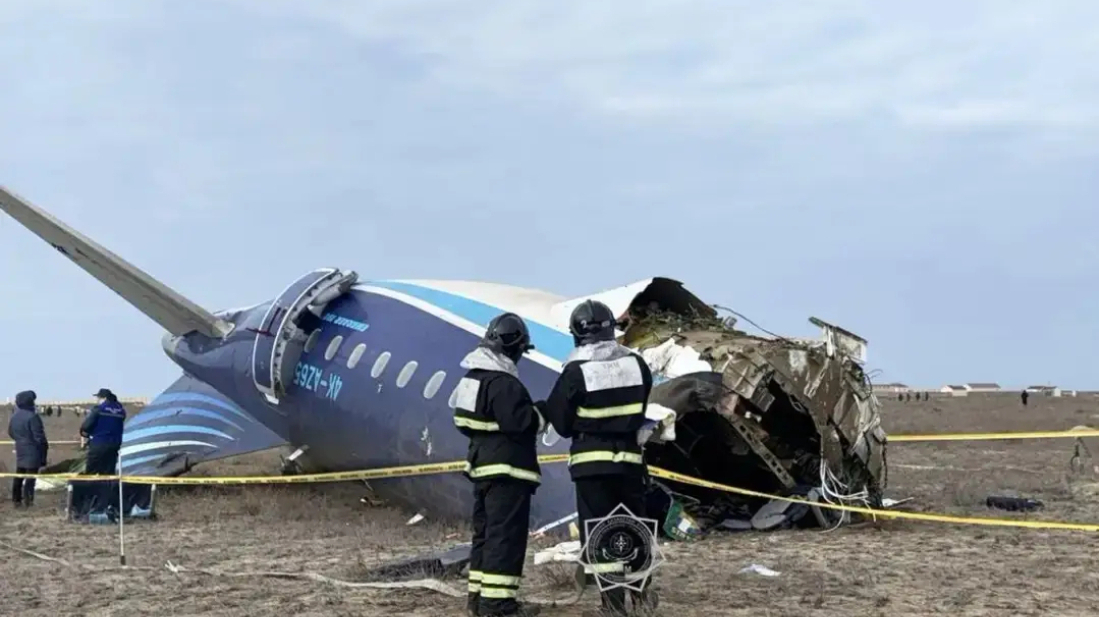
Azerbaijan Airlines Flight J2-8243 was deliberately shot down by Russian air-defence forces on 25 December 2024 while approaching Grozny, killing 38 people. An air defence captain's written testimony, backed by audio recordings, confirms that the order to destroy the aircraft came directly from the Russian Ministry of Defence.
The captain, Dmitry Paladichuk, detailed in his signed explanatory note how he received instructions to fire on the aircraft despite poor visibility and unstable communications. Two missiles were launched, with the second striking the plane and causing its destruction.
Russia initially blamed a technical failure, but later issued a vague expression of “regret”. Azerbaijan rejected this as inadequate and has launched legal proceedings, with President Ilham Aliyev demanding accountability and reparations.
The incident severely strained diplomatic ties. Azerbaijan suspended flights to Russian regions, and the European Union advised airlines to avoid Russian airspace.
Ethnic profiling and abuse inside Russia
Relations further deteriorated after Russian special forces raided Azerbaijani homes in Yekaterinburg on 27 June, killing brothers Ziyaddin and Huseyn Safarov and detaining dozens of others. Witnesses and released detainees reported physical abuse, threats, and coerced confessions. Court proceedings were held behind closed doors, with injured detainees brought before judges while barely able to stand.
Among those targeted was Shahin Shykhlinski, head of the Azerbaijani diaspora in Yekaterinburg, declared wanted after being detained with his son. His son remains in custody, while Russian media pushed unproven criminal claims to undermine him.
Azerbaijan’s Foreign Ministry condemned the operation as “brutal and unjustified,” calling the killings “unacceptable” and accusing Russia of targeting citizens based on ethnicity. The Russian chargé d’affaires was summoned, and Baku demanded a full and transparent investigation.
Despite the growing outrage, the Kremlin refused to take responsibility. Presidential spokesperson Dmitry Peskov said, “We sincerely regret the decisions that were taken,” but insisted the raids were a matter for Russian law enforcement and “should not be a reason” for Azerbaijan’s reaction.
The targeting of ethnic Azerbaijanis, the killing of civilians, and the denial of accountability have further strained already fragile ties between the two countries.
Moscow must face the consequences
The downing of a civilian aircraft, the killing of Azerbaijani nationals on Russian soil, and the systemic abuse of ethnic Azerbaijanis represent not isolated incidents but a pattern of hostility. Moscow’s continued deflection, refusal to accept responsibility, and use of legal processes to shield state violence only deepen the divide. Azerbaijan has made its position clear: accountability is not optional, and the safety and dignity of its citizens will not be compromised. If Russia seeks stable relations, it must first reckon with the consequences of its actions.
Russia's health watchdog said on Tuesday that no cases of plague had been detected among anyone who had come into contact with a Siberian plague institutelaboratory worker who died last week, and locals said their lives had barely been disrupted.
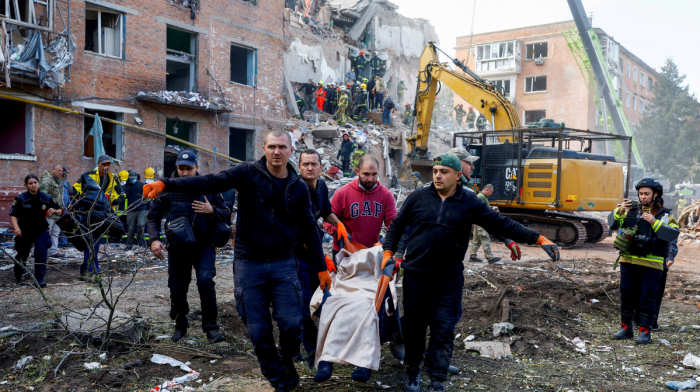
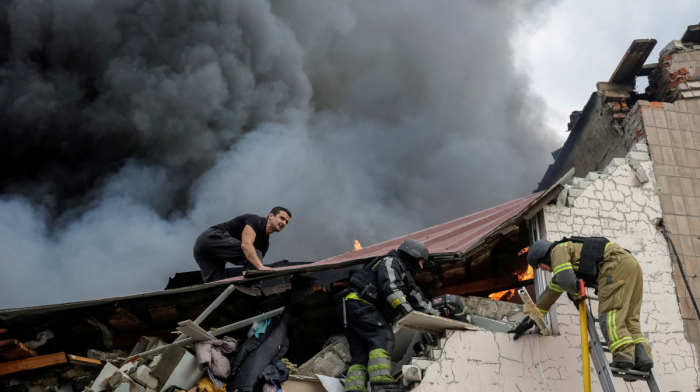
Russia struck Ukraine overnight in one of the biggest attacks of the conflict, killing at least 19 people, Kyiv's Foreign Ministry said on Wednesday. Around 70 missiles were fired at Ukraine during the attack, as well as drones, the Ministry said.
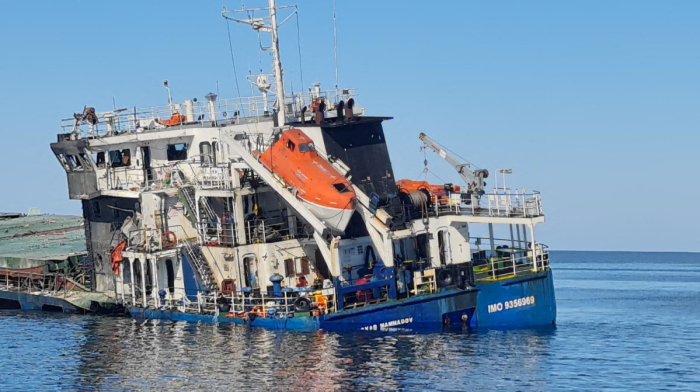
An Azerbaijani citizen died and another is missing after a cargo ship was attacked by a drone in the Black Sea, near the coast of Romania on Monday, 5 October, Baku's Foreign Ministry has said.
A large Ukrainian drone attack on Moscow and the surrounding region has killed two people, damaged homes and sparked a major fire at a key fuel facility, according to Russian officials and military bloggers.
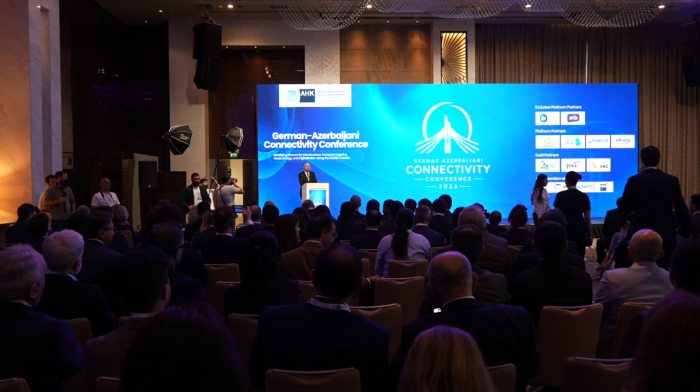
The German-Azerbaijani Connectivity Conference 2026 commenced on 6 October in Baku under the title “Mobilising Finance for Infrastructure, Transport, Logistics, Green Energy, and Digitalisation along the Middle Corridor.”
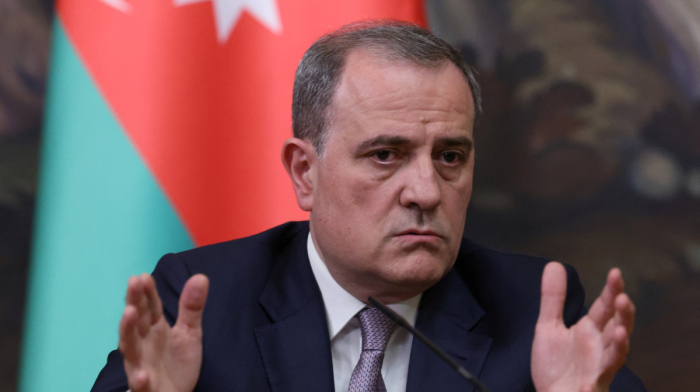
Azerbaijan’s Foreign Minister Jeyhun Bayramov has called for further integration of infrastructure between regional countries to bolster the Middle Corridor trade and logistics network.
The Saudi-led coalition says it has carried out a series of military operations against Houthi targets in Yemen after attacks on two Saudi airports left three people dead and dozens injured.
Russian oil company Lukoil plans to expand its activities in Uzbekistan, with potential areas including geological exploration, hydrocarbon development and retail fuel sales. The plans were discussed during a meeting between President Shavkat Mirziyoyev and Lukoil founder Vagit Alekperov.
European Commissioner for Enlargement Marta Kos has said Georgia is a candidate country “only on paper,” prompting a rapid response from senior Georgian officials who rejected the characterisation and criticised Brussels.
Download the AnewZ app
You can download the AnewZ application from Play Store and the App Store.














What is your opinion on this topic?
Leave the first comment