Kazakhstan evacuates more than 8,500 citizens from the Middle East amid rising regional tensions
Kazakhstan has evacuated 8,585 citizens from Middle Eastern countries as regional tensions escalate. Authorities a...
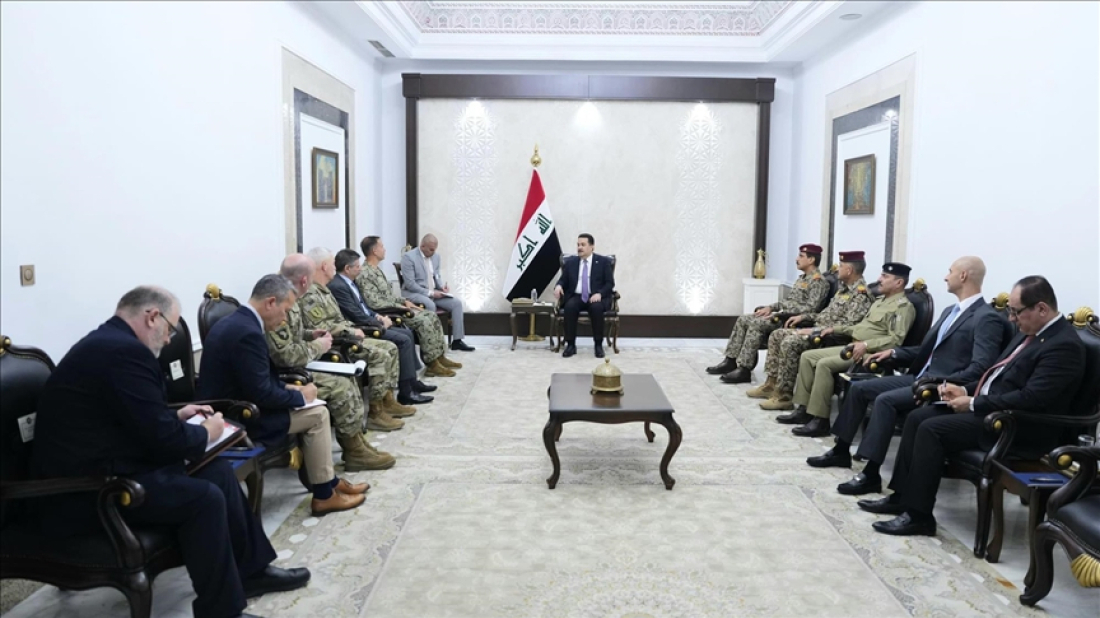
Iraqi Prime Minister Mohammed Shia al-Sudani met in Baghdad on Tuesday with Admiral Brad Cooper, head of U.S. Central Command (CENTCOM), to review security cooperation and future counterterrorism efforts.
A statement from al-Sudani’s office said the talks covered “various aspects of the security and military relationship between Iraq and the U.S., progress in the fight against terrorism, and follow-up on the joint declaration of September 2024,” with both sides reaffirming their commitment to all provisions of the agreement.
On 27 September 2024, Washington and Baghdad agreed to end the U.S.-led coalition’s mission against Daesh/ISIS in Iraq within 12 months, transitioning to bilateral security arrangements by the end of September 2025.
The leaders pledged continued support for Iraqi forces and sustained pressure on the terror group under the new framework.
Sudani and Cooper stressed “the importance of continued dialogue on joint security cooperation at the bilateral level, along with broader discussions on developing the partnership.”
The Iraqi premier said the partnership with Washington has “yielded important results for both countries and contributed to enhancing security and stability locally, regionally, and internationally.”
Cooper praised Iraq as “a model of successful counterterrorism cooperation” and reaffirmed Washington’s commitment to “building on past achievements, advancing security cooperation, and strengthening strategic communication.”
The U.S. currently has around 2,500 troops in Iraq. The coalition, formed in 2014 to combat ISIS, includes partners such as France and Spain.

Mojtaba Khamenei, son of the late Ayatollah Ali Khamenei, is a hardline cleric with strong backing from the Islamic Revolutionary Guard Corps. His rise signals continuity in Tehran's anti-Western policies.
Global oil prices surpassed $119 a barrel on Monday (9 March, 2026), an almost four year high, as the Middle East conflict rumbled on.
China has urged Afghanistan and Pakistan to resolve their dispute through dialogue after Chinese envoy Yue Xiaoyong met Afghan Foreign Minister Amir Khan Muttaqi, as fighting between the two neighbours entered its eleventh day.
Welcome to our live coverage as the conflict involving Iran enters its 11th day. Tensions in the region remain high as the United States and Iran exchange increasingly sharp warnings over the strategic Strait of Hormuz, a critical artery for global oil supplies.
Entry and exit across the state border between Azerbaijan and Iran for all types of cargo vehicles, including those in transit, will resume on 9 March, according to a statement by the Cabinet of Ministers of Azerbaijan.
Kazakhstan has evacuated 8,585 citizens from Middle Eastern countries as regional tensions escalate. Authorities are coordinating air and land evacuations while analysts warn the crisis could reshape security and energy risks across the Caspian region.
The United States has designated Afghanistan a “State Sponsor of Wrongful Detention”, accusing the Taliban of holding American citizens to gain political concessions and demanding the immediate release of detained Americans.
Azerbaijan is evacuating nearly 200 people from the Middle East on a special charter flight departing from Oman.
Up to 30 tonnes of food will be delivered to Iran amidst ongoing hostilities with U.S. and Israel, following a phone converstation between the President of Azerbaijan Ilham Aliyev and Iranian counterpart Massoud Pezeshkian.
Schools across Pakistan are being forced to close for a fortnight from next week with government departments down to a four-day week, according to Prime Minister Shehbaz Sharif in a televised address to the nation.
You can download the AnewZ application from Play Store and the App Store.
What is your opinion on this topic?
Leave the first comment