Winter grips Japan as Takaichi pushes for an avalanche of votes
Voters across Japan pushed through deep winter snow on Sunday to cast ballots in an election expected to hand Prime Minister Sanae Takaichi a sweeping...
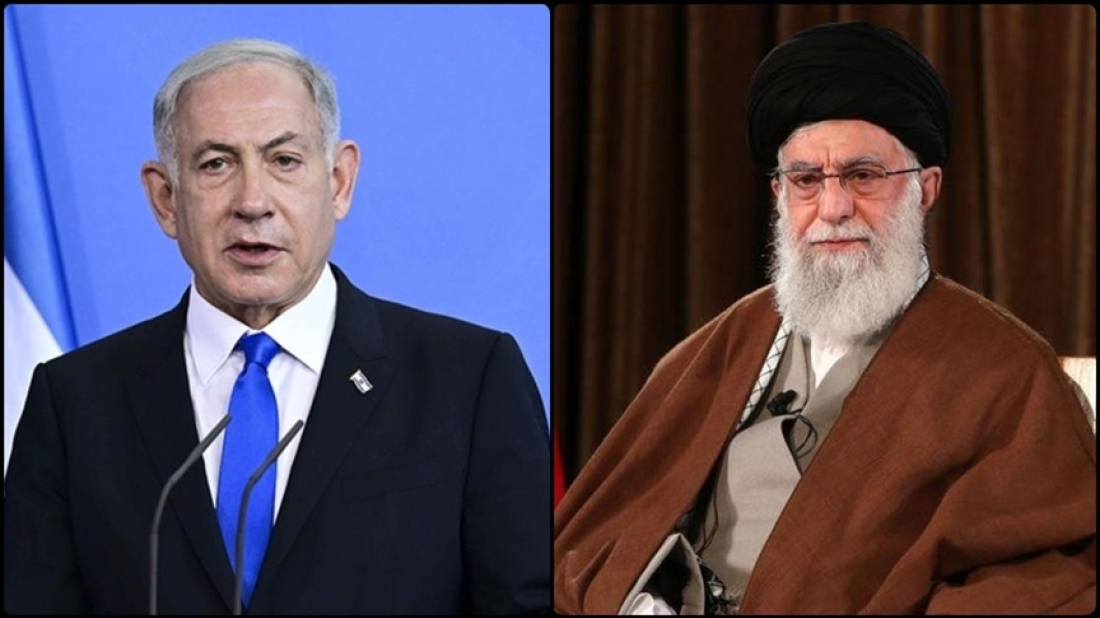
Israeli Prime Minister Benjamin Netanyahu reiterated his assassination threat against Iranian Supreme Leader Ayatollah Ali Khamenei, stating that he has instructed the military that “no one is untouchable in Iran."
Speaking to Israel’s state broadcaster KAN in response to a question from Defense Minister Yisrael Katz about the threat, Netanyahu said, “I have instructed the army that no one has immunity in Iran. There is no need for further explanation—let the events speak for themselves.”
Netanyahu claimed that Israel does not aim to overthrow the Iranian regime.
“The regime’s destabilization could be a consequence, but it is not the goal. That is a decision for the Iranian people to make,” he said.
Regarding Iran’s nuclear program, Netanyahu asserted that Israel “has the capability to strike all nuclear facilities in Iran.”
Netanyahu also emphasized that Israel does not wait for a “green light” from the United States to attack Iran. He praised the support of the administration of U.S. President Donald Trump.
“They provide us with excellent defence assistance, including American pilots who shoot down drones, and the U.S. also supports us with the THAAD ballistic missile defence system.”
Defense Minister Yisrael Katz previously stated in Holon, near Tel Aviv—the site targeted in Iran’s recent retaliatory strikes—that “a dictator like Khamenei cannot maintain his rule.”
Visiting Soroka Hospital in Beersheba, which was hit in Iran’s early morning counterattacks, Netanyahu hinted that an assassination attempt on Khamenei is on the table, stating, “All options are being considered.”
The conflict between Israel and Iran escalated following Israel’s large-scale attacks on 13 June, targeting Iran’s nuclear facilities and senior military commanders. The strikes killed Iran’s Chief of Staff, Revolutionary Guards Commander, several senior officials, and nine nuclear scientists, while total civilian casualties reported at 224.
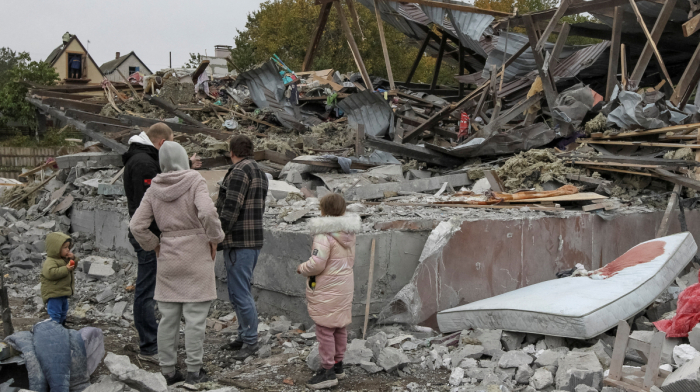
In Iran’s ballistic missile retaliation against Israel, 24 people were killed and more than 500 injured.
Several countries, including Turkey, have condemned Israel’s attacks. As tensions rise in the region, the international community continues to call for de-escalation.

Storm Leonardo hit Spain and Portugal on Tuesday, forcing more than 11,000 people from their homes, as a man in Portugal died after his car was swept away by floodwaters and a second body was found in Malaga.
Winter weather has brought air travel in the German capital to a complete halt, stranding thousands of passengers as severe icing conditions make runways and aircraft unsafe for operation and force authorities to shut down one of Europe’s key transport hubs.
An attacker opened fire at the gates of a Shiite Muslim mosque in Islamabad on Friday before detonating a suicide bomb that killed at least 31 people in the deadliest assault of its kind in the capital in more than a decade.
Start your day informed with AnewZ Morning Brief: here are the top news stories for the 6th of February, covering the latest developments you need to know.
“Having a good security relationship with the United States is of utmost importance for the Japanese as a whole,” said Professor Seijiro Takeshita of the University of Shizuoka, highlighting the strategic stakes ahead of Japan’s national election.
U.S. has become a central outside power in the south caucasus, shaping diplomacy, security and energy flows. Its relations with Azerbaijan and Armenia have evolved from similar beginnings into two distinct partnerships that now define Washington’s role in the region.
Iran would retaliate by striking U.S. military bases across the Middle East if it comes under attack by American forces, Foreign Minister Abbas Araghchi said on Saturday (7 January), stressing that such action should not be seen as targeting the countries hosting those bases.
Uzbekistan is preparing to introduce Islamic banking after the Senate approved legislation creating a legal framework for Sharia-compliant financial services, a move authorities say could broaden financial access and attract new investment into the country’s economy.
Agreements signed by the United States, Kazakhstan and Uzbekistan in Washington on 5 February show that the United States is changing how it secures access to strategic raw materials.
Azerbaijan has summoned Russia’s ambassador in Baku and issued a formal protest note over remarks by Russian lawmaker Konstantin Zatulin, escalating diplomatic tensions between the two countries.
You can download the AnewZ application from Play Store and the App Store.
What is your opinion on this topic?
Leave the first comment