G7 calls for urgent global action on Congo Ebola outbreak
Leaders of the Group of Seven (G7) have called for a strong and coordinated international response to the Ebola outbreak in the Democratic Republic of...
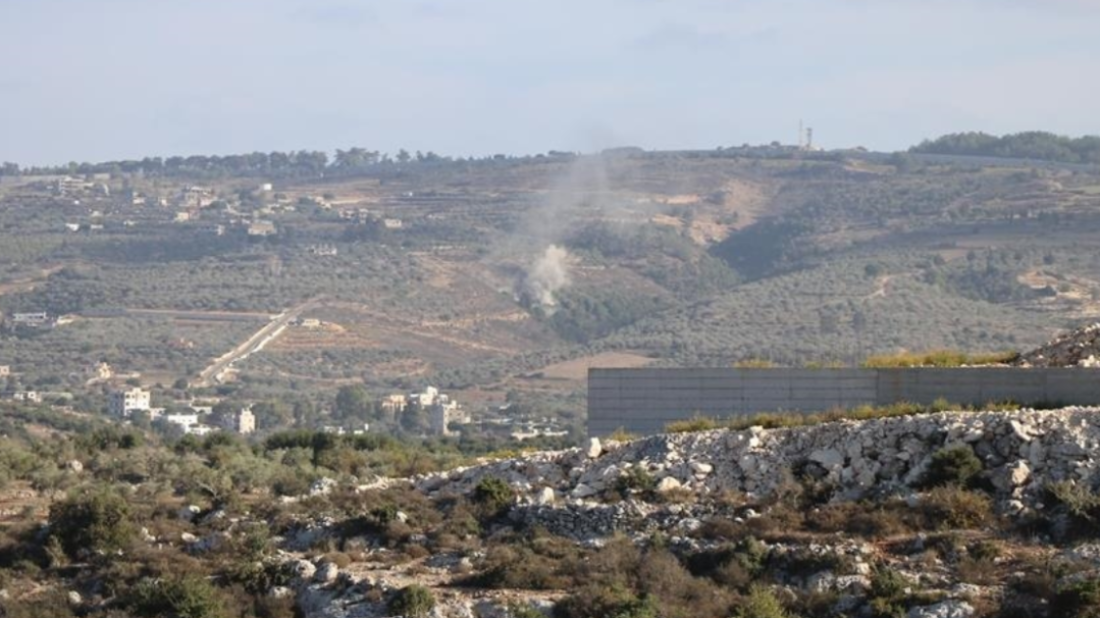
The Syrian Ministry of Defense on Thursday accused Hezbollah militias of firing artillery shells from Lebanese territory toward Syrian army positions in the al-Qusayr area west of Homs.
“Lebanese Hezbollah militias fired several artillery shells from Lebanese territory toward positions of the Syrian Arab Army in the al-Qusayr area west of Homs,” Syria’s state news agency SANA reported, citing a Defense Ministry source.
“Our forces immediately targeted the sources of fire after locating the sites” from which the five shells were launched, the source said.
The Syrian military halted its strikes on the Lebanese side after the Lebanese army requested a pause and pledged to sweep the area and pursue the groups responsible, the source added. The statement did not specify if there were any casualties or material damage.
While there has been no official response from Beirut, Lebanon’s state news agency reported Thursday that eight Syrian refugees were injured and transferred by the Lebanese Red Cross to hospitals in Hermel following the explosion of a booby-trapped drone in a farm in the border town of Hosh al-Sayyid Ali.
The Lebanese army reportedly dispatched reinforcements to the area after hearing gunfire. No party has claimed responsibility for the drone attack, and Hezbollah has not commented on the Syrian accusations.
Tensions along the 375-kilometer Lebanese-Syrian border have escalated in recent months, exacerbated by accusations last month that Hezbollah abducted and killed three Syrian soldiers — a claim the group denies. Syria’s government has vowed to tighten border security, targeting drug smuggling and other destabilizing activities.
Late last month, Syrian Defense Minister Murhaf Abu Qasra and Lebanese Defense Minister Michel Menassa met in Saudi Arabia, agreeing on the importance of border demarcation and closer security coordination.

Details of a reported draft memorandum of understanding between the United States and Iran offer the clearest picture yet of how both sides plan to end months of conflict and move towards a longer-term settlement.
The U.S. and Iran say they have reached a deal to end their conflict, with an immediate ceasefire and reopening of the Strait of Hormuz after the lifting of the U.S. naval blockade. Talks will continue over the next 60 days to finalise the agreement
A senior U.S. official said on Monday that the memorandum of understanding linked to the U.S.-Iran agreement had been signed by President Donald Trump, Vice President JD Vance and Iranian Parliament Speaker Mohammad Bagher Qalibaf.
Israeli Prime Minister Benjamin Netanyahu has told U.S. President Donald Trump that Israel does not consider itself bound by a Lebanon-related provision in an emerging agreement with Iran, according to Israeli officials.
A strong 6.7-magnitude earthquake struck Indonesia's Sulawesi island early Tuesday, killing at least one person and injuring four, according to emergency authorities.
Pope Leo XIV has been invited to visit Azerbaijan by President Aliyev during talks with a senior Vatican official in Baku. The invitation was extended during a meeting on Tuesday between President Aliyev and Cardinal George Jacob Koovakad, who is responsible for interfaith affairs at the Vatican.
An exiled Russian artist has been shot dead in Poland days after he carried out a one-man protest against Vladimir Putin, featuring a caricature of the Russian President as a baby held by the Soviet-era dictator Joseph Stalin.
Israel's Supreme Court has rejected an appeal seeking the release of prominent Palestinian doctor Hussam Abū Ṣafiyah, who has been held without charge since his detention in Gaza in late 2024.
Kazakhstan has signed a $10 billion agreement with Firebird and NVIDIA to build one of Central Asia's largest AI computing hubs, as governments increasingly compete for the infrastructure needed to power artificial intelligence.
A secretive offshore oil transfer network backed by U.S. military support has helped keep Gulf energy exports flowing despite major disruption around the Strait of Hormuz, a Reuters investigation has found.
You can download the AnewZ application from Play Store and the App Store.
What is your opinion on this topic?
Leave the first comment