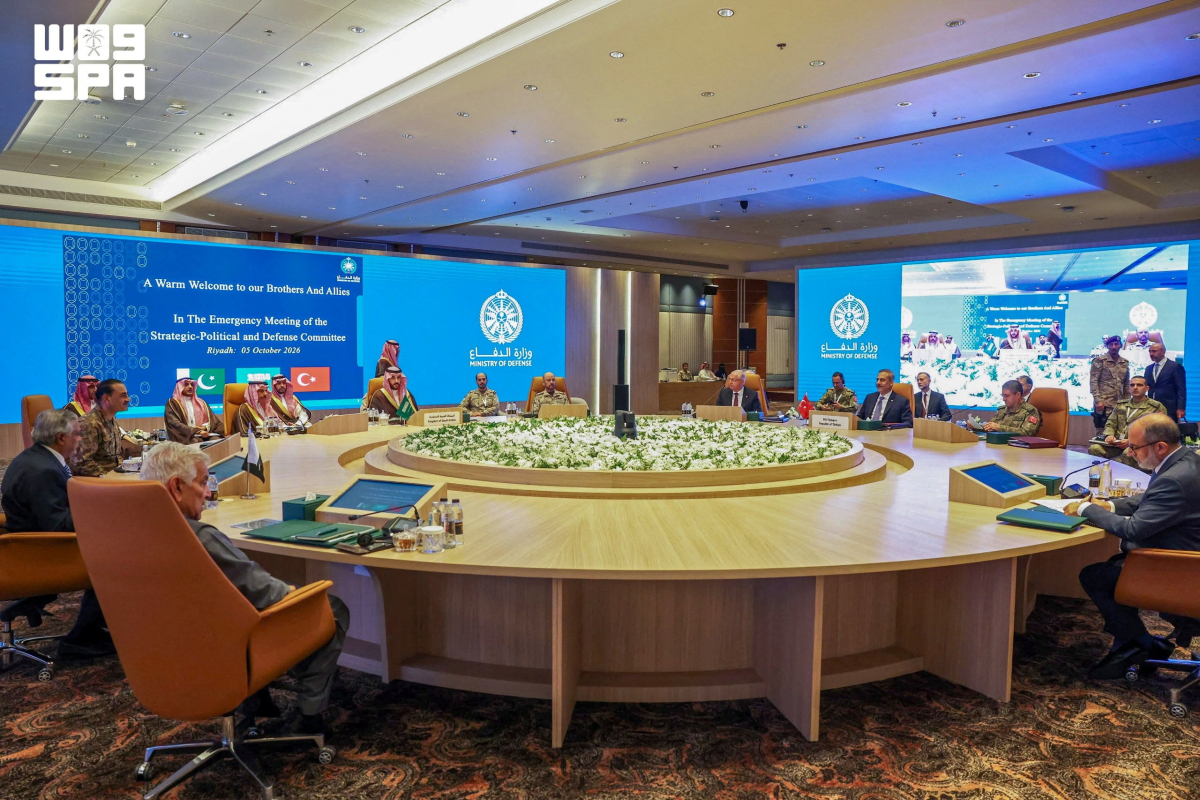
Saudi Arabia, Pakistan and Türkiye on Monday agreed at an emergency meeting in Riyadh to put their Mecca Joint Defence Agreement into practical effect, deciding to deploy agreed military forces and capabilities rapidly to the kingdom as Houthi attacks and a Saudi-backed offensive in Yemen continue.
In a joint statement released by Pakistan’s Ministry of Foreign Affairs, the three countries said they would “move immediately to the practical implementation of the collective defence commitments.” Deployments will follow approved arrangements and national laws.
The statement gave no troop numbers or timelines and did not name the Houthis.
Who attended the Riyadh meeting
Saudi Foreign Minister Prince Faisal bin Farhan, Defense Minister Prince Khalid bin Salman and Chief of General Staff Gen. Fayyadh bin Hamed Al-Ruwaili hosted. Türkiye sent Foreign Minister Hakan Fidan, Defense Minister Yasar Guler and Chief of General Staff Gen. Selcuk Bayraktaroglu. Pakistan was represented by Deputy Prime Minister and Foreign Minister Mohammad Ishaq Dar, Defense Minister Khawaja Asif and Field Marshal Syed Asim Munir, Chief of Defence Forces and Chief of Army Staff.
Key takeaways
Condemnation: The three condemned “in the strongest terms” the attempted targeting of Mecca and Madinah and attacks on civilian and economic facilities. In September, Saudi Arabia said it destroyed a Houthi drone before it entered Mecca’s airspace. The Houthis called the claim “a worn-out lie.”
Leadership: Retired Lt. Gen. Nauman Mahmood of Pakistan became first secretary-general.
Deterrence: Prince Khalid said on X the committee agreed to activate collective deterrence measures against “all those responsible” for the attacks.
Diplomacy: Fidan said the meeting was brought forward because of Yemen, and the three discussed peaceful resolution through dialogue.
Yemen offensive and regional reaction
Saudi-backed Yemeni forces launched an offensive to retake all territory the Houthis have seized in 12 years of war. On Monday (5 October) they said they had retaken most of the coastal territory the Houthis conquered.
On Sunday, Iranian Foreign Ministry Spokesman Esmail Baghaei warned that any “new intervention” in Yemen would complicate matters.
On Monday, the Houthis claimed missile and drone attacks on Saudi targets, including Riyadh’s King Khalid International Airport.
Riyadh has not confirmed the claim.
When and why the Mecca Joint Defence Agreement was signed
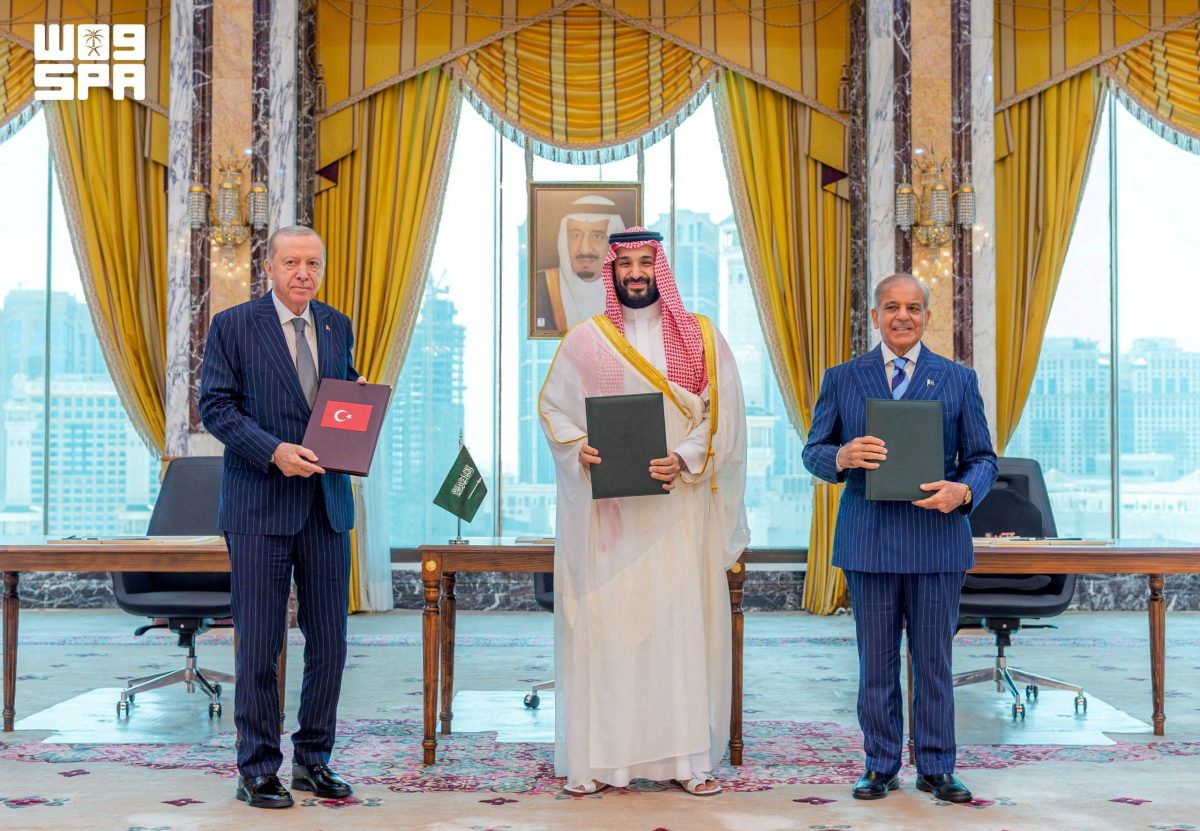
Saudi Crown Prince Mohammed bin Salman, Turkish President Recep Tayyip Erdoğan and Pakistani Prime Minister Shehbaz Sharif signed the agreement on 7 August. It means an attack on any of the three is treated as an attack on all and followed a Saudi-Pakistani Defence pact signed in September 2025.
The agreement came amid the U.S.-Iran war, which has disrupted shipping through Hormuz and the Red Sea, and after Riyadh’s April 2022 truce with the Houthis broke down.
Mecca Joint Defence pact expansion: membership requests and next steps
No deployment dates have been announced. Pakistan’s foreign minister says more than six other countries want to join, but no requests can be considered until the pact is fully operational, which could take up to a year.
Read more:












What is your opinion on this topic?
Leave the first comment