




11:16 CET
Nuclear security
Georgia arrests man over attempted $700,000 uranium sale
Georgia has detained a man ...
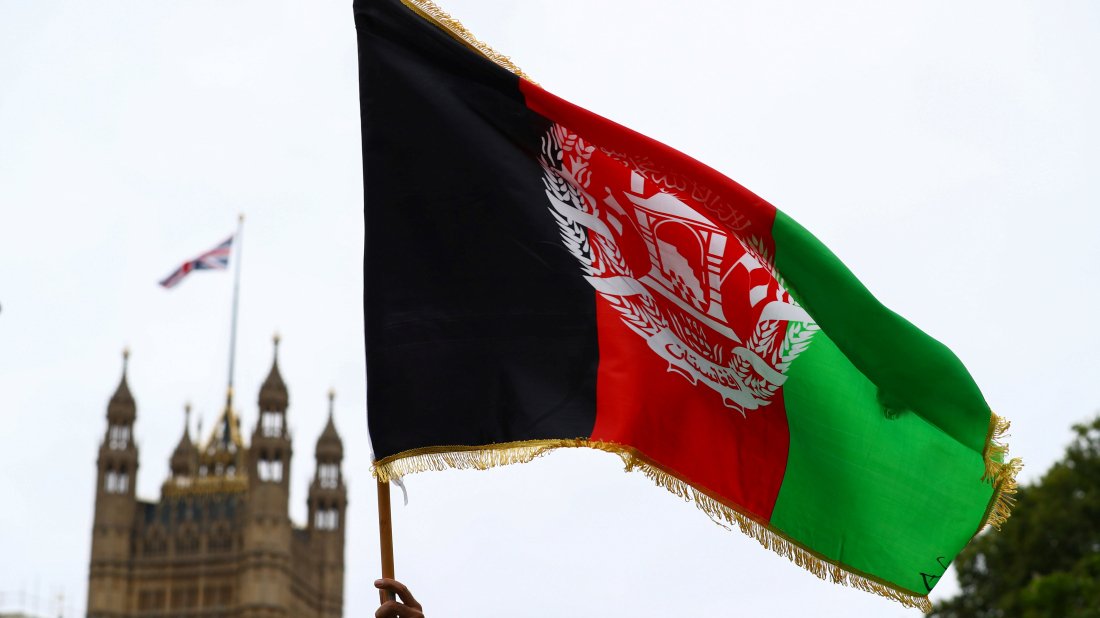


Afghanistan's trade with five Central Asian nations—Uzbekistan, Tajikistan, Kazakhstan, Turkmenistan, and Kyrgyzstan—has reached $1.696 billion since March 2024, according to an announcement by the Ministry of Industry and Commerce.
The ministry's spokesperson, Akhunzada Abdul Salam Jawad, stated that trade with these five Central Asian countries totaled $1.696 billion, with exports amounting to $112 million and imports making up $1.584 billion.
In a recent report released by the Ministry of Industry and Commerce, Afghanistan's total trade in 2024 increased by 29% compared to 2023. The total trade for 2024 was valued at $12.422 billion, up from $9.594 billion in 2023.
In 2024, the total exports from Afghanistan amounted to $1.803 billion, while total imports made up $10.619 billion. In contrast, 2023 saw exports of $1.884 billion and imports of $7.710 billion. This represents a 38% increase in imports and a 4% decrease in exports for the year 2024.
In 2024, Afghanistan's largest export destination was Pakistan, with total exports valued at $817 million, reflecting an 18.7% decrease compared to 2023. On the other hand, imports from Iran, Afghanistan's leading import partner, saw a significant increase of 83.38% in 2024, reaching a total value of $3.143 billion.
Among the five Central Asian countries, Turkmenistan leads in trade with Afghanistan. In 2024, the total trade value between Afghanistan and Turkmenistan reached $670 million. Of this, $645 million worth of goods were imported to Afghanistan, marking a 35% increase from the previous year. Meanwhile, exports to Turkmenistan amounted to $2.5 million, reflecting a 6% decrease compared to 2023.
Uzbekistan ranks second in trade volume among Central Asian countries, with a significant increase in trade activity in 2024. Exports to Uzbekistan surged by 104%, totaling $56 million, while imports from Uzbekistan rose by 145%, reaching $587 million.
Trade with Kazakhstan also grew in 2024, with total trade reaching $401 million. Exports to Kazakhstan amounted to $43 million, a 34% increase from 2023, while imports from Kazakhstan totaled $358 million, reflecting a 55% rise compared to the previous year.
Tajikistan's total trade with Afghanistan in 2024 stood at $61 million, with $49 million worth of imports to Afghanistan and $12 million worth of exports from Afghanistan.
Imports from Kyrgyzstan saw a significant increase, rising to $39 million in 2024 from just $1 million in 2023. However, exports to Kyrgyzstan decreased by 5%, falling to $7.6 million in 2024.
Afghanistan exported a variety of goods to these neighboring countries, including agricultural products like asafoetida (hing), potatoes, and onions, as well as fresh and dried fruits, juices, and talc stone. On the other hand, the country imported critical commodities such as fuel, electricity, wheat flour, cooking oil, cement, chemical fertilizers, and raw materials for industrial production.

Georgia has detained a man ...
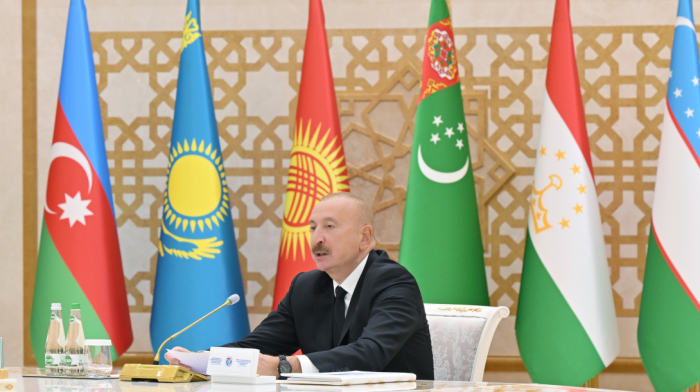
Azerbaijan and the five Central Asian states have signed two key documents at the 8th Consultative Meeting of Heads of State in Turkmenbashi, forma...
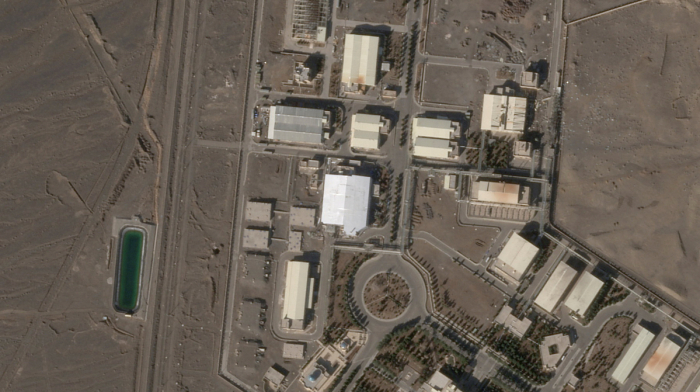
U.S. Vice President JD Vance told Reuters on Monday (5 October) that ...


Russia's health watchdog said on Tuesday that no cases of plague had been detected among anyone who had come into contact with a Siberian plague institute laboratory worker who died last week, and locals said their lives had barely been disrupted.

Russia struck Ukraine overnight in one of the biggest attacks of the conflict, killing at least 19 people, Kyiv's Foreign Ministry said on Wednesday. Around 70 missiles were fired at Ukraine during the attack, as well as drones, the Ministry said.

A large Ukrainian drone attack on Moscow and the surrounding region has killed two people, damaged homes and sparked a major fire at a key fuel facility, according to Russian officials and military bloggers.
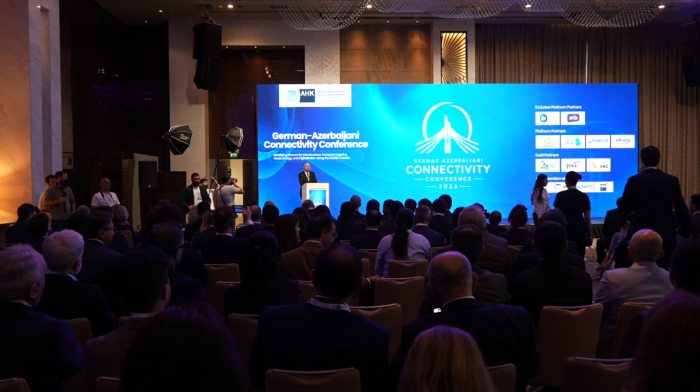
The German-Azerbaijani Connectivity Conference 2026 commenced on 6 October in Baku under the title “Mobilising Finance for Infrastructure, Transport, Logistics, Green Energy, and Digitalisation along the Middle Corridor.”
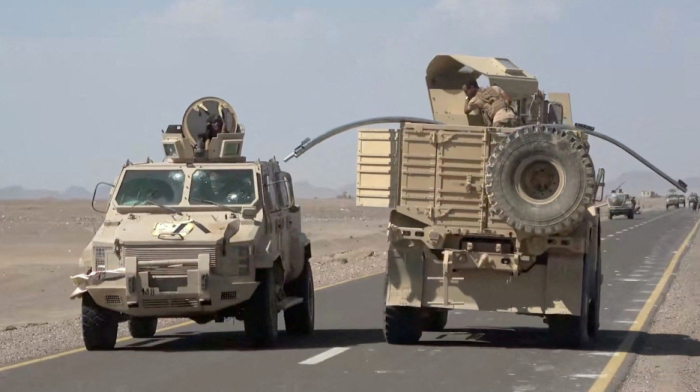
The Saudi-led coalition says it has carried out a series of military operations against Houthi targets in Yemen after attacks on two Saudi airports left three people dead and dozens injured.
Georgia has detained a man who planned to sell uranium-238 to a foreign national for $700,000, the national security service said on Wednesday.
Azerbaijan and the five Central Asian states have signed two key documents at the 8th Consultative Meeting of Heads of State in Turkmenbashi, formalising a broader framework for regional cooperation in transport, trade, energy, digitalisation and security.
U.S. Vice President JD Vance told Reuters on Monday (5 October) that Iran must make a “meaningful” reduction in its uranium enrichment capacity to satisfy U.S. demands and end the countries' seven-month war.
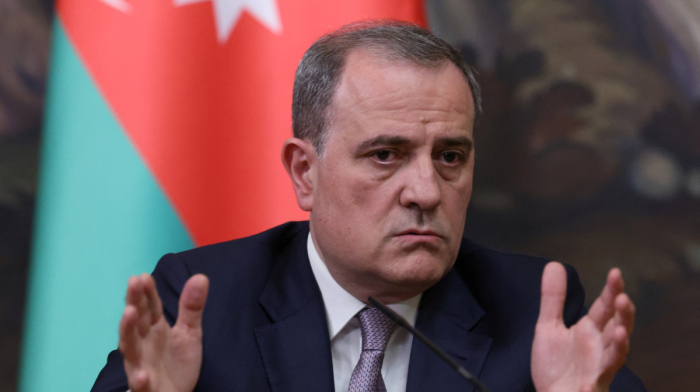
Azerbaijan’s Foreign Minister Jeyhun Bayramov has called for further integration of infrastructure between regional countries to bolster the Middle Corridor trade and logistics network.
The Saudi-led coalition says it has carried out a series of military operations against Houthi targets in Yemen after attacks on two Saudi airports left three people dead and dozens injured.
You can download the AnewZ application from Play Store and the App Store.




What is your opinion on this topic?
Leave the first comment