Iran’s Khatam al-Anbiya Central Headquarters has warned that Tehran would target remaining infrastructure in the region if the Islamic Republic’s infrastructure were attacked by the U.S. military, according to the Defa Press military news website.
“If the recent threats of the U.S. president, who is full of empty words, to target the infrastructure of Islamic Iran are carried out, every infrastructure in the region that is still intact due to Iran's decency will be crushed under the steel blows of the powerful armed forces of Iran,” spokesman Lieutenant Colonel Ebrahim Zolfaqari said.
“No trace of the infrastructure will remain and it will be as if they never existed in the first place,” he warned in a recorded televised message on Thursday.
President Masoud Pezeshkian has also said that Iran would defend every inch of its territory, the state-run IRNA news agency reported.
He made the statement after U.S. President Donald Trump reposted his earlier posts calling for the occupation of the Iranian islands in the Persian Gulf, renewed threats to bomb Iran’s energy and railway infrastructure, and remarks directed at the Iranian people.
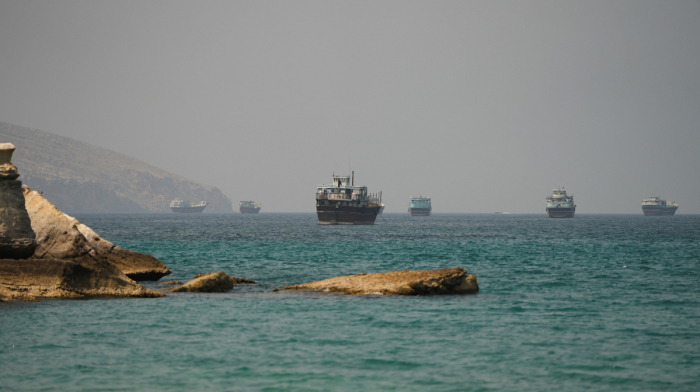
The military spokesman added that Iran would not allow the United States, described as an extra-regional power, to interfere in the strategic waterway of the Strait of Hormuz, which links the Persian Gulf and the Gulf of Oman.
“It is reiterated that under no circumstances and in no way will we allow America, as a foreign and extra-regional country, to interfere in the Strait of Hormuz. This is Iran's invincible red line.”
Iran, UK tensions rise over IRGC designation
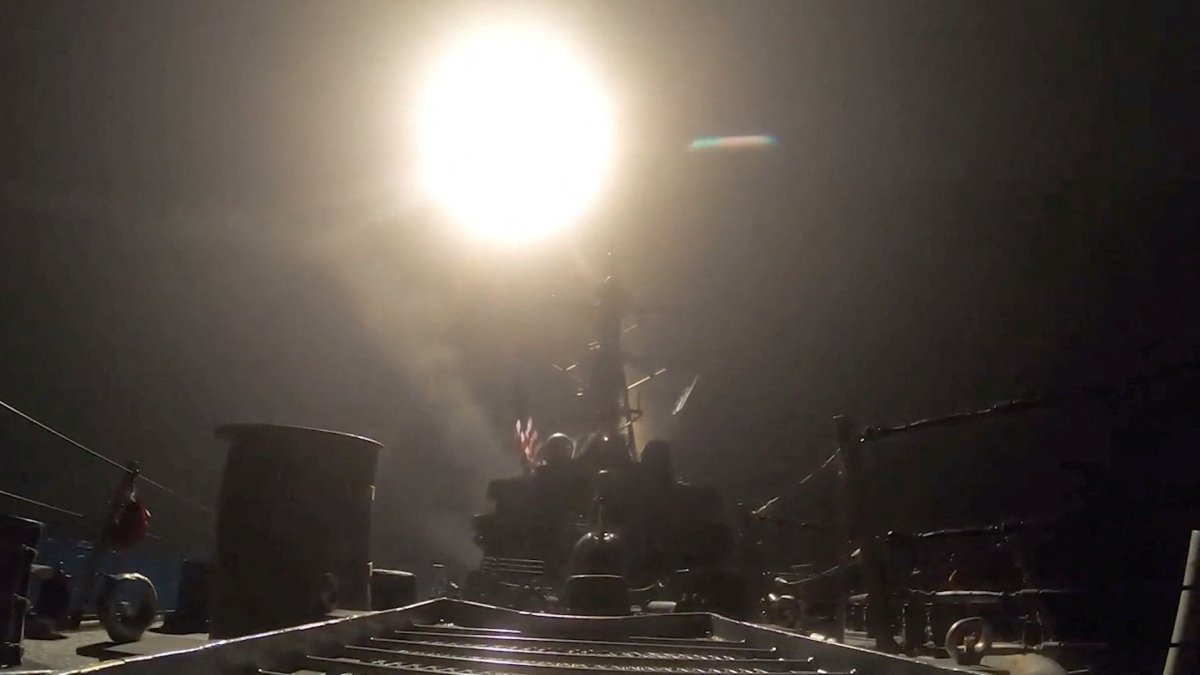
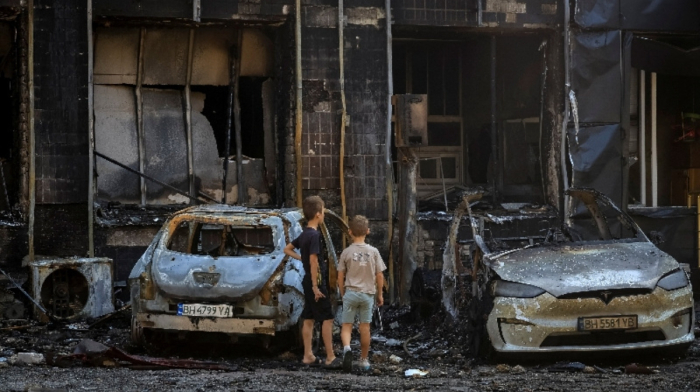
In the latest escalation in the military standoff between Tehran and Washington, Iran’s Armed Forces, comprising the Army and the Islamic Revolutionary Guard Corps (IRGC), have claimed responsibility for retaliatory attacks against U.S. bases and interests in the region, including in Bahrain, Jordan and Kuwait, as well as for targeting ships transiting the Strait of Hormuz without Iran’s coordination.
Meanwhile, British envoy to Tehran Hugo Shorter was summoned by Iran’s Foreign Ministry on Wednesday.
Tehran strongly protested against the UK’s decision to designate the Islamic Revolutionary Guard Corps as a security threat under a new set of counter-terrorism powers.
The ministry strongly criticised the move as an “irresponsible act and contrary to the international obligations of the UK government and the fundamental principles governing relations between states”, official sources reported.
The move came a day after Britain summoned Iran’s Chargé d’Affaires, Ali Nasimfar, in London over what the UK government said was Iran’s role in directing proxy groups to carry out attacks across Europe in recent months.
In February, Iran’s Foreign Ministry summoned European Union envoys in Tehran to protest against the bloc’s designation of the Islamic Revolutionary Guard Corps as a “terrorist organisation”.
Established in the early days of the 1979 Islamic Revolution, the IRGC is a multi-service branch of Iran’s Armed Forces. It is led by a commander-in-chief appointed by the Supreme Leader, to whom he reports.












What is your opinion on this topic?
Leave the first comment