Iran and Oman have held the first meeting of a new joint committee to discuss the future management of the strategically important Strait of Hormuz, an Iranian deputy foreign minister said on Monday.
First joint committee meeting
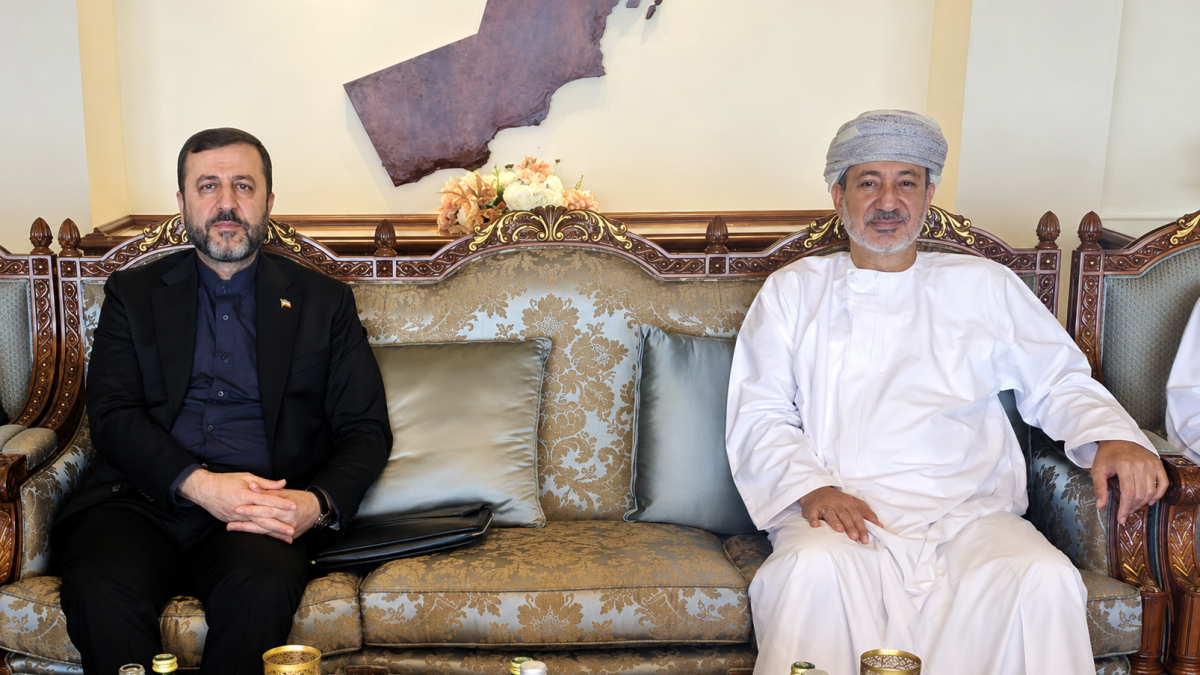
Representing the only two countries on either side of the Strait of Hormuz, Iranian and Omani delegates held the inaugural meeting of the joint committee in Muscat to discuss the future management of the strategic waterway, a senior Iranian diplomat said on Monday.
“During the visit to Muscat, the first meeting of the Hormuz Joint Committee was held with Oman's ambassador-at-large, Abdulaziz Al-Hanaei,” Deputy Foreign Minister for Legal and International Affairs Kazem Gharibabadi said on his X account.
“Reviewing current issues related to the strait, we exchanged views on the future management of the strait within the framework of Article 5 of the Islamabad Memorandum of Understanding and the sovereign rights of coastal states,” he added.
Clause 5(a), as reported by the state-run IRNA news agency, stipulates: “Upon the signing of this MoU, the Islamic Republic of Iran will make arrangements using its best efforts for the safe passage of commercial vessels with no charge for 60 days only from the Persian Gulf to the Sea of Oman and vice versa.”
It continues: “The Islamic Republic of Iran will conduct dialogue with the Sultanate of Oman to define the future administration and maritime services in the Strait of Hormuz in discussion with other Persian Gulf littoral states in line with the applicable international law and the sovereign rights of coastal states of the Strait of Hormuz.”
Tensions with the U.S.
Following an exchange of fire between the Iranian and U.S. militaries in the strait over the weekend, Gharibabadi, who leads the Iranian team at the technical talks with the U.S., said safe navigation cannot be guaranteed through arrangements that exclude Iran as a coastal state.
Foreign Minister Abbas Araghchi stressed on Sunday that responsibility for reopening the Strait of Hormuz lies solely with Iran under the ceasefire agreement.
“Any interference and any attempt to adopt separate arrangements will only lead to further complication of the situation and to a delay in the reopening of the strait,” he warned during a joint press conference with Iraq's Foreign Minister Fuad Hussein in Baghdad.
Last week, the Revolutionary Guards issued a warning following the announcement of new shipping routes through the Strait of Hormuz without informing or coordinating with Iran.
The announcement was followed by retaliatory encounters between Iranian and U.S. forces, leading to the postponement of technical-level talks reportedly scheduled for Sunday.
Tehran cancelled the technical talks with Washington on implementing the ceasefire memorandum of understanding, also citing what it described as unfulfilled U.S. obligations under the truce agreement.
Lebanon discussed
Meanwhile, Parliament Speaker and chief negotiator Mohammad Bagher Ghalibaf held a phone call with his Lebanese counterpart, Nabih Berri, on Sunday.
Ghalibaf told his Lebanese counterpart that Lebanon is an important part of the first clause of the Islamabad Memorandum of Understanding between Iran and the United States.
“Iran seriously pursues the end of war in Lebanon, return of refugees to their homes, termination of Israel’s occupation, and withdrawal of the Israeli forces from Lebanon,” the Parliament News Agency (ICANA) quoted him as saying.
The Iranian speaker visited Oman on 23 June, during which the Islamic Republic and the Sultanate agreed to establish the joint committee on the Strait of Hormuz as the two countries bordering the waterway.
In a joint statement issued at the end of the visit, the two sides stressed the need to respect the sovereign rights of the two coastal states and reaffirmed their commitment to ensuring the security of international shipping through the narrow corridor linking the Persian Gulf and the Gulf of Oman.















What is your opinion on this topic?
Leave the first comment