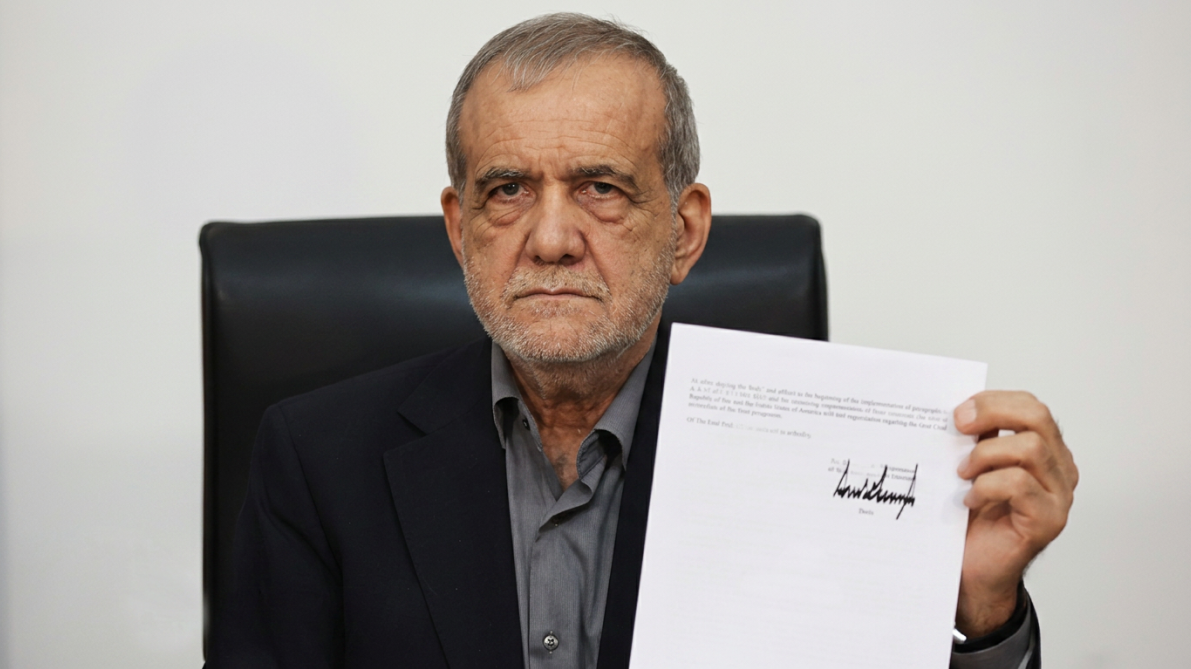
Iranian President Masoud Pezeshkian has remotely signed a memorandum of understanding (MoU) with the U.S., brokered by Pakistan, under which Tehran and Washington agreed to extend their ceasefire and begin negotiations towards a peace agreement.
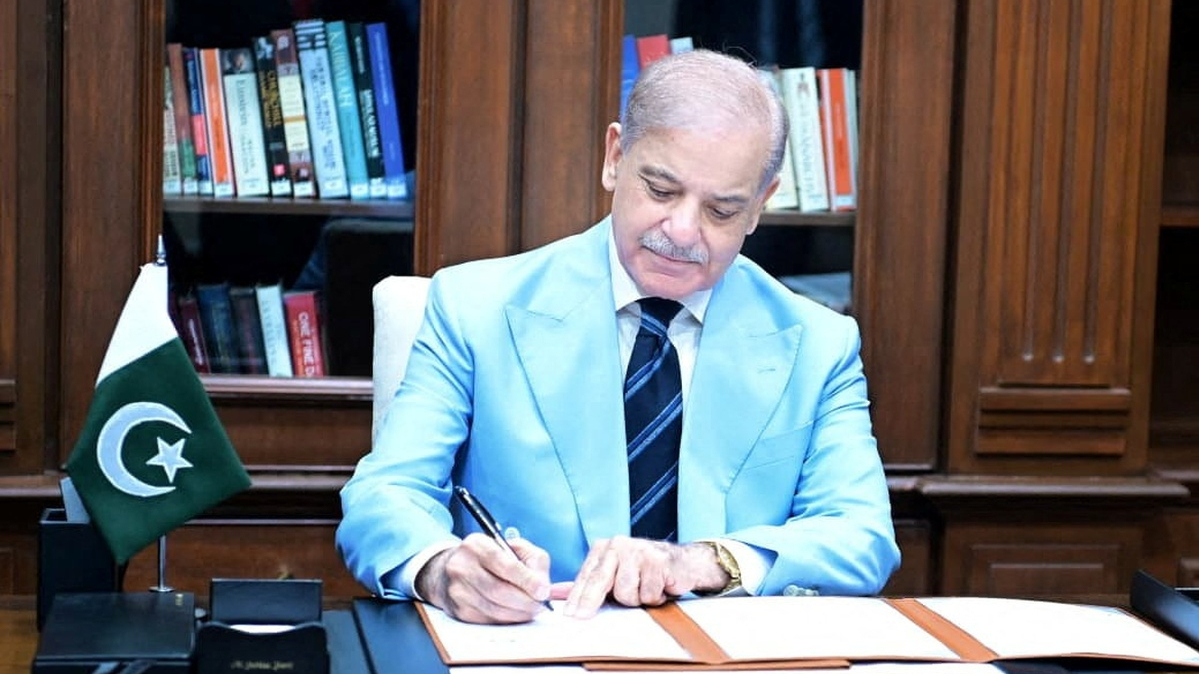
The agreement was co-signed on Wednesday by U.S. President Donald Trump and Pakistani Prime Minister Shehbaz Sharif, acting as mediator. The initial deal provides for a 60-day extension of the ceasefire, allowing both sides to begin negotiations on a final peace settlement.
Reciprocity at the core of agreement
Iran's chief negotiator with the U.S. and Parliament Speaker Mohammad-Bagher Ghalibaf said in an interview with state broadcaster IRIB on Wednesday evening that the Iran-U.S. MoU is based on the principle of reciprocity.
“Every commitment we have made in the MoU is based on the principle of action in return for action. If the United States does not fulfill its commitments, we will not take any action either,” he reiterated.
According to official sources, the memorandum outlines a framework for ending the war, launching negotiations aimed at reaching a final agreement, and establishing a series of mutual commitments in the security, economic and nuclear sectors.
The state news agency IRNA, which published the full text of the 14-point document, said it begins by declaring “the immediate and permanent termination of military operations on all fronts, including in Lebanon”.
Commitments on security and sanctions
By undertaking “to respect each other's sovereignty and territorial integrity”, Iran and the U.S. also committed “to negotiating and achieving the final deal in maximum 60 days, extendable with mutual consent”.
“Immediately upon the signing of this MoU, the U.S. will begin the removal of its naval blockade … and will fully end the naval blockade within 30 days,” the MoU, published by IRNA, states.
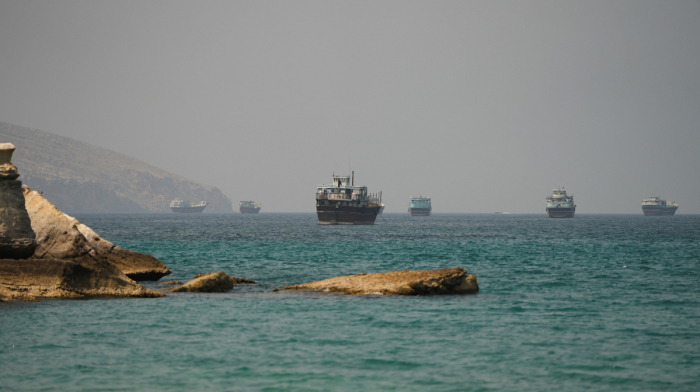
In return, Iran “will make arrangements using its best efforts for the safe passage of commercial vessels with no charge for 60 days only from the Persian Gulf to the Sea of Oman and vice versa”.
The U.S. also “undertakes with regional partners to develop a definitive, mutually agreed plan with at least $300 billion for the reconstruction and economic development” of Iran.
Washington further “undertakes to terminate all types of sanctions against Iran, including the UN Security Council resolutions, i.e. IAEA Board of Governors resolutions and all unilateral U.S. sanctions, primary and secondary”.
Nuclear commitments
According to the MoU, Iran “reaffirms that it shall not procure or develop nuclear weapons”, while both sides “agreed to resolve the disposition of stockpiled enriched material, pursuant to a mechanism that will be mutually agreed upon … under the supervision of the IAEA”.
In addition to issuing “waivers for the export of Iranian crude oil, petroleum products and derivatives, and all associated services”, Washington also “undertakes to make fully available for use the frozen or restricted funds and assets of Iran upon the implementation of this MoU”.
The closing clause states that “the final deal will be endorsed by a binding [UN Security Council] resolution” - a provision Tehran has long sought after being attacked twice by the U.S. during the course of negotiations.
Tehran stresses accountability
Foreign Ministry spokesman Esmaeil Baghaei said the Iran-U.S. MoU was signed by the presidents of both countries in order to increase the political cost of any future violation by Washington.
“Once the text is signed by the highest officials of the two countries, violating it will naturally have greater costs,” Baghaei added. “Based on our experience, we preferred this to happen.”
Speaking on IRIB on Thursday, he said Iran and the U.S. were negotiating through Pakistani mediators over the date and venue for the start of peace talks as soon as possible.
Read more:
















What is your opinion on this topic?
Leave the first comment