EU blacklists 218 targets and agrees to watered-down 21st sanctions package against Russia
The European Union (EU) has agreed on a 21st package of sanctions against Russia, after shelving some proposed measures to appease member states, most...
The president of the International Committee of the Red Cross (ICRC), Mirjana Spoljaric Egger, visited Tehran to address “urgent humanitarian concerns” following the U.S.–Israel war on Iran, according to an ICRC delegation statement.
Egger met Foreign Minister Abbas Araghchi, Deputy Foreign Minister for Legal Affairs Kazem Gharibabadi, and Iranian Red Crescent Society (IRCS) President Pir-Hossein Kolivand on Wednesday. Discussions focused on the aftermath of the 40-day Israel-U.S. conflict against Iran.
The ICRC president also visited residential districts and medical centres in Tehran that were destroyed by U.S.-Israeli airstrikes, the IRCS website reported.
According to official sources, she praised the Iranian Red Crescent for its brave staff and outstanding performance during the war, which broke out on 28 February.
In a meeting with Araghchi, “she expressed deep regret over the loss of lives of citizens and bombing of civilian targets, including schools, hospitals, and residential areas,” the state-owned IRNA news agency reported.
“Iran expects international and humanitarian organisations to fulfil their legal and moral obligations in accordance with the Geneva Conventions of 1949,” the Iranian foreign minister told the visiting ICRC chief.
Deputy Foreign Minister Gharibabadi also said “the U.S.-Israeli attacks on 130,000 civilian sites are examples of war crimes”, adding that the international community had failed to address appropriately these “crimes against humanity.”
The president of Iran’s Red Crescent Society urged the ICRC and other humanitarian organisations to support Tehran “in following up on violations of international humanitarian law” by the U.S. and Israeli forces.
Meanwhile, Iran’s top diplomat held phone calls with his Indian, Polish and Kenyan counterparts, as well as the Speaker of Lebanon’s parliament, to discuss bilateral relations and the latest regional developments.
Araghchi also called for global condemnation of the U.S. blockade of Iran’s southern ports.
Washington and Tel Aviv “must be held accountable for the security and economic consequences of their actions,” IRNA reported, quoting Foreign Ministry press releases.

Start your day informed with AnewZ Morning Brief. Here are the top news stories for the 22nd of July, covering the latest developments you need to know.
The United States has bombed Iran for an 11th consecutive night as the Pentagon says the war’s cost reach $37.5 billion. President Donald Trump threatens a heavy strike on the suspected Pickaxe Mountain nuclear site. Tehran warns that any attack could trigger a wider regional escalation.
Start your day informed with AnewZ Morning Brief. Here are the top news stories for the 23rd of July, covering the latest developments you need to know.
Azerbaijani President Ilham Aliyev and German President Frank-Walter Steinmeier have discussed regional developments, transport connectivity, energy cooperation and the Azerbaijan-Armenia peace process during talks in Berlin.
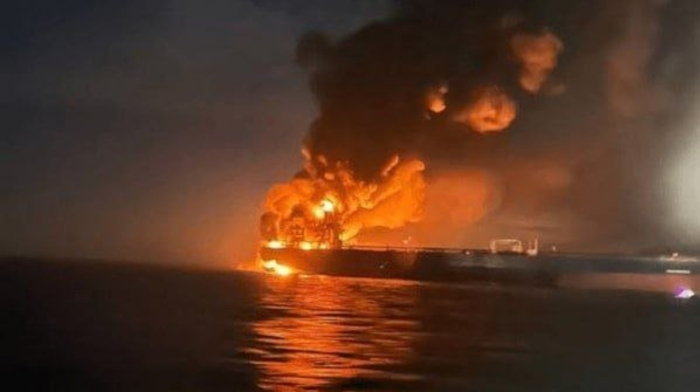
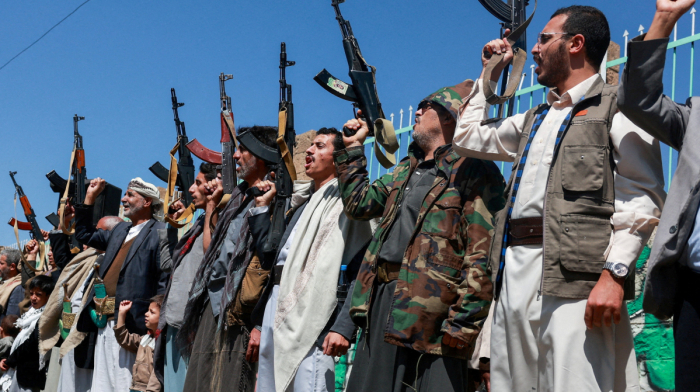
U.S. strikes on Iran entered a 12th consecutive night, with Iranian officials saying two people were killed in an attack on the Shalamcheh border crossing with Iraq. Meanwhile, Yemen's Houthis said they attacked two Saudi oil tankers in the Red Sea.
Kazakhstan is set to invest $22.2 million in the development of a new communications satellite, KazSat-3R, as the Central Asian nation prepares to replace its ageing KazSat-3 spacecraft before it reaches the end of its operational life in 2029.
Iran has urged European countries to take a more diplomatic approach to its conflict with the U.S. and Israel, saying Europe should uphold international law rather than support what Tehran describes as aggression.
Afghanistan recorded 483 suspected cases of Crimean-Congo haemorrhagic fever (CCHF) and 21 deaths in June 2026, a 174.4% increase from May, with the World Health Organization (WHO) linking the surge to livestock contact and animal slaughter during Eid al-Adha.
Türkiye's parliament has approved a two-year extension of the country's military deployment in Somalia, reinforcing deepening security ties between Ankara and Mogadishu as the Horn of Africa nation continues to battle terrorism, piracy and other security threats.
Georgia's fuel imports from Belarus surged by 3,469% in the first half of 2026 as Russia's export bans disrupted regional supplies, highlighting a rapid shift in the country's fuel market.
You can download the AnewZ application from Play Store and the App Store.
What is your opinion on this topic?
Leave the first comment