Israel launched its heaviest strikes on Lebanon since hostilities escalated last month, killing over 100 people, even as Hezbollah halted attacks under a disputed U.S.-Iran ceasefire.
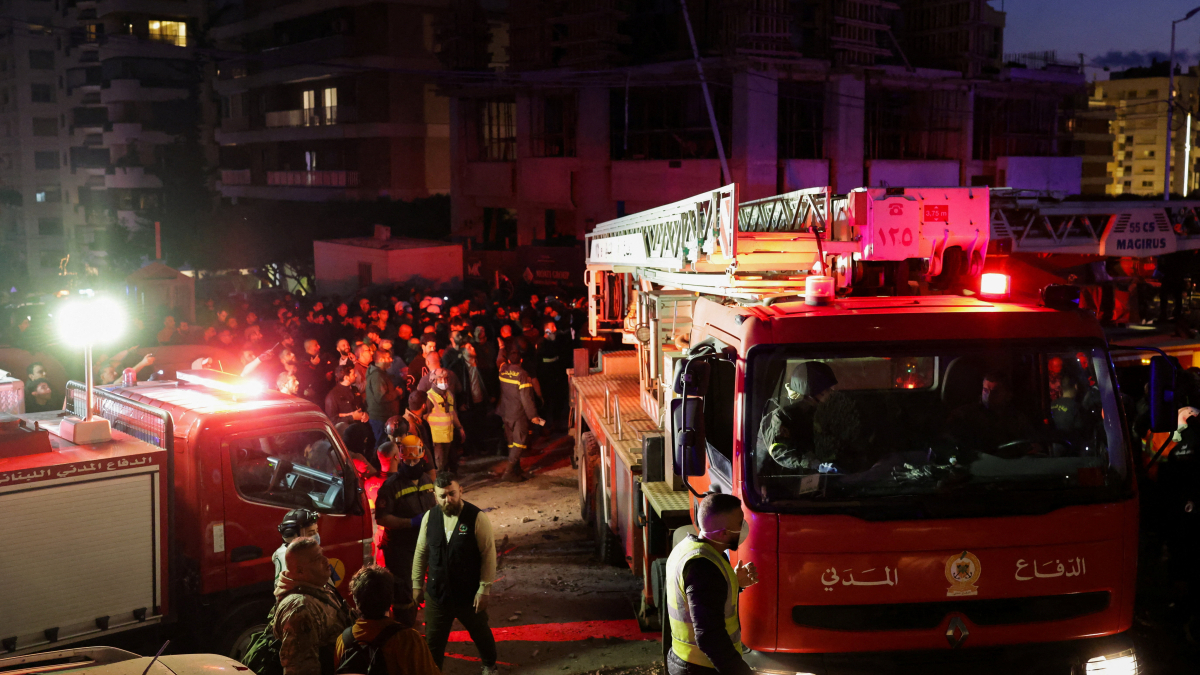
Consecutive explosions rocked Beirut, sending plumes of smoke across the the capital as Israel said it had carried out its largest coordinated assault of the conflict. More than 100 Hezbollah command centres and military sites were targeted in Beirut, the Bekaa Valley and southern Lebanon, according to the Israeli military.
Lebanon’s health ministry said at least 112 people were killed and 837 wounded nationwide, underscoring the heavy civilian toll of the bombardment.
In Beirut, Reuters journalists witnessed civilians transporting the injured on motorcycles due to a shortage of ambulances. Firefighters battled blazes in a car park where more than a dozen vehicles were left scorched and twisted by a strike.
Plea for medical assistance
Medical authorities issued urgent appeals for assistance. Elias Chlela, head of Lebanon’s syndicate of doctors, called for “all physicians from all specialities” to report to hospitals, while one of Beirut’s largest medical centres requested blood donations of all types.
Israeli Prime Minister Benjamin Netanyahu said the ceasefire in the six-week-old U.S.-Israeli war with Iran did not extend to Lebanon and the military confirmed operations against Hezbollah would continue. The stance appeared to contradict remarks by Pakistani Prime Minister Shehbaz Sharif, who had indicated the truce would include Lebanon.
Hezbollah condemned what it described as Israel’s “barbaric aggression”, saying the attacks reinforced its “natural and legal right to resist the occupation and respond to its aggression.” Iran’s Revolutionary Guards warned the U.S. and Israel of a “regret-inducing response” if strikes persisted.
Earlier in the day, Israeli shelling and air raids hit southern Lebanon, including a strike near a hospital that killed four people. In Sidon, eight people were killed and 22 wounded, according to Lebanon’s health ministry. Another strike later hit central Beirut without prior warning.
Hezbollah claims of 'massacres'
“Hezbollah was informed that it is part of the ceasefire - so we abided by it, but Israel as usual has violated it and committed massacres all across Lebanon,” senior Hezbollah lawmaker Ibrahim al-Moussawi told Reuters.
Lebanese officials stressed the importance of securing inclusion in any broader regional agreement. President Joseph Aoun said Beirut would continue diplomatic efforts to ensure Lebanon’s protection within a lasting peace framework.
The humanitarian situation continues to deteriorate. Since March, more than 1,500 people have been killed in Israel’s campaign, including over 130 children. Lebanese authorities say more than 1.2 million people have been displaced.
Residents described fear and exhaustion. “Tonight I'm not going to sleep because I'm going to be afraid that it's happening again. I'm living a nightmare,” said Beirut resident Naim Chebbo.
“Hopefully a ceasefire will be reached,” said displaced resident Ahmed Harm. “Lebanon can’t take it anymore. The country is collapsing economically, and everything is collapsing.”











What is your opinion on this topic?
Leave the first comment