live Trump: 'Hopefully we are towards the end of the war'
U.S. President Donald Trump said on Wednesday he hoped the war against Iran was nearing its end and that Tehran wanted to reach a deal, but Iran di...
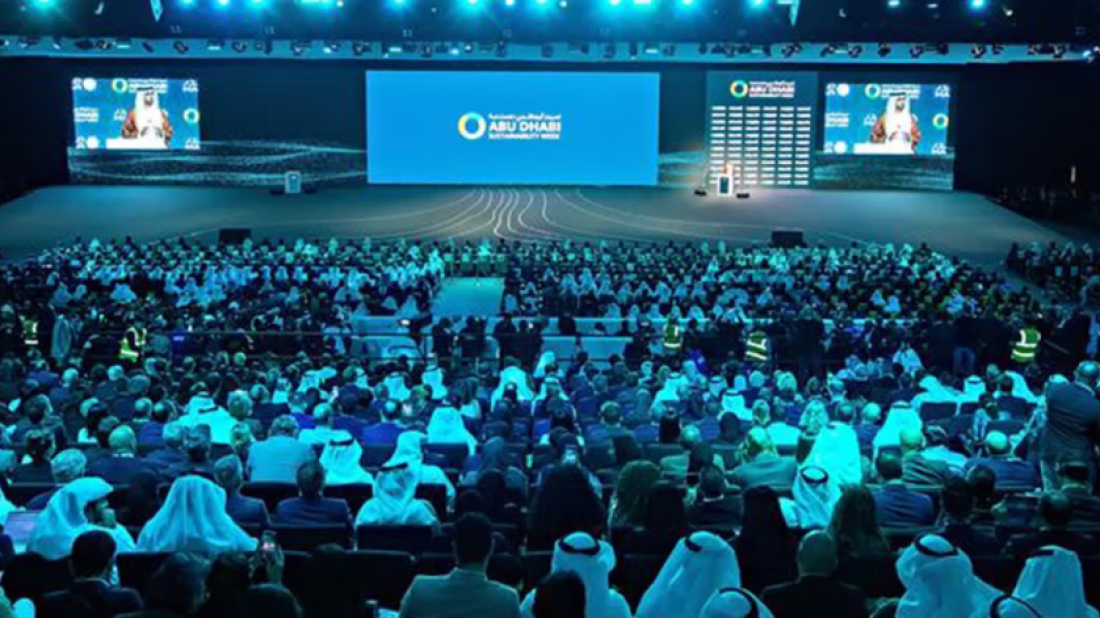
ADSW 2025, under Sheikh Mohamed bin Zayed Al Nahyan's patronage, unites 13 heads of state and 140+ ministers to address AI, energy, and sustainability. With the theme "The Nexus of Next," the summit drives global solutions for a $10 trillion economic opportunity.
With an aim to leverage a $10 trillion economic potential, Abu Dhabi Sustainability Week (ADSW) 2025 will bring together 13 heads of state and more than 140 ministers, under the patronage of Sheikh Mohamed bin Zayed Al Nahyan, President of the UAE.
With this year's theme being 'The Nexus of Next. Supercharging Sustainable Progress', the role of advanced technologies such as Artificial Intelligence will drive conversations at the ADSW Summit to be held from 14-15 January.
His Excellency Dr Sultan Al Jaber, UAE Minister of Industry and Advanced Technology and Chairman of Masdar, said: “ADSW is not just a platform, but a bold call to action to explore and learn how interconnected systems are driving a new era of supercharged progress, unlocking endless possibilities to help build a better tomorrow for all.”
The ADSW Summit including 34 sessions with more than 70 speakers will address key issues such as global energy transformation, the impact of artificial intelligence (AI), water and food security, and financing for sustainable development. Key discussions will focus on reshaping global investment patterns through the digital-climate nexus, innovations in energy storage, and modelling climate risk with big data.
Heads of state participating in the ADSW Summit include Ilham Aliyev, President of Azerbaijan; Kassym-Jomart Tokayev, President of Kazakhstan; William Ruto, President of Kenya; Bola Tinubu, President of Nigeria; Paul Kagame, President of Rwanda; Wavel Ramkalawan, President of Seychelles; Yoweri Museveni, President of Uganda; Shavkat Mirziyoyev, President of Uzbekistan; Edi Rama, Prime Minister of Albania; Petteri Orpo Prime Minister of Finland; Giorgia Meloni, Prime Minister of Italy, and Anwar Ibrahim, Prime Minister of Malaysia.

U.S. President Donald Trump has again said Iran is keen to reach a deal quickly, but a senior Iranian security official rejected the claim, saying Tehran will not negotiate until its conditions are met.
A Danish military helicopter came within “metres” of being struck by flares fired by a Russian warship, Denmark's Defence Minister Jeppe Bruus said on Tuesday. Russia accused Denmark of carrying out “dangerous manoeuvres” near its ship, and said it was investigating the incident.
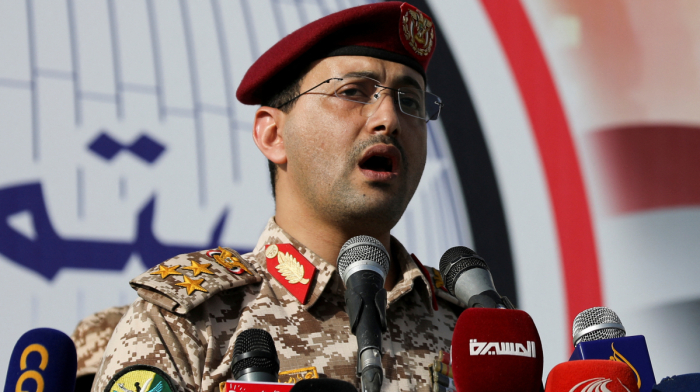
Saudi Arabia said its air defences destroyed a Houthi drone south of Mecca before it could enter prohibited airspace over the holy city, as attacks by the Iran-aligned group deepen regional tensions.
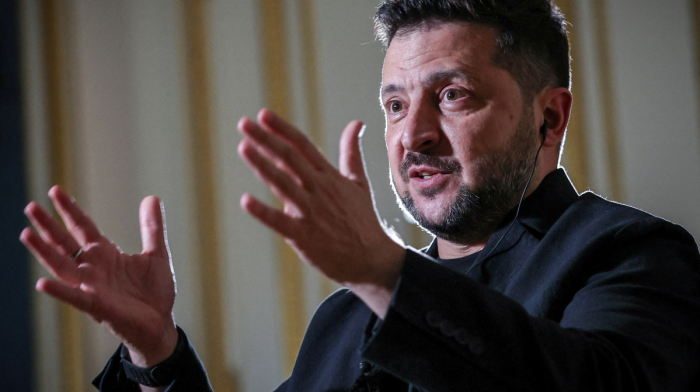
Ukrainian President Volodymyr Zelenskyy said that Ukraine was carrying out tests on a new weapon to intercept drones and had recorded a successful hit overnight.
European Commission President Ursula von der Leyen is outlining the EU's priorities in her annual State of the Union address, covering security, support for Ukraine, trade with China, migration, climate and artificial intelligence.
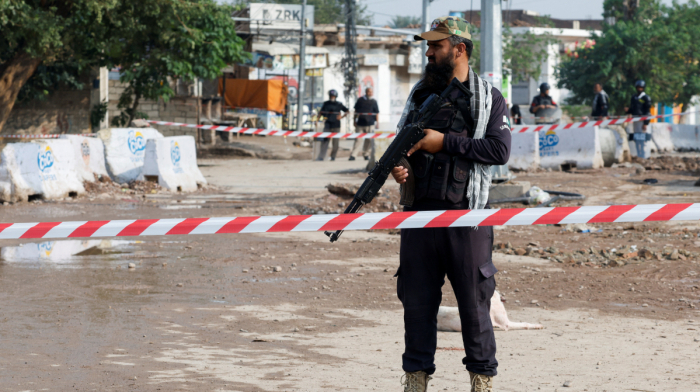
Pakistan and India have lodged protests against each other after their respective naval vessels collided in the North Arabian Sea.
Six months after the strikes that killed his father and left him seriously wounded, Iran’s Supreme Leader Mojtaba Khamenei has remained absent from public view, raising questions over his condition, his ability to govern and how power is being exercised behind the scenes.
Iranian Foreign Minister Abbas Araghchi has described his visit this week to Beijing as “successful", emphasising the significance of Tehran’s strategic partnership with Beijing.
Mohammad Saeed had just turned 18 when he fled to Iran with his parents and younger brother and sister, escaping the Taliban's return to power in Afghanistan in 2021.
Kazakhstan's oil production remains strong, with around 4.4 billion tonnes of recoverable oil reserves - the total volume of oil that can be technically and economically extracted -- while its geological reserves are estimated at 13.2 billion tonnes, according to the country’s Energy Ministry.
You can download the AnewZ application from Play Store and the App Store.
What is your opinion on this topic?
Leave the first comment