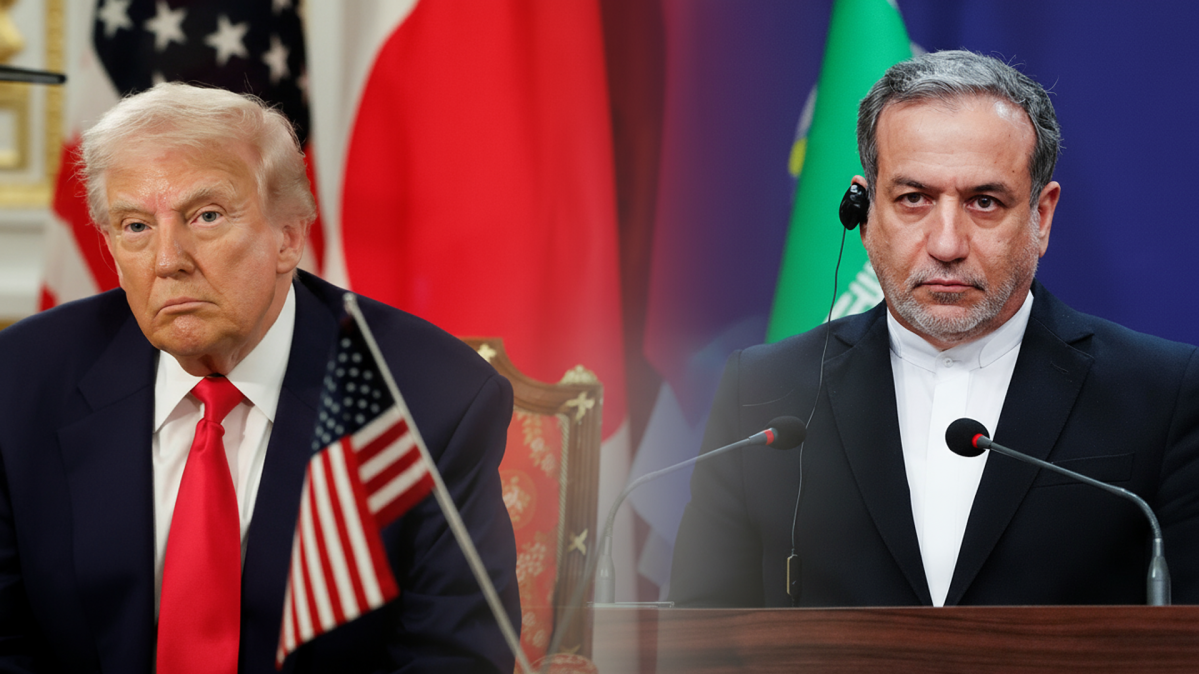
The Iranian Foreign Minister Abbas Araghchi has strongly condemned the order by U.S. President Donald Trump to resume nuclear weapons testing, while having bombed Iran’s civilian nuclear sites in June and threatening further strikes.
Araghchi in a post on X, accused the U.S. of being a nuclear-armed bully renamed its Department of Defence to the Department of War.
Araghchi added that in a blatant violation of international law, “the US has been demonising Iran’s peaceful nuclear program and threatening further strikes on Tehran’s safeguarded nuclear facilities” after the 12-day Israel-US war against Iran in June.
He bashed Trump’s statement and accused the U.S. of being the “World's Most Dangerous Proliferation Risk” urging the rest of the world “to unite to hold the US accountable for normalising the proliferation of atomic weapons”.
Araghchi’s statement came after President Trump instructed Pentagon this week to immediately restart testing of nuclear weapons after a 33-year moratorium because of advances in other countries’ testing programs, making direct reference to China and Russia.
“Russia is second, and China is a distant third, but will be even within 5 years. Because of Other countries testing programs, I have instructed the Department of War to start testing our nuclear weapons on an equal basis. That process will begin immediately,” read his post on Truth Social platform.
According to Iran’s foreign minister, the US announcement on the resumption of nuclear tests is a “regressive and irresponsible move and a serious threat to international peace and security”.
In a rare direct rebuke of President Trump, the United Nations warned of a nuclear escalation risk after Trump ordered new test of atomic weapons.
“We shouldn’t forget the disastrous legacy of over 2,000 nuclear-weapons tests that have been carried out over the last 80 years,” said a UN spokesman.
The risk of nuclear war is “already alarmingly high,” Deputy UN Spokesperson Farhan Haq said in response to a question at a regular briefing in New York.
He added that from the Secretary General's standpoint “nuclear testing can never be permitted under any circumstances.”
Meanwhile in Tehran, Foreign Ministry Spokesman Esmaeil Baghaei in an interview with Al Jazeera TV urged Director General of the International Atomic Energy Agency Rafael Grossi to avoid ‘unfounded’ remarks on Iran’s peaceful nuclear program.
In response to Grossi’s statement on renewed activities at Iran’s uranium enrichment sites, the spokesman reiterated that the “tragic” remarks of the IAEA chief led to the Israeli and U.S. invasion of Iran.
“The tragic statements of Grossi paved the way for the US and Zionist aggression against Iran,” he said.
The IAEA chief has rejected Tehran’s criticism that the report in June by the agency’s Board of Governors served as a pretext to bomb Iran’s nuclear sites under UN safeguards.
“Grossi is well aware of the peaceful nature of Iran's nuclear program,” Baghaei said.













What is your opinion on this topic?
Leave the first comment