Flood danger rises as Spain and Portugal face another storm
Rivers and reservoirs across Spain and Portugal were on the verge of overflowing on Wednesday as a new weather front pounded the Iberian peninsula, co...
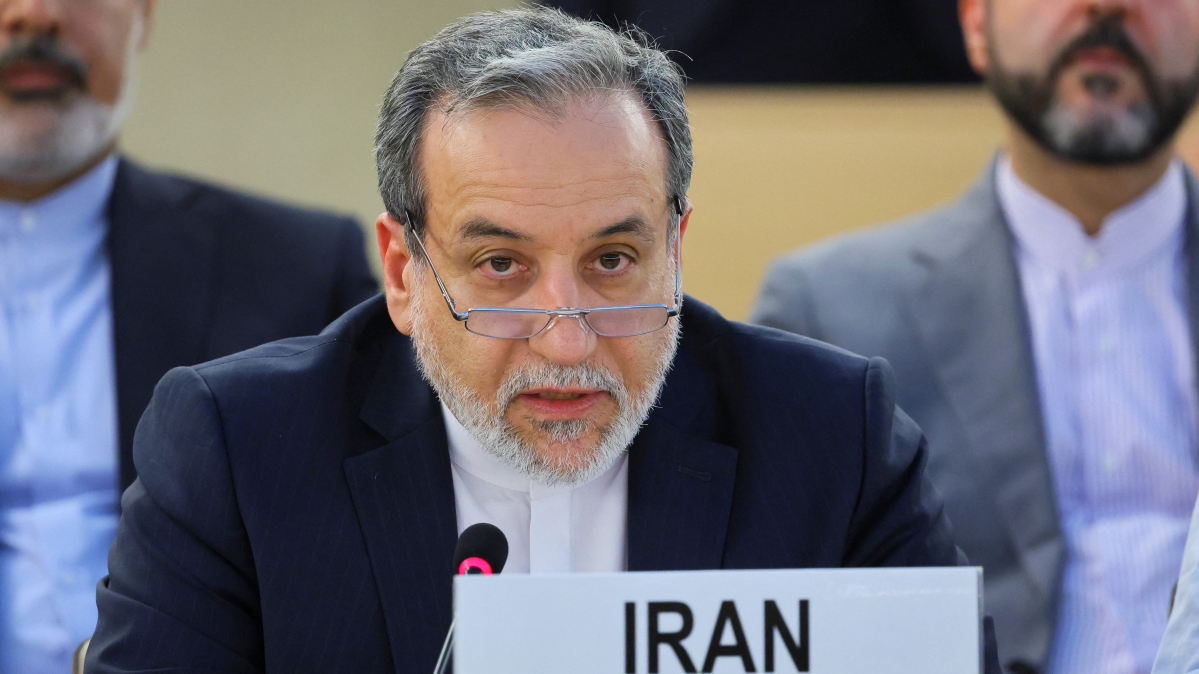
Iran’s Foreign Minister Abbas Araghchi said that Tehran is pursuing what he termed a policy of “provincial diplomacy” to promote Iran’s trade and cultural relations with its neighbouring countries.
Speaking at a conference in Tabriz University on Wednesday, Iran’s top diplomat stressed the role of trade and cultural exchanges between the border provinces and the neighbouring countries saying, “the Foreign Ministry is supporting provincial diplomacy to further bilateral ties with neighbours”.
“The two provinces of East Azarbaijan and West Azarbaijan, and the provinces of Gilan and Ardabil, can play again the historical role (of serving as gateways) in relations with neighbouring countries, including Russia, Georgia, Azerbaijan, Armenia, and Turkey,” IRNA quoted him saying.
Araghchi also said that the Foreign Ministry has the implementation of the policy of provincial diplomacy on its agenda “so that Iran’s diplomatic missions can establish effective ties with the provincial capitals to help develop trade, people-to-people exchanges, and cultural cooperation”.
Last week, the Iranian foreign minister opened the provincial diplomacy conference in the northeastern city of Mashhad in which he stated that economic ties with the neighbouring countries are the “breathing space” in the wake of sanctions.
“Iran's trade with each of its neighbouring countries is more than total trade with Europe,” said Araghchi as Tehran is under U.S. and European sanctions over its civilian nuclear program.
“Majority of bilateral issues can be reviewed and resolved at border areas,” he added, “Iran’s priority in foreign relations is its immediate neighbours and next the nearby countries in the region.”
According to Araghchi, smugglers and terrorists do not cross the borders through which goods are exchanged and passengers travel.
“As the saying goes, if local officials in border provinces reach agreements with neighbouring provinces, the borders will function as borders of peace,” he said.

Cuba’s Deputy Foreign Minister Carlos Fernández de Cossío has denied that Havana and Washington have entered formal negotiations, countering recent assertions by U.S. President Donald Trump, while saying the island is open to dialogue under certain conditions.
Talks with the U.S. should be pursued to secure national interests as long as "threats and unreasonable expectations" are avoided, President Masoud Pezeshkian posted on X on Tuesday (3 February).
Mexico said it will stop sending oil to Cuba as U.S. President Donald Trump ramped up pressure on the Caribbean nation.
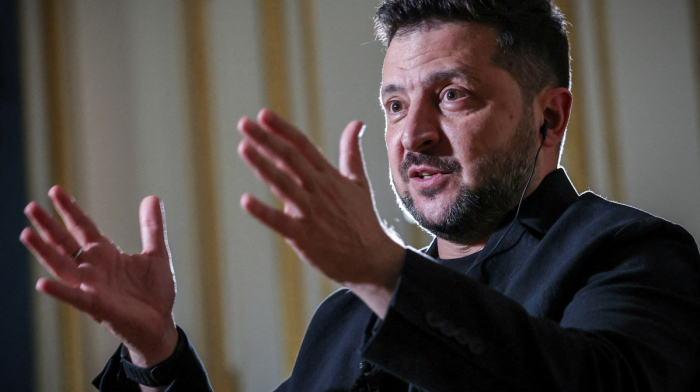
Ukrainian President Volodymyr Zelenskyy accused Russia on Tuesday (3 February) of exploiting a U.S.-backed energy ceasefire to stockpile weapons and launch large-scale drone and missile attacks on Ukraine ahead of peace talks.
Paris prosecutors have summoned X chairman Elon Musk and former chief executive Linda Yaccarino for questioning in April as part of their probe into the X social media network, they said on Tuesday.
U.S. President Donald Trump has said Iran’s Supreme Leader Ali Khamenei “should be very worried”, as efforts to establish a diplomatic path between Washington and Tehran appear to be breaking down.
Another shipment of grain was sent to Armenia via transit through Azerbaijani territory on 4 February. The latest delivery consisted of eight wagons carrying 560 tonnes of grain dispatched from Azerbaijan to Armenia.
Azerbaijan and Armenia used a high-profile international platform in Abu Dhabi on Tuesday to underline growing trade ties, expanding cooperation and what both leaders described as an irreversible turn towards peace after decades of conflict.
Afghan officials and international partners met in Kabul on Wednesday (4 February) for the fourth meeting of the Doha Process Working Group on Counter-Narcotics, with officials citing a reduction in poppy cultivation to “nearly zero” as efforts to curb drug production and trafficking were reviewed.
Uzbekistan is accelerating plans to expand uranium production and deepen international nuclear cooperation, positioning the sector as a pillar of long-term industrial growth and resource security.
You can download the AnewZ application from Play Store and the App Store.
What is your opinion on this topic?
Leave the first comment