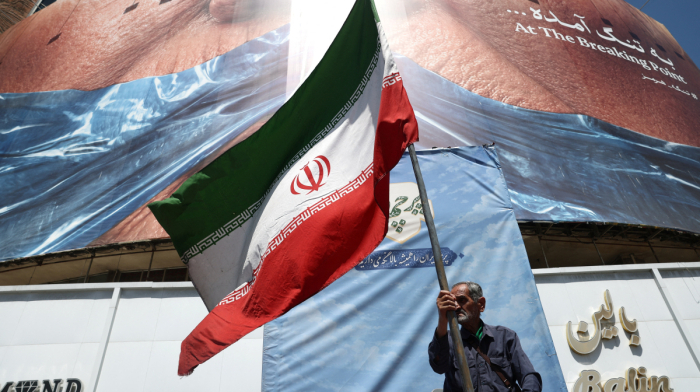
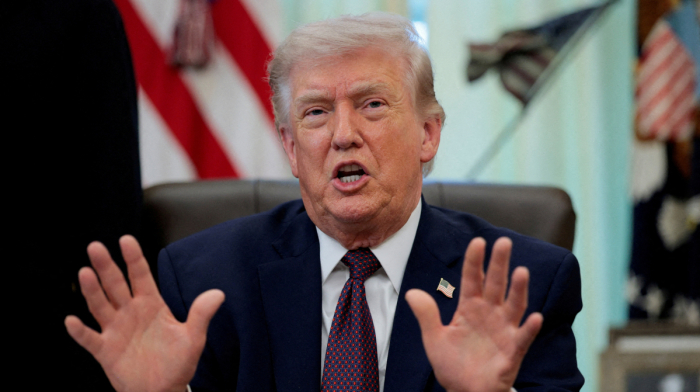
Iran's foreign ministry criticised U.S. President Donald Trump's call for dialogue, accusing Washington of "hostile and criminal behaviour" following his remarks to the Israeli parliament about being ready to strike a deal with Tehran.
It blamed Washington for “moral hypocrisy” as well as “active complicity in Israel’s genocide” against Palestinians.
In a statement released on Tuesday, it rejected President Trump’s accusations against Iran saying that the United States “as the world’s largest sponsor of terrorism and the backer of Israel lacks any moral standing” to level charges against others.
It stressed that Trump’s claims against Tehran’s peaceful nuclear program and his boasting of bombing Iran’s nuclear sites and assassination of its top generals cannot justify his crimes of violating Iran’s territory together with Israel and killing of the military commanders.
“Repeating false claims about Iran’s peaceful nuclear program can in no way justify the joint crimes of the American and Zionist regime in violating Iran’s sacred soil and assassinating its brave sons.
Boasting about and admitting to such crimes only increases the burden of responsibility on the U.S. and reveals the depth of hostility among American policymakers toward the great people of Iran,” it read.
“The Foreign Ministry views the U.S. president’s expressed desire for peace and dialogue as contradictory to America’s hostile and criminal behaviour toward the Iranian people.
How can one claim to seek peace and friendship while simultaneously attacking residential areas and peaceful nuclear facilities, killing over a thousand innocent people, including women and children, during political negotiations?,” asked the statement.
Tehran had declined Egypt’s invitation to participate in the Sharm El-Sheikh Summit on Gaza ceasefire between Hamas and Israel on Monday, saying it cannot sit at the same table with those who attacked Iran, referring to Israel and US airstrikes in June.
The summit in Red Sea resort of Sharm al-Sheikh was co-chaired by Egyptian President Abdel Fattah el-Sisi’s and U.S. President Trump to formalize a ceasefire and outline the reconstruction and governance measures after the two-year war in Gaza.
Earlier, Tehran also rejected Trump's proposal saying Iran can join the Abraham Accords which include agreements that established diplomatic normalization between Tel Aviv and some Arab capitals in the Middle East.
Iran does not recognize Israel and has not accepted the two-state solution of Palestine and Israel expressing its reservation on the issue at the international forums on the situation in the Palestinian lands.
Western countries accuse Iran of seeking nuclear weapons, but Tehran maintains its nuclear programme is only for civilian purposes.















What is your opinion on this topic?
Leave the first comment