The Oligarch’s Design: Tracing Power, Politics, Influence
The Oligarch’s Design is an investigative documentary that examines how financial power, political influence, and carefully constructed narratives c...
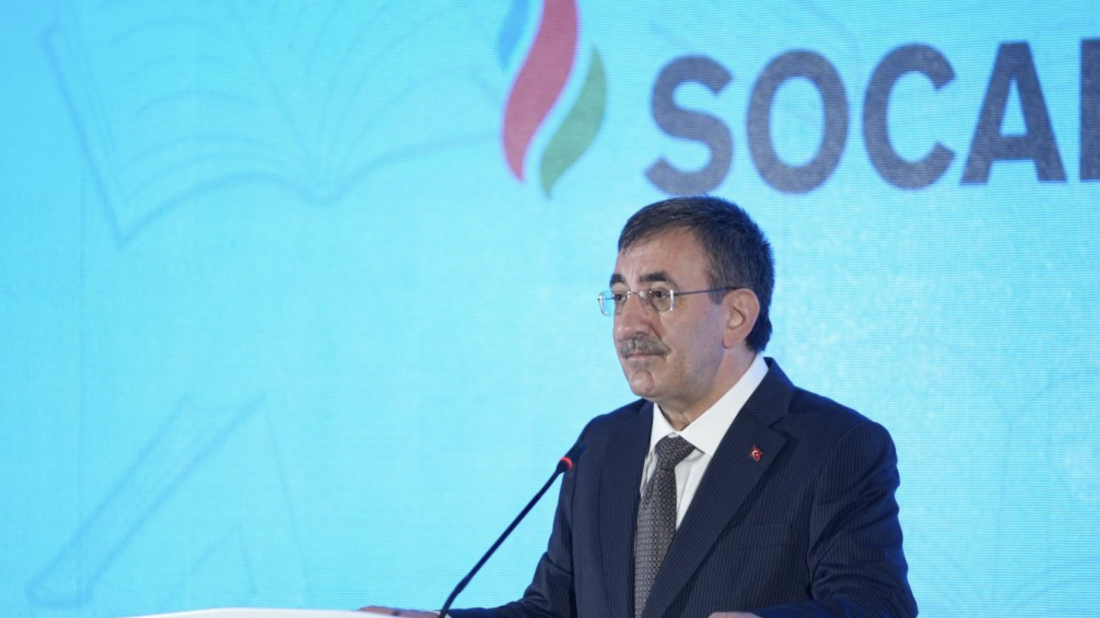
Azerbaijan’s SOCAR will invest $7 billion in Türkiye’s petrochemical sector, reinforcing its role as the country’s largest foreign investor.
Ankara says Azerbaijan’s state owned oil and gas company has announved significant investment in Turkiye.
Turkish Vice President Cevdet Yılmaz has hailed the move, saying it will support major growth and macroeconomic stability in the country.
He says that preliminary engineering is complete under SOCAR Türkiye’s “Master Plan,” and the government hopes the project will move forward “as soon as possible,” reiterating that every dollar of domestic output will help narrow the current account shortages.
SOCAR is Türkiye’s biggest foreign investor with over $18 billion in energy, petrochemicals, and logistics.
Its wide ranging portfolio includes Petkim, acquired in 2008, which operates 16 plants and produces 2 million tons of petrochemicals yearly, equaling about 11% of Türkiye’s output.
SOCAR states the new capacity plan, approved in December, will be implemented in phases over a 5 to 10 year period.
This industrial complex ties into Türkiye’s 2053 net-zero agenda with Yılmaz referencing R&D, including sustainable aviation fuel, as a way to decarbonize heavy industry, while lifting export competitiveness.
Yılmaz highlighted closer coordination with Baku on boosting Azerbaijani gas flows and opening the door for Turkmen gas to be transferred through Azerbaijan and Türkiye.
He also mentioned the new gas supply to Syria, routed through Türkiye, to restart power plants with 1,200 megawatts of capacity, converting gas to electricity as part of Syria’s reconstruction push.
The next steps include site selection and financing for the new complex, alongside deeper Türkiye-Azerbaijan cooperation on energy and regional connectivity.

Japan has lifted a tsunami advisory issued after an earthquake with a magnitude of 6.9 hit the country's northeastern region on Friday (12 December), the Japan Meteorological Agency (JMA) said. The JMA had earlier put the earthquake's preliminary magnitude at 6.7.
The United States issued new sanctions targeting Venezuela on Thursday, imposing curbs on three nephews of President Nicolas Maduro's wife, as well as six crude oil tankers and shipping companies linked to them, as Washington ramps up pressure on Caracas.
The resignation of Bulgaria's government on Thursday (11 December) puts an end to an increasingly unpopular coalition but is likely to usher in a period of prolonged political instability on the eve of the Black Sea nation's entry into the euro zone.
An extratropical cyclone has caused widespread disruption across Brazil’s São Paulo state, with powerful winds toppling trees and power lines, blocking streets and leaving large parts of the region without electricity.
Pakistan has indicated its openness to forming a regional bloc with Bangladesh without including India. The statement from Islamabad follows comments by Bangladesh’s top foreign affairs adviser, Md Touhid Hossain, that such an arrangement is strategically possible without India.
A flash of light followed by the sound of an explosion was observed over Gaza early on Saturday, according to witnesses, as severe winter storms worsened an already dire humanitarian crisis in the territory.
Hundreds of people gathered for a second consecutive week at Tel Aviv’s Hostages Square, on Friday (12 December), to support the family of Master Sgt. Ran Gvili, the last remaining Israeli hostage whose body is believed to be held in Gaza.
Turkish President Recep Tayyip Erdoğan and Russian President Vladimir Putin met for a closed-door discussion on the sidelines of the International Forum for Peace and Trust in Ashgabat, Turkmenistan, on Friday.
Kazakhstan has begun redirecting part of its crude exports, sending oil from Kashagan to China as the Caspian Pipeline Consortium (CPC) operates at reduced capacity.
Azerbaijan’s post-conflict reconstruction in Karabakh is attracting international attention. The book by British author Graeme Wilson documents this journey, combining first-hand reporting and digital storytelling to highlight both the region’s restoration and the human stories behind it.
You can download the AnewZ application from Play Store and the App Store.
What is your opinion on this topic?
Leave the first comment