U.S., Ukraine discuss ambitious March peace goal despite major obstacles
U.S. and Ukrainian negotiators have discussed an ambitious goal of reaching a peace agreement between Russia and Ukraine by March, though the timeline...
The World Bank has approved a $200 million concessional credit to help Uzbekistan modernize its irrigation and drainage infrastructure, aiming to cut water losses and improve energy efficiency across five regions.
Uzbekistan will receive $200 million in concessional credit from the World Bank to modernize its aging irrigation and drainage systems. The initiative, focused on Karakalpakstan, Bukhara, Kashkadarya, Namangan, and Surkhandarya regions, seeks to reduce water losses, enhance energy efficiency, and improve the quality of irrigation service delivery. The Government of Uzbekistan will contribute an additional $23.2 million in co-financing, with the Ministry of Water Resources responsible for project implementation.
The project involves large-scale upgrades to eight major primary canals linked to the Amu Darya and Syr Darya rivers. These include laying modern concrete and geomembrane linings over 259 kilometers of canals, reshaping and elevating canal beds to enable gravity-fed water supply and minimize the need for pumping, and building approximately 470 hydraulic structures to strengthen water control. In addition, the project will introduce flow-regulated outlets equipped with meters and a SCADA (Supervisory Control and Data Acquisition) system for automated monitoring and management.
As a result of the project, irrigation service delivery is expected to improve across 232,000 hectares of farmland, boosting agricultural productivity and resilience to climate change. Around 180,000 water users, including 80,000 women, are expected to directly benefit from more reliable irrigation services. Furthermore, the project is projected to reduce annual water losses by 540 million cubic meters and cut electricity consumption by over 165 million kilowatt-hours, significantly lowering operational costs and enhancing the sustainability of water use in Uzbekistan.

Iran’s Islamic Revolutionary Guard Corps (IRGC) has deployed one of its largest ballistic missiles at a newly unveiled underground base on Wednesday (3 February), just two days ahead of mediated nuclear talks with the United States in Muscat, Oman.
Winter weather has brought air travel in the German capital to a complete halt, stranding thousands of passengers as severe icing conditions make runways and aircraft unsafe for operation and force authorities to shut down one of Europe’s key transport hubs.
Storm Leonardo has swept across the Iberian Peninsula, causing widespread flooding, landslides and transport disruption in Portugal and Spain, leaving at least one person dead and forcing thousands to evacuate as authorities issued urgent warnings.
Israeli tank shelling and airstrikes killed 24 Palestinians including seven children in Gaza on Wednesday (4 February), health officials said, the latest violence to undermine the nearly four-month-old ceasefire.
An attacker opened fire at the gates of a Shi'ite Muslim mosque in Islamabad on Friday before detonating a suicide bomb that killed at least 31 people in the deadliest assault of its kind in the capital in more than ten years.
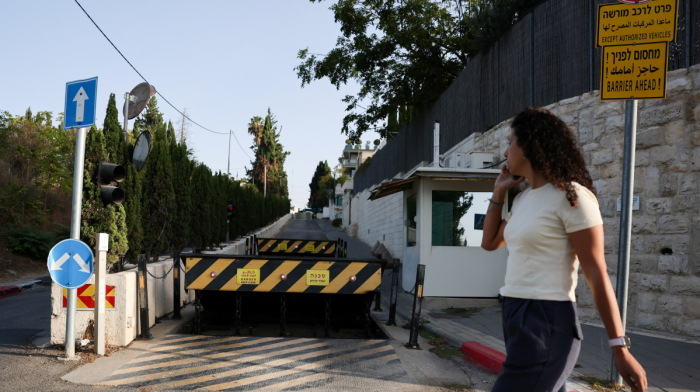
Azerbaijan has summoned Russia’s ambassador in Baku and issued a formal protest note over remarks by Russian lawmaker Konstantin Zatulin, escalating diplomatic tensions between the two countries.
France’s “absolute priority” remains the fight against the Islamic State (IS) group, Foreign Minister Jean-Noël Barrot said on Thursday (5 February) during talks with his Syrian counterpart in Damascus, as Paris reassesses its counter-terrorism strategy.
Georgia and the United States have held a rare high-level meeting in Washington, reopening cautious discussion about relations after years of political stagnation.
Using art as a quiet alarm, a new exhibition in Baku is drawing attention to endangered wildlife and the need for environmental responsibility.
The United States and Iran are set to hold nuclear talks in Oman on Friday after Tehran requested a change of venue and a strictly bilateral, nuclear-focused format, a move that is fuelling questions about Iran’s negotiating strategy.
You can download the AnewZ application from Play Store and the App Store.
What is your opinion on this topic?
Leave the first comment