live Iranian Supreme Leader pledges revenge for killing of father
Iran's Supreme Leader, Mojtaba Khamenei, has promised to avenge the killing of his father, while U.S. President Donald Trump said Tehran and Washin...
Prime Time opens with the resumption of direct military talks between the United States and China after months of limited contact, as both sides try to manage rivalry and reduce the risk of miscalculation in the Indo-Pacific. The programme examines why communication channels went quiet, what has changed, and how tensions around Taiwan and the South China Sea continue to shape the relationship.
Attention then turns to global business and economy updates, including major developments in the entertainment industry, mixed signals from the U.S. jobs market, shifting inflation trends in the UK, a paused U.S.-UK technology deal, a major data breach investigation in South Korea, and signs of cooling demand in China’s collectible toy market.
The programme also covers growing political pressure in Slovakia, where thousands have taken to the streets to protest proposed legal changes that critics say weaken democratic oversight, with demonstrations expanding to include the country’s Hungarian minority.
Later, the focus moves to Azerbaijan, as President Ilham Aliyev visits the United Arab Emirates for talks on energy, economic cooperation, and investment, alongside his attendance at the Games of the Future in Abu Dhabi. The discussion highlights deepening Azerbaijan-UAE ties, renewable energy ambitions, and broader regional connectivity.
Diplomatic tensions in the Middle East are also in focus, with renewed talks in Paris involving the United States, France, and Saudi Arabia amid rising Israel-Lebanon tensions and concerns over Hezbollah’s role in Lebanon.
The programme concludes with global updates, including tougher U.S. measures against Venezuela, Ukraine’s push for war compensation mechanisms in Europe, worsening humanitarian conditions in Afghanistan, energy cooperation in Central Asia, infrastructure projects linking China to the region, refugee flows from eastern Democratic Republic of Congo, and developments following the Bondi Beach attack in Australia.

It has been a punishing week for large parts of China, and forecasters warn the worst may not be over. After Typhoon Maysak left a trail of destruction and at least 23 people dead, Super Typhoon Bavi is now threatening the country's eastern coast.
At least 12 people have been killed in forest fires in Almeria in southern Spain, Andalucía’s emergency agency has said, as firefighters continue efforts to put out the blaze.
U.S. President Donald Trump said Washington has agreed to resume talks with Iran after Tehran requested further negotiations, but declared that last month's ceasefire between the two countries was "over".
The U.S. military said on Wednesday it launched fresh strikes on Iran to keep the Strait of Hormuz open to shipping, triggering Iranian attacks on Kuwait and Bahrain in the latest escalation to derail efforts to end the war.
Dozens of flights have been cancelled across East Asia as Super Typhoon Bavi approaches China. The typhoon, which has maximum sustained winds of 162 kph (100mph), is nearing a remote chain of Japanese islands, east of Taiwan on Friday.
AnewZ's Daybreak on 10 July covered mounting tensions in the Middle East, political developments in the UK, and major stories from the South Caucasus and Central Asia, alongside key international news.
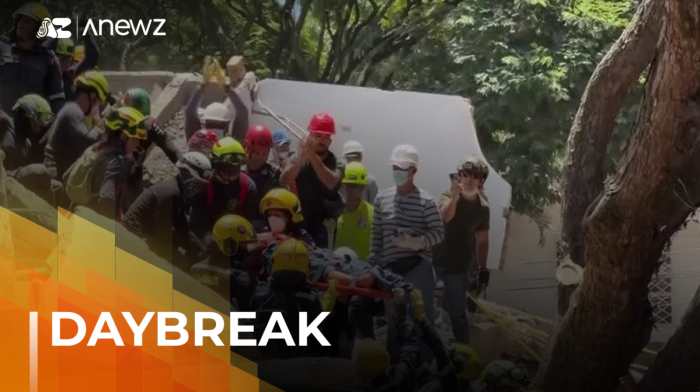
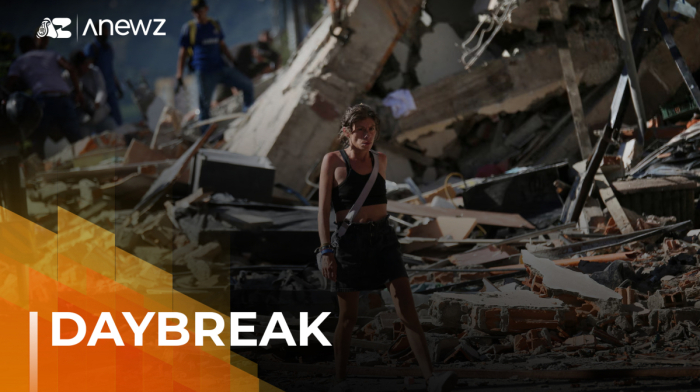
On 6 July, AnewZ's Daybreak focused on Ukraine, Iran and Venezuela's earthquake crisis.
The 30 June edition of AnewZ's Daybreak explored the growing strategic importance of the Middle Corridor, focusing on Georgia's deepening partnership with Kazakhstan and the wider effort to strengthen connectivity between Europe, the South Caucasus and Central Asia.
The 30 June edition of AnewZ's Prime Time explored the fragile ceasefire between Iran and the U.S., as conflicting statements about possible talks in Doha fuelled uncertainty over the future of negotiations.
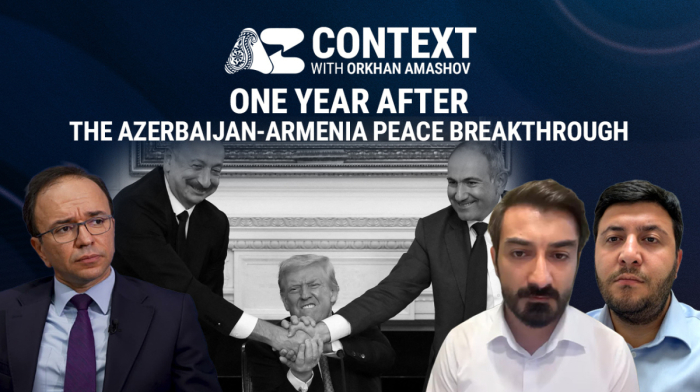
The 30 June edition of AnewZ's Context explored the regional implications of Israel's decision to recognise the events of 1915 in the Ottoman Empire as genocide, focusing on how the move has affected diplomatic dynamics between Türkiye, Israel, Azerbaijan and Armenia.
You can download the AnewZ application from Play Store and the App Store.
What is your opinion on this topic?
Leave the first comment