An agreement between Iran and the U.S. to reopen the Strait of Hormuz is expected "soon," a U.S. official has said. The deal would result in the resumption of commercial shipping through the sea passage and the lifting of an American naval blockade on Iranian ports.
⦿ 19:00 GMT | UPDATE
Israeli soldier wounded by Israeli fire in southern Lebanon
Anadolu
An Israeli soldier was moderately wounded in an operational incident in southern Lebanon on Saturday, according to the Israeli military. Israel Army Radio reported that the combat engineer from the 607th Engineering Battalion was struck by shrapnel from Israeli fire in the village of Tayri and was taken to hospital.
The incident occurred as Israeli forces continued shelling several areas of southern Lebanon. Lebanon’s National News Agency reported artillery strikes near Nabatieh al-Fawqa and Mansouri, where several homes were damaged. The shelling came two days after the latest round of U.S.-mediated Lebanese-Israeli negotiations, which Lebanese officials said had made positive progress.
The talks focus on implementing a June 26 framework agreement providing for a phased Israeli withdrawal, Lebanese army deployment and the disarmament of armed groups, including Hezbollah. Despite the negotiations, Israeli military operations in southern Lebanon have continued, while Israel still occupies parts of Lebanese territory.
⦿ 18:00 GMT | UPDATE
Iran says Hormuz will stay closed until US meets six demands
Source
Iran’s top security official says the Strait of Hormuz will remain closed until Washington changes what Tehran describes as hostile policies and meets six conditions. Supreme National Security Council Secretary Mohammad Bagher Zolghadr said the demands include ending threats against Iran’s supreme leader and permanently halting military action against Iran and its regional allies.
Tehran is also demanding the withdrawal of U.S. naval and air forces involved in what it calls a blockade of Iran. Other conditions include compensation for damage from recent conflicts, the lifting of U.S. sanctions and the release of frozen Iranian assets. Zolghadr said the Supreme National Security Council would not retreat from the demands in either negotiations or conflict.
His comments come as talks over navigation through the Strait of Hormuz remain deadlocked. Iran and the U.S. signed a memorandum of understanding on 18 June that envisaged a gradual restoration of commercial shipping, but implementation later stalled amid mutual accusations of violations.
⦿ 17:30 GMT | UPDATE
Iran president says U.S. stance unchanged despite diplomacy
Anadolu
Iranian President Masoud Pezeshkian says Tehran’s position toward the U.S. has not changed despite recent diplomatic engagement between the two sides. He defended the memorandum signed with Washington, saying Iran had made no concessions and remained fully committed to the agreement.
Pezeshkian argued that diplomacy had forced the U.S. to enter negotiations and reach an understanding with Tehran. He accused Washington of violating the memorandum by pursuing alternative shipping routes through the Strait of Hormuz instead of following procedures to be agreed jointly by Iran and Oman.
The Iranian president said disputes over alleged violations should be addressed through mechanisms established under the agreement. He also defended Iran’s negotiating team against criticism, describing its members as experienced and committed. Separately, Pezeshkian said his administration was working with senior state bodies to ease internet restrictions while considering security and infrastructure concerns.
⦿ 16:30 GMT | UPDATE
Iran says close to Oman deal on new Hormuz shipping route
Anadolu
Iran says it is “very close” to reaching an agreement with Oman on a new shipping route through the Strait of Hormuz. Foreign Minister Abbas Araghchi said talks are focused on the legal framework and management of the strategic waterway, with a temporary traffic route currently under consideration.
He said reopening the strait would also depend on other conditions, including compensation for what Tehran describes as U.S. violations of the June Islamabad Memorandum of Understanding. Araghchi said Iran no longer accepts the previous traffic separation scheme and that military and naval officials from Iran and Oman are discussing a replacement route.
Separately, Iran’s Islamic Revolutionary Guard Corps said reopening the strait depends on Washington accepting Tehran’s conditions and ending what it calls interference in regional negotiations. The dispute follows months of heightened regional tensions after U.S. and Israeli attacks on Iran in February and subsequent Iranian retaliatory strikes. Iran and the U.S. signed a memorandum of understanding on 18 June to end active hostilities, but subsequent talks stalled over maritime security and freedom of navigation through the Strait of Hormuz.
⦿ 15:50 GMT | UPDATE
Yemen forces say operation carried out against Houthis
Reuters
A spokesperson for Yemen’s armed forces says an operation was carried out against the Houthis and affiliated militias. No further details about the operation were immediately provided.
⦿ 14:40 GMT | UPDATE
Pezeshkian says now is best time for Iran agreement
Reuters
Iranian President Masoud Pezeshkian says the current moment offers the best opportunity to reach an agreement, according to Iranian media. He said Iran is “strong and united” and is viewed as having emerged victorious from the war.
⦿ 13:40 GMT | UPDATE
Iran's Revolutionary Guard says re-opening Strait of Hormuz does not depend on talks with Oman
Reuters
Iran's Revolutionary Guard said on Saturday that re-opening the Strait of Hormuz is not related to Iran-Oman negotiations but conditional on the U.S. accepting Iran's conditions.
A U.S. official on Friday reported progress between Iran and Oman that could soon reopen the Strait of Hormuz, potentially restoring oil exports that have been disrupted by the five-month-old U.S. war with Iran.
"The reopening of the Strait of Hormuz is subject to the specific mechanisms and conditions of the Islamic Republic of Iran and is not related to the negotiations between Iran and Oman," Iran's Tasnim news agency cited Guard's spokesperson Hossein Mohebbi as saying.
⦿ 13:00 GMT | UPDATE
UAE's ADNOC says vessel targeted by missile in Strait of Hormuz
Reuters
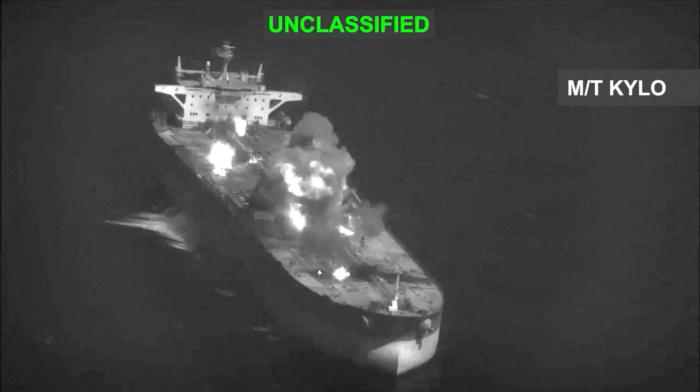
Abu Dhabi National Oil Company (ADNOC) said one of its vessels was targeted by a missile while transiting the Strait of Hormuz early on Saturday, adding that no injuries were reported and the situation had been brought under control, the state news agency WAM reported.
WAM gave no details on the vessel, its cargo, possible damage or responsibility for the incident.
⦿ 12:18 GMT | UPDATE
Iran and Oman 'close' to reaching Hormuz shipping deal, Iranian Foreign Minister says
Reuters
Iran and Oman are "very close" to reaching an accord on a new shipping route through the Strait of Hormuz, Iranian Foreign Minister Abbas Araghchi has said.
He added that there would be conditions, including compensation for what Tehran says were U.S. violations of the Islamabad memorandum of understanding.
Iran and Oman were discussing a temporary shipping route while technical and legal issues surrounding a permanent route were resolved, Araghchi added.
⦿ 11:02 GMT | UPDATE
Iraq discusses oil export arrangement with Iran
Reuters
Iraq is in talks with Iran about an arrangement to allow Iraqi oil exports, but the mechanism has not yet been activated, the country's Oil Minister Basim Mohammed said on Saturday.
He gave no details on the proposed route, expected volumes, or a timeline for the arrangement.
Iraq currently produces about 2.7 million barrels per day and exports roughly half of that amount, the minister said during a press conference, adding that export capacity this month is capped at 1.5 million to 1.75 million barrels per day.
⦿ 10:59 GMT | UPDATE
Ship targeted by missile in Hormuz, UAE media says
Reuters
Abu Dhabi National Oil Company (ADNOC) said one of its vessels was targeted by a missile while transiting the Strait of Hormuz early on Saturday, adding that no injuries were reported and the situation had been brought under control, state news agency WAM reported.
WAM gave no details on the vessel, its cargo, possible damage or responsibility for the incident.
⦿ 10:56 GMT | UPDATE
U.S. must accept Iran's conditions for reopening of Hormuz, IRGC spokesman says
Reuters
The reopening of the Strait of Hormuz is dependent on the U.S. fully accepting Iran's conditions, a spokesman for Iran's Revolutionary Guards (IRGC) has said.
"The reopening of the Strait of Hormuz is subject to the specific mechanisms and conditions of the Islamic Republic of Iran and is not related to the negotiations between Iran and Oman," Iran's Tasnim News Agency cited IRGC spokesperson Hossein Mohebbi as saying.
Earlier, a U.S. official said that an agreement between Tehran and Washington to resume commercial shipping through the sea passage was expected "soon."
⦿ 08:12 GMT | UPDATE
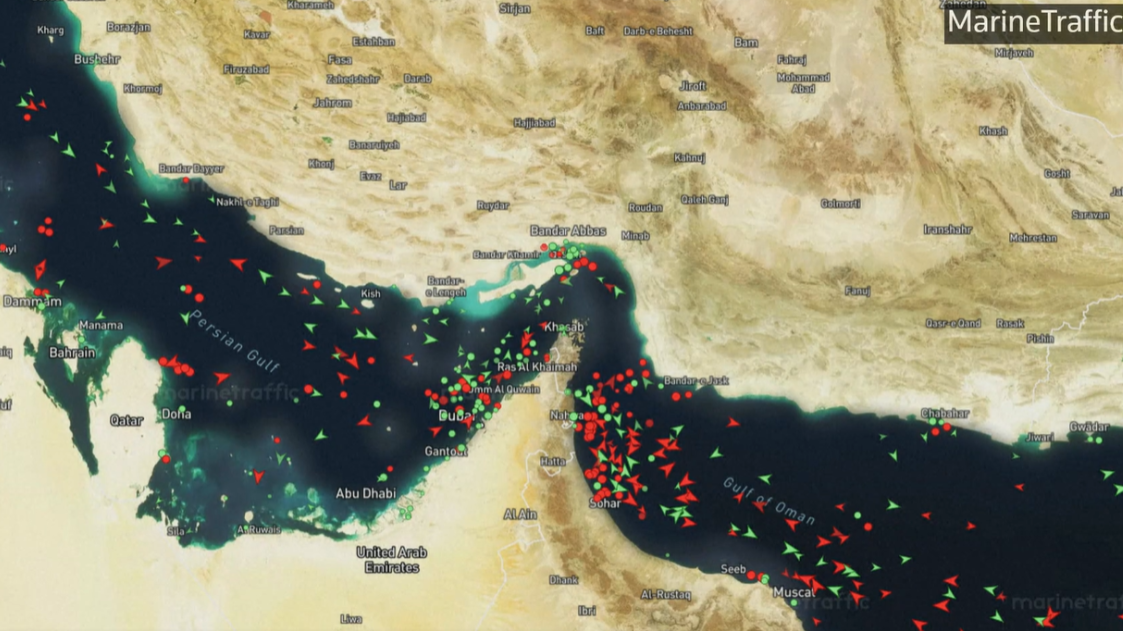
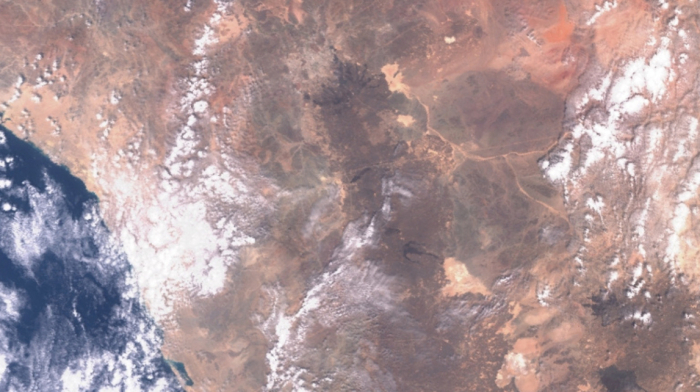
Strait of Hormuz on Saturday
Reuters/Marine Traffic
A map shows the state of ship traffic around the Strait of Hormuz on Saturday. An agreement between Iran and the U.S. to reopen the sea passage is expected "soon," a U.S. official has said.
⦿ 05:49 GMT | UPDATE
Two people killed in Houthi strike in Yemen
Reuters
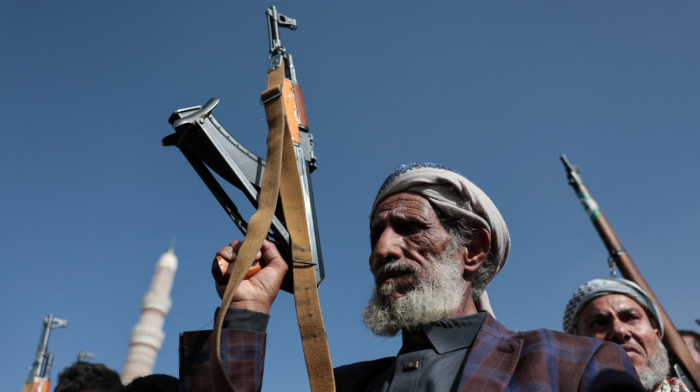
Two people were killed in a Houthi strike on displacement camps and residential neighbourhoods in Marib, north-central Yemen on Friday, Yemen's state news agency SABA reported, citing local authorities.
Yemen's army said early on Saturday that it had responded against Iran-backed Houthi forces on several fronts.
A senior Saudi official said on Thursday that Riyadh expected imminent coordinated attacks from Yemen's Houthis, as well as Iraqi militias under the supervision of Iran's Islamic Revolutionary Guard Corps.
⦿ 04:00 GMT | UPDATE
Iran-U.S. deal to reopen Hormuz expected 'soon'
Reuters
Tehran and Washington are close to reaching an agreement to restore commercial shipping through the Strait of Hormuz, a U.S. official has said. The deal would also result in the lifting of a U.S. naval blockade on Iranian ports.
"There is progress between Oman and Iran on the strait, and we expect a deal soon," a U.S. official said on Friday.
"Once the deal is announced to restore commercial shipping without impediments, the United States will lift the blockade of Iranian ports," the official added.
Before the start of the U.S.-Iran conflict on 28 February, about one out of every five barrels of oil consumed worldwide transited the strait.
Iran has used the hostilities to justify charging a toll on oil tankers and firing on ships that attempt to cross the sea passage without permission.
That disruption in oil shipments has caused energy prices to surge and fuelled inflation.














What is your opinion on this topic?
Leave the first comment