Iran has strongly condemned the recent U.S. attack on the construction site of the Karoon Nuclear Power Plant in Darkhovin, Khuzestan Province. Tehran officials are urging the UN to adopt a “zero-tolerance” policy regarding attacks on civilian nuclear centers under the world body’s verification.
The Ambassador and Permanent Representative of Iran to the United Nations, Amir Saeed Iravani, in a letter called on the United Nations chief and the Security Council to unequivocally and urgently condemn the attack.
“Iran calls on the UN Secretary General and the Security Council to fulfill their responsibilities under the UN Charter without delay and without discrimination or double standards and to unequivocally condemn the armed U.S. attack against the safeguarded Darkhovin Nuclear Power Plant,” stated in the his letter.
The U.S. attack on Iran’s under-construction power plant on Sunday came at the height of escalation of tit-for-tat exchanges of fire between Iranian and U.S. militaries.
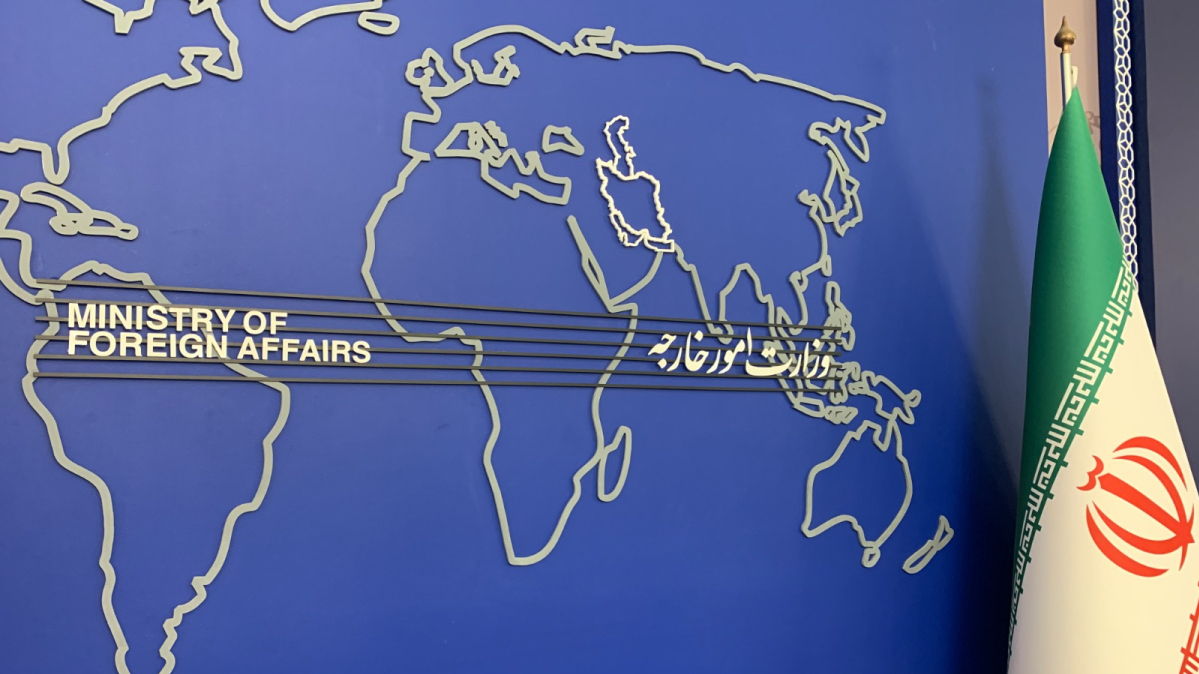
Along with the statement made at the UN, Foreign Ministry Spokesman Esmaeil Baghaei urged the head of the International Atomic Energy Agency (IAEA), Rafael Mariani Grossi, to also condemn attacks on nuclear sites under UN verification.
"This silence and indifference will certainly not strengthen our confidence in the Agency. Its failure to state its position does not change the essence of the matter. The essence of the matter is that attacking a country's peaceful nuclear facilities is absolutely against all international rules,” he said.
Atomic Energy Organization of Iran (AEOI) added its condemnation, stressing that the Karoon nuclear power site in Darkhoven is being developed purely for civilian purposes.
“This site is fully under the IAEA supervision and safeguards as well as the Comprehensive Safeguards Agreement between Iran and the Agency. Its activities are peaceful and legal,” it said in a statement.
It added that the attack “further weakens the Non-Proliferation Treaty (NPT), nuclear safeguards, and the IAEA Statute of the International Atomic Energy Agency."
Suspended ties with the IAEA
Ties between Tehran and the IAEA are currently suspended, following the Israeli-U.S. bombing of its nuclear facilities in June 2026, over what Iran says is the IAEA's failure to condemn the attacks.
As a result, Iran's has barred the UN watchdog’s inspectors from visiting the destroyed sites. Its Parliament has also banned IAEA chief Grossi from visiting Iran.
In addition to the statement at the UN, in Vienna, the Permanent Mission of Iran to the United Nations and other international organisations echoed the condemnation of the Karoon plant, calling on the international community to adopt a "zero tolerance" policy against attacks on peaceful, safeguarded nuclear facilities.
“These attacks reaffirm that all the narratives of the aggressors under headings such as concerns about proliferation are nothing more than lies, misinformation and deception to justify their illegitimate goals,” the statement said.
Cooperation with Moscow
Tehran is currently focused on cooperation with Moscow to build its nuclear reactors in addition to the Bushehr Power Plant.
The Bushehr plant is Iran’s first ever 1,000-megawatt nuclear power unit and has been connected to the national grid since 2012 based on an agreement with Rosatom. The Russian firm took over the project after the German Siemens company withdrew from its 1974 contract with Iran in the wake of the Islamic Revolution which ousted the pro-western Shah in 1979.
In addition to the Bushehr power plant, Iran has four other large- and small-scale power plants under construction with Russia, including in Darkhovin.
According to Behrouz Kamalvandi, deputy chairman and spokesperson for the Atomic Energy Organization of Iran (AEOI), Iran was working with Russia to build the 300-megawatt power plant in Darkhovin in the oil-rich Khuzestan Province, because Iran’s industrial capacity allows it to manufacture steam generators, boilers and turbines.
Last October, Iran and Russia signed contracts in Moscow on nuclear energy production, and launching the construction of nuclear power reactors.
They agreed on developing small modular reactors (SMRs) that can generate 300 Megawatts of nuclear power. They also approved the construction of four 1,250-Megawatt reactors at a value of above 25 billion dollars.
Read more:












What is your opinion on this topic?
Leave the first comment