Iran's Araghchi says Hormuz deal 'very close' but hinges on U.S. compenation
A deal on a new route for vessels through the Strait of Hormuz is "very close," Iranian Foreign Minister Abbas Araghchi has said, while warning that t...
Neuralink to trial brain implant in Canada, aiming to help paralysed patients control devices through thought.
Elon Musk's Neuralink announced it has received approval to conduct its first clinical trial in Canada for a brain implant designed to enable paralysed individuals to operate digital devices through thought.
The study, conducted at Toronto's University Health Network hospital, will evaluate the implant's safety and functionality for individuals with quadriplegia. Health Canada has not commented on the approval.
Neuralink has already implanted the device in two U.S. patients, with one using it successfully for tasks like playing video games and 3D design.
Founded in 2016, the company is developing brain chip interfaces to aid disabled individuals in movement, communication, and vision restoration. In September, it received FDA "breakthrough device" status for its vision-restoring implant.

An agreement between Iran and the U.S. to reopen the Strait of Hormuz is expected "soon," a U.S. official has said. The deal would result in the resumption of commercial shipping through the sea passage and the lifting of an American naval blockade on Iranian ports.
Start your day informed with AnewZ Morning Brief. Here are the top news stories for the 8th of August, covering the latest developments.
U.S. President Donald Trump said negotiations to reopen the Strait of Hormuz are progressing and suggested an agreement with Iran could be reached “soon”.
U.S. President Donald Trump may have to accept concessions he previously opposed if he wants to secure a deal with Iran to reopen the Strait of Hormuz, according to analysts, as negotiators move closer to a temporary agreement.
Typhoon Dolphin lashed Japan’s southern Okinawa prefecture on Saturday, injuring six people, disrupting flights and leaving more than 50,000 buildings without power, as China shut ports and suspended transport services ahead of the storm’s expected arrival on its east coast.
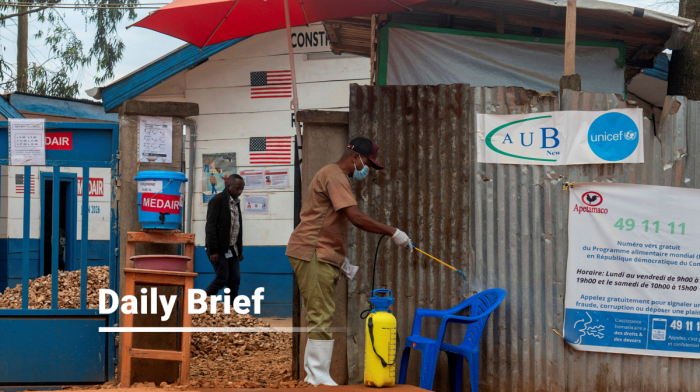
The Ebola outbreak in the Democratic Republic of Congo is expected to surpass 4,000 cases this week, with delayed detection, weak surveillance, funding shortages and conflict allowing the virus to spread faster than in any previous epidemic at the same stage.
Australia warned on Monday (3 August) of a wider spread of H5N1 bird flu after its first confirmed mass mortality event among seabirds killed about 50 greater crested terns off the coast of South Australia, south of Adelaide.
Cancer patients in Sudan are struggling to access life-saving treatment as soaring medication costs, power shortages and damaged hospital infrastructure deepen the country's healthcare crisis after more than three years of war.
The world risks a resurgence of the HIV epidemic after international funding fell by nearly a fifth last year, according to a new report from UNAIDS, which warned that decades of progress against the disease could be reversed without renewed global support.
A global shift towards healthier diets, more efficient farming and reduced food waste could cut greenhouse gas emissions from agriculture-related land-use change by 85% by 2050, according to a study published last week in the journal Nature.
You can download the AnewZ application from Play Store and the App Store.
What is your opinion on this topic?
Leave the first comment