As France endures a record-breaking heatwave that has been linked to at least 40 drowning deaths, forecasters are using three key terms - pic de chaleur, vague de chaleur and canicule. Here's what they mean.
The terminology has taken on added significance as France battles an exceptionally intense heatwave.
According to France's forecaster Météo-France, the country recorded its hottest day on Tuesday (23 June) since national records began in 1947.
The national temperature indicator, which measures average daytime and night-time temperatures across 30 weather stations, reached 29.8°C based on provisional data.
Temperatures soared above 40°C in many areas and broke records in several cities, including Bordeaux and Poitiers. More than half of mainland France's departments were placed under the highest red heatwave alert.
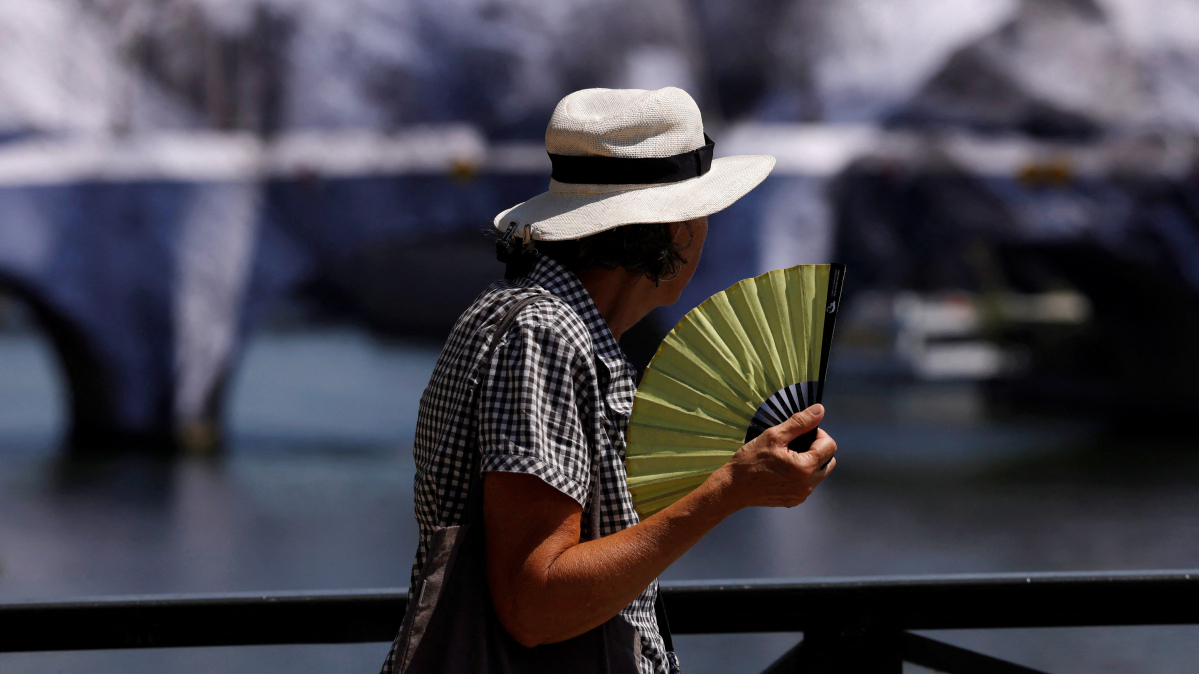
The heat has disrupted daily life across the country. Schools closed or adjusted timetables, while major landmarks changed opening hours.
The Louvre Museum in Paris announced early closures because the heat was making conditions difficult for visitors and staff. The Eiffel Tower also shortened its opening hours.
French forecasters expect the extreme temperatures to continue before gradually easing from the Atlantic coast later in the week.
Pic de chaleur: A short burst of extreme heat
A pic de chaleur, or heat spike, is the shortest of the three events.
It usually lasts between 24 and 48 hours and brings temperatures that are well above seasonal averages. A heat spike can affect a small area or a much larger part of the country.
Although temperatures can be very high, the event is relatively brief.
Think of it as a sudden surge of heat that arrives quickly and then passes.
Vague de chaleur: a heatwave lasting several days
A vague de chaleur, or heatwave, lasts longer.
It is defined as at least three consecutive days of unusually high temperatures across a fairly large area. Temperatures are generally at least 3°C above the monthly average.
In summer, France's national temperature indicator must reach at least 25.3°C for one day and remain at or above 23.4°C for at least three days.
Unlike a canicule, a heatwave does not necessarily trigger official heat alerts because local warning thresholds may not be reached.
Even so, prolonged heat can be exhausting, especially for older people, young children and those with health conditions.
Canicule: The most dangerous category
A canicule is the term that causes the greatest concern.
Unlike the other two expressions, it is tied to specific temperature and duration thresholds that vary from one department to another.
A canicule occurs when very high temperatures persist for at least three days and three nights. The key difference is that temperatures remain dangerously high overnight, giving the body little chance to recover.
This is why health officials closely monitor these events.
Heatwaves that continue through the night increase the risk of dehydration, heat exhaustion and death, particularly among elderly people, infants and vulnerable groups.
When local thresholds are reached, weather alerts are automatically issued.
More than just a question of temperature
Experts say heat becomes harder to endure when it is combined with high humidity, little wind and air pollution.
The body also struggles when temperatures rise suddenly, leaving people little time to adapt.
That is why a canicule is not simply a hotter version of a heatwave. It is a public health emergency that can put lives at risk.
As France faces another summer of extreme temperatures, understanding these terms helps explain why meteorologists and health officials are paying such close attention to the weather.
Read more:












What is your opinion on this topic?
Leave the first comment