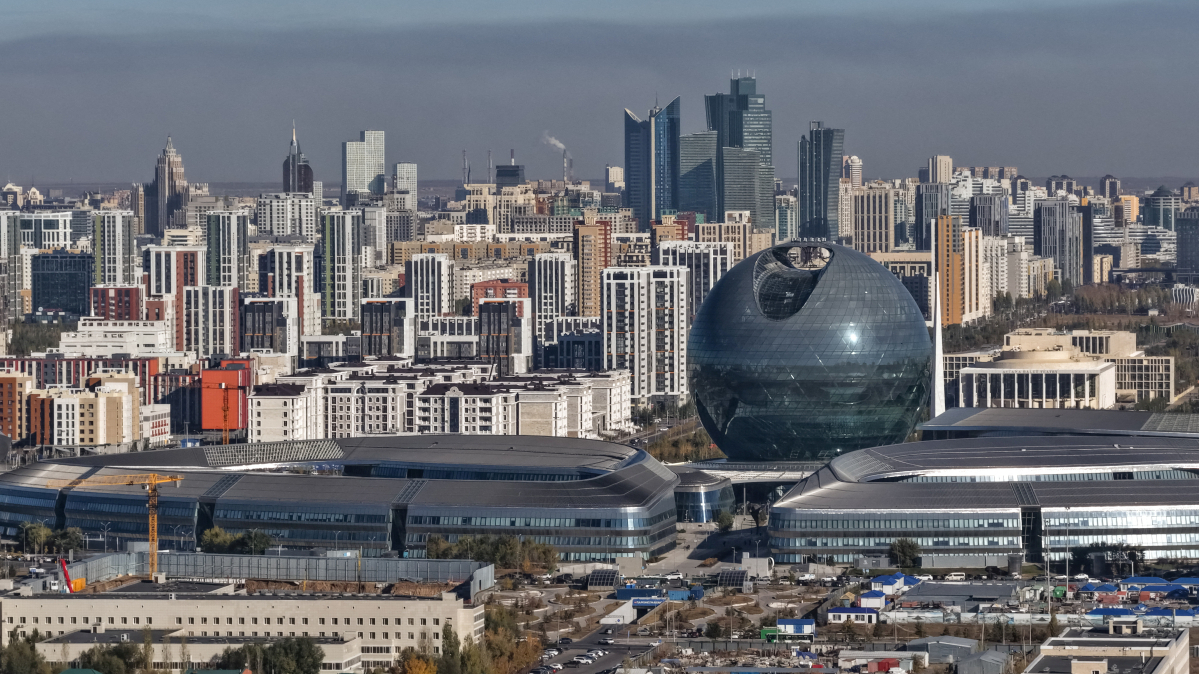
Astana, the capital of Kazakhstan, has become home to what organisers say is the world's largest competition dedicated to films made using artificial intelligence, after the Astana AI Film Festival (AAIFF 2026) attracted more than 8,000 entries from 125 countries.
The U.S. submitted the most films, with 1,395, while Kazakhstan came second with 829. India, China and South Korea rounded out the top five, and the UK, Indonesia, Japan, Brazil and France also featured among the 10 biggest contributors.
Nearly 40 per cent of entries - 3,138 films - fit within the festival's central theme: ‘The Future Worth Living In.’ The remaining 4,929 works were submitted to an open competition spanning 19 genres with no thematic restrictions.
Space in final for 25 films
AAIFF Co-Founder and Creative Director Aizatulla Khussain said the festival was conceived in Astana in December 2025, in anticipation of what they expected would be a rapid acceleration in generative video technology.
Submissions are now being whittled down through several rounds of screening, starting with checks for plagiarism and low-quality AI output, before specialists in cinema and visual storytelling assess the remainder.
Around 150 films will reach a senior selection panel tasked with choosing 25 finalists.
Khussain said many entries had produced a strong “wow effect” among judges, making the final selection difficult, and that two Kazakh-made films were already among the early frontrunners.
$1 million in prize money up for grabs
The festival is offering a $1 million prize pool: $750,000 for the main thematic programme and $250,000 spread across five open categories.
A separate $1 million investment fund, set up by entrepreneur Balaji Srinivasan, will back promising AI filmmaking teams.
Srinivasan said falling production costs could open new opportunities for smaller language communities to tell their own stories on screen.
In total, the festival received more than 100,000 minutes of film from 4,756 filmmakers, who used upwards of 80 generative AI models to produce their work.
The contest comes amid a broader push into AI-assisted animation in Kazakhstan: the Qazaqanimation-produced project KÖLEÑKE recently won the Special Jury Award at the Portland Festival of Cinema, Animation & Technology in the United States.
Read more:













What is your opinion on this topic?
Leave the first comment