President Aliyev highlights security, unity and peace in New Year address
President Ilham Aliyev said Azerbaijan ended 2025 as a year of peace, security and stability, stressing that unity between the people and the governme...
Global arms sales surged 4.2% in 2023, reaching $632 billion, driven by conflicts, rearmament, and geopolitical tensions, a SIPRI report reveals.
Global arms sales by the top 100 manufacturers rose by 4.2% year-on-year to $632 billion in 2023, according to a SIPRI report.
Companies in Russia and the Middle East recorded the sharpest revenue increases, driven by heightened demand linked to conflicts in Gaza and Ukraine, East Asian tensions, and global rearmament efforts.
Nearly three-quarters of the top arms producers reported growth, with revenues recovering after a dip in 2022. However, firms like Lockheed Martin and RTX faced declines due to supply chain issues affecting aeronautics and missile production.
US-based companies, accounting for 50% of global arms revenues, reached $317 billion, while European producers saw marginal growth, focusing on older contracts. In contrast, Germany, Sweden, and Eastern European manufacturers experienced significant gains due to the Ukraine war’s demand for munitions and defence systems.
Russian companies saw a 40% increase in revenue to $25.5 billion, with Rostec leading the surge through increased production and modernisation of military equipment. Asian arms makers reported a 5.7% revenue hike to $136 billion, driven by South Korea and Japan’s military build-ups.
Middle Eastern firms grew by 18% to $19.6 billion, with Israeli arms producers setting revenue records amid the Gaza conflict. Türkiye's Baykar, known for UAV exports, saw its revenues rise by 25% to $1.9 billion, with exports constituting 90% of sales.
SIPRI anticipates continued growth in 2024 as demand intensifies across regions.

The Russian radio station known as 'Doomsday Radio' (or UVB-76) unexpectedly began playing ‘Swan Lake’, music from a ballet composition. The last time this was done was during the deaths of Soviet-era leaders and the 1991 coup.
Protests in Iran over soaring prices and a plunging rial have spread to universities in Tehran, as students join shopkeepers and bazaar merchants in demanding government action. With inflation above 42% and the rial at record lows, unrest continues to grow across the country.
As Russia’s war in Ukraine enters its fourth year, rising casualties, economic struggles, and mounting unrest expose cracks in society. Despite Kremlin propaganda, frustration is growing as more Russians question the government’s narrative, according to The Washington Post.
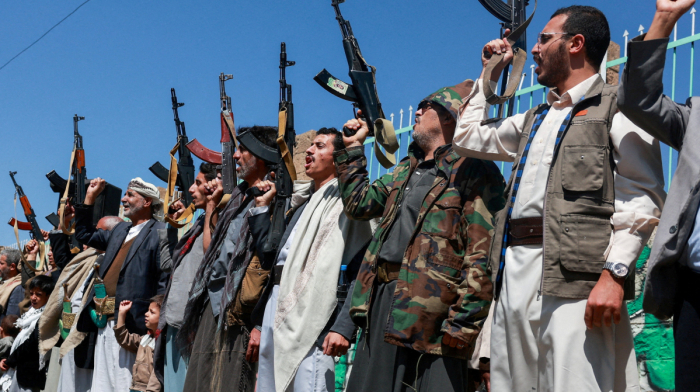
The head of Yemen’s Presidential Council, Rashad al-Alimi, has ordered all forces linked to the United Arab Emirates to leave Yemen within 24 hours.
European leaders held talks on Ukraine after Russia said it would revise its negotiating position, citing an alleged Ukrainian drone attack that Kyiv has firmly denied.
India’s largest oil refiner, Indian Oil Corporation (IOC), has taken a significant step towards diversifying its crude oil supply by purchasing Colombian crude, from state oil company Ecopetrol, for the first time.
China has given the nod for car makers to sell Level 3 self-driving vehicles from as early as next year after it approved two electric sedans from Changan Auto and BAIC Motors.
Warner Bros Discovery’s board rejected Paramount Skydance’s $108.4 billion hostile bid on Wednesday (17 December), citing insufficient financing guarantees.
Ford Motor Company said on Monday it will take a $19.5 billion writedown and scrap several electric vehicle (EV) models, marking a major retreat from its battery-powered ambitions amid declining EV demand and changes under the Trump administration.
Iran has rolled out changes to how fuel is priced at the pump. The move is aimed at managing demand without triggering public anger.
You can download the AnewZ application from Play Store and the App Store.
What is your opinion on this topic?
Leave the first comment