At least 18 people dead after migrant boat sinks off Türkiye's Aegean coast
At least 18 people were killed when an inflatable boat carrying migrants sank off Türkiye's&nbs...
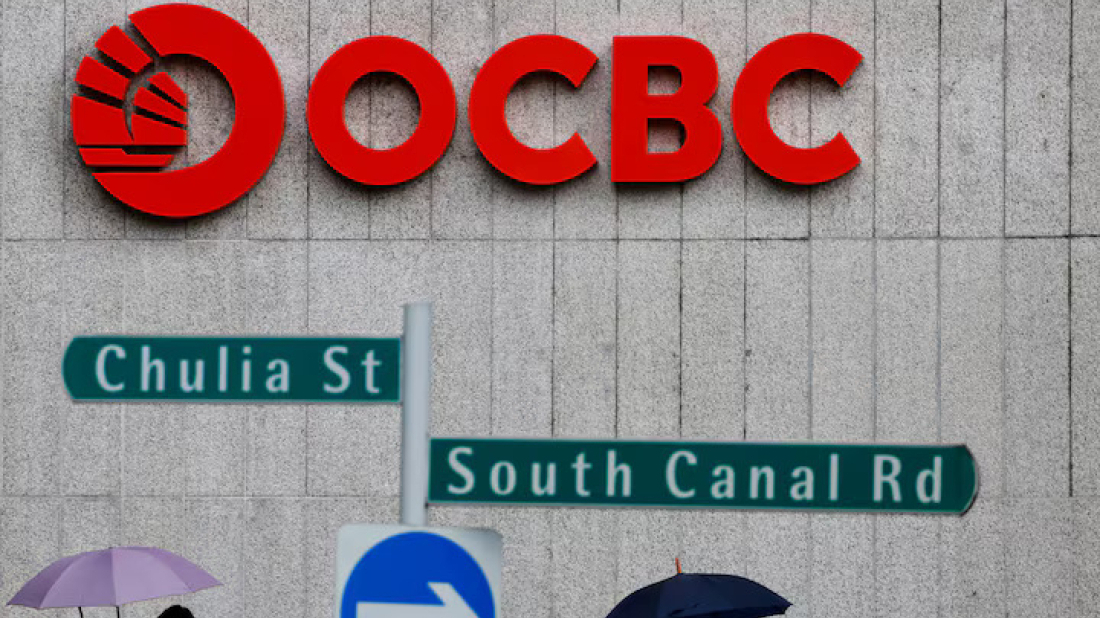
OCBC and UOB, Singapore’s second and third largest banks, project stronger loan growth in 2025 after exceeding third-quarter profit expectations. This outlook follows recent U.S. rate cuts, though geopolitical uncertainties could still impact markets, said OCBC’s CEO Helen Wong.
Singapore's second and third largest banks, among Southeast Asia's biggest by assets, forecast an improving loan growth environment in 2025, after posting strong sets of third-quarter net profits that beat market expectations.
The forecasts followed the U.S. central bank's interest rate cut by a quarter percentage point on Thursday, the second straight reduction after a bigger half point cut in September.
"I do see that next year loan growth has a bigger potential compared to this year," said Oversea-Chinese Banking Corp (OCBC.SI), or OCBC, Group CEO Helen Wong at an earnings briefing.
Smaller peer United Overseas Bank (UOBH.SI), or UOB, projected high single-digit loan growth for 2025, versus low single-digit it is seeing for 2024, as it reported a faster-than-expected rise in third-quarter net profit.
Nevertheless, U.S. President-elect Donald Trump's proposed policies that include more import tariffs and stricter immigration restrictions could spur inflation and translate into fewer interest rate cuts by the Federal Reserve.
OCBC's Wong said uncertain geopolitical conditions could potentially create market volatilities.
OCBC, Singapore's second-biggest bank after DBS Group (DBSM.SI), said July-September net profit increased 9% to S$1.97 billion ($1.49 billion) from S$1.81 billion a year earlier. That beat the mean estimate of nearly S$1.91 billion from analysts surveyed by LSEG.
OCBC's improved performance was also driven by increased wealth management activity that lifted fee and trading income, in addition to higher insurance income and lower allowances.
Net interest margin was, however, lower at 2.18% during the quarter from 2.27% a year earlier, a trend similar with DBS and UOB too.
OCBC's return on equity rose slightly to 14.1% in the third quarter from 14.0% in the same period of 2023.
($1 = 1.3201 Singapore dollars)

U.S. President Donald Trump has said that the U.S is in talks with the new Iranian regime. He said this in a post on his Truth Social account but warned that the U.S. will "Obliterate" Iran's electric and oil facilities if no deal is reached, especially regarding the Strait of Hormuz closure.
The Iran-U.S.-Israel conflict is intensifying, with fresh strikes near Tehran, European calls for restraint, and Iran threatening to target U.S. firms in the region, raising fears of a broader escalation across the Middle East.
The war in Iran has rapidly upended regional security, triggering spillover across the Middle East and raising fears of wider economic disruption that could threaten globalisation.
Japan’s growing interest in Caspian crude reflects a pragmatic response to uncertainty in global energy markets and its continued reliance on the Middle East for more than 90% of its oil imports.
Russia has expelled a British diplomat, accusing him of economic espionage in a move that further strains already tense relations between Moscow and London. The United Kingdom described the action as intimidation and rejected the allegations outright, Reuters reports.
The U.S. national average retail price of petrol rose above $4 a gallon for the first time in over three years on Monday (30 March), according to GasBuddy data, as the U.S.–Israeli war with Iran continued to roil global energy markets.
Japan and Indonesia will deepen coordination on energy security, Tokyo said, as the U.S.-Israeli war on Iran disrupts vital oil and gas flows to Asia.
China's three largest state-owned airlines have issued warnings regarding their financial outlook for the current year, acknowledging that the eruption of war involving Iran has driven jet fuel prices to unsustainable highs.
Stock markets across Asia fell on Monday as escalating conflict involving Iran drove oil prices sharply higher, fuelling fears of inflation and a potential global recession, with investors reacting to disruption risks in the Strait of Hormuz and prolonged hostilities.
World Trade Organization (WTO) talks broke up with no agreement on Monday on a plan for reform or even on extending a moratorium on e-commerce, piling more pressure on the trade body that finds itself increasingly sidelined by economic nationalism.
You can download the AnewZ application from Play Store and the App Store.
What is your opinion on this topic?
Leave the first comment