Brazilian President Luiz Inácio Lula da Silva has secured another four years in office, but slowing growth, expensive credit and mounting public debt threaten to test the economic gains of his previous term.
Lula defeated right-wing Senator Flávio Bolsonaro in Sunday's (25 October) presidential runoff, securing another term as Brazil faces slowing economic growth, rising public debt and mounting financial pressure on households, despite improvements in employment and wages.
Lula first governed Brazil from 2003 to 2006, followed by a second term from 2007 to 2010. He returned in January 2023 for his third term, which ends in December 2026. His fourth is scheduled to run from January 2027 until December 2030.
The figures reveal the central challenge: preserving improvements in living standards while restoring confidence in Brazil's finances.
2.3% growth: Brazil's economy loses momentum
Brazil's economy expanded by 3.4 per cent in 2024 before slowing to 2.3 per cent in 2025, according to the Brazilian Institute of Geography and Statistics (IBGE).
The slowdown matters because weaker growth limits government revenue and makes it harder for businesses to expand.
The International Monetary Fund's (IMF) October economic outlook projects growth of 2.2 per cent in 2026 and 1.9 per cent in 2027, suggesting Lula's next term will begin with less momentum.
Credit ratings agency Fitch is more pessimistic, forecasting growth of just 1.4 per cent next year as borrowing costs continue to restrain consumption and investment.
1.9% growth in 2027: Brazil trails Latin America's outlook
Despite its position as Latin America's largest economy, Brazil is expected to underperform the wider region in 2027.
The IMF forecasts growth of 2.5 per cent across Latin America and the Caribbean, with Argentina projected to expand by 3.5 per cent, Chile by 2.6 per cent and Colombia by 2.3 per cent.
Mexico is expected to grow at the same pace as Brazil, highlighting how the region's two largest economies face a more subdued outlook than several of their neighbours.
5.6% unemployment: The brighter side of Lula's record
Brazil's labour market tells a different story.
IBGE data show unemployment averaged 5.6 per cent in 2025, its lowest annual level since the current statistical series began in 2012.
Employment reached a record 103 million people in 2025, representing 59.1 per cent of the population aged 14 and over, giving more households a regular source of income.
These improvements strengthened Lula's economic record, even as concerns about living costs persisted. A stronger jobs market, however, has not protected borrowers from increasingly expensive repayments.
13.75% interest rates: Why borrowing remains expensive?
Brazil's central bank set its benchmark interest rate, known as the Selic, at 13.75 per cent in September, according to its official monetary policy announcement.
The rate influences the cost of mortgages, business loans and consumer credit.
Higher rates help contain inflation by discouraging spending. But they also leave indebted families with less disposable income and make companies more cautious about investing.
Fitch says the private-sector debt-service burden has reached a two-decade high, illustrating how expensive credit can weaken an economy even when employment remains strong.
82% of GDP: The government's growing debt burden
Brazil's gross public debt has exceeded 82 per cent of economic output in 2026, up by more than 10 percentage points since Lula returned to office in January 2023, according to Reuters. That means the government owes the equivalent of more than four-fifths of everything the economy produces in a year.
Brazil's 2026 federal budget classifies around 92 per cent of primary spending as mandatory, leaving less than 8 per cent available for discretionary spending, according to Reuters' analysis of budget figures. This limits the government's ability to reduce expenditure without changing existing spending commitments.
Lula has promised to protect social programmes and increase the minimum wage faster than inflation. Both commitments could complicate efforts to contain expenditure, particularly because wage increases also affect pension costs.
28% VAT: A tax overhaul approaches
Brazil's consumption-tax reform, approved in 2023, is due to begin implementation in January 2027.
The overhaul aims to simplify a complicated system of overlapping taxes, reducing the administrative burden on businesses.
However, the government has not yet announced the effective rate. Independent estimates reported by Reuters put it near 28 per cent.
The uncertainty leaves businesses preparing for a major tax transition without a final headline rate, while the right-wing-dominated Congress could complicate further legislation.
300,000 tonnes of beef: A new opening in the U.S. tariff dispute
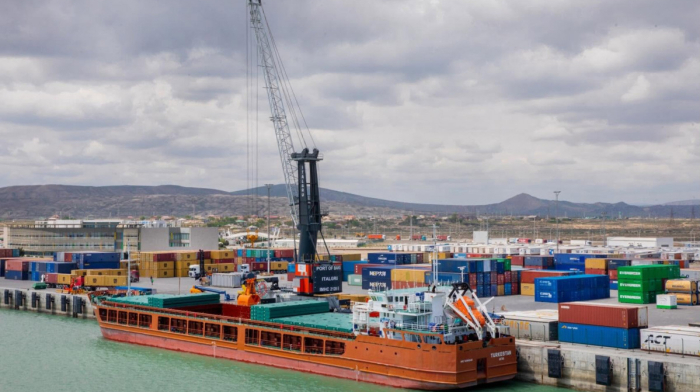
Trade with the U.S. presents a different challenge, combining opportunities for Brazilian exporters with uncertainty over Washington's policies.
In August, U.S. President Donald Trump authorised an additional 300,000 metric tonnes of lean beef imports under lower-tariff quota arrangements, according to the White House proclamation.
The temporary measure runs from September through November and aims to reduce beef costs for American consumers.
Brazilian suppliers stand to benefit from easier access, although the measure is not exclusive to Brazil and does not guarantee a particular volume of Brazilian exports.
The decision also exposed tensions within the U.S. agricultural sector. American cattle producers have criticised cheaper imports, fearing pressure on domestic prices.
For Brazil, the episode illustrates how quickly foreign trade policy can alter export opportunities, even without changes to domestic production.
4 years: A difficult political balancing act
Lula's new mandate will unfold alongside a Congress where Bolsonaro's right-wing Liberal Party and its allies are expected to hold majorities, according to Reuters.
That could restrict his ability to negotiate spending reforms, revise tax exemptions and secure important appointments.
His economic task is therefore both financial and political: maintain support for workers and poorer households while persuading investors that the government can control its obligations.
The election has settled who will lead Brazil. Whether its economy can sustain the gains of recent years remains the larger test.
Read more:




















What is your opinion on this topic?
Leave the first comment