live Iran says it has no trust in U.S. as nuclear tensions and talks continue- Middle East conflict
Iran’s Foreign Minister Abbas Araghchi said Tehran has “no trust” in the United States and will only consider negotiations if Was...
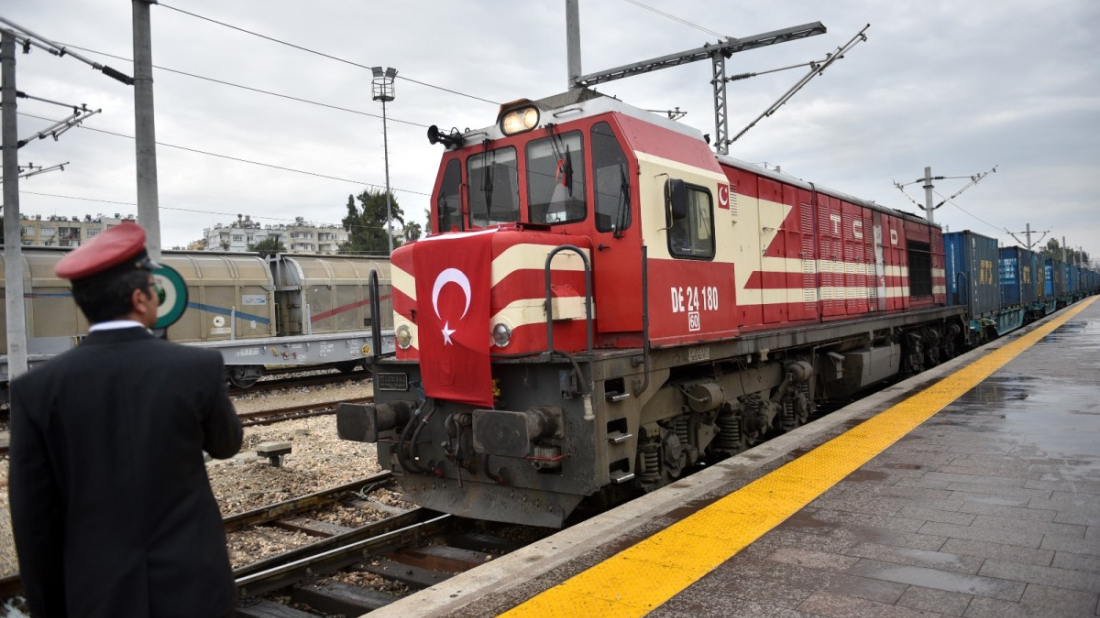
Türkiye has secured €2.4 billion ($2.8 billion) in green financing for a railway project aimed at establishing a direct rail connection to Azerbaijan's Nakhchivan exclave.
Turkish Finance Minister Mehmet Simsek reposted the article by Anadolu agency on his X account and said that "the financing we've received from international institutions strengthens our national infrastructure, enhancing both competitiveness and operational efficiency."
Türkiye signed the agreement with a group of lenders led by Japan's MUFG Bank, Anadolu said, adding the package is backed by Sweden's EKN and Austria's OeKB export credit agencies, as well as an unit of Islamic Development Bank.
This railway line will boost Türkiye’s trade volume with China, Central Asia, Europe, and the Caspian region, revitalize the regional logistics sector, and create new business opportunities. Additionally, in line with green development goals, the use of electric systems in railway transport will help reduce fossil fuel consumption and lower carbon emissions.

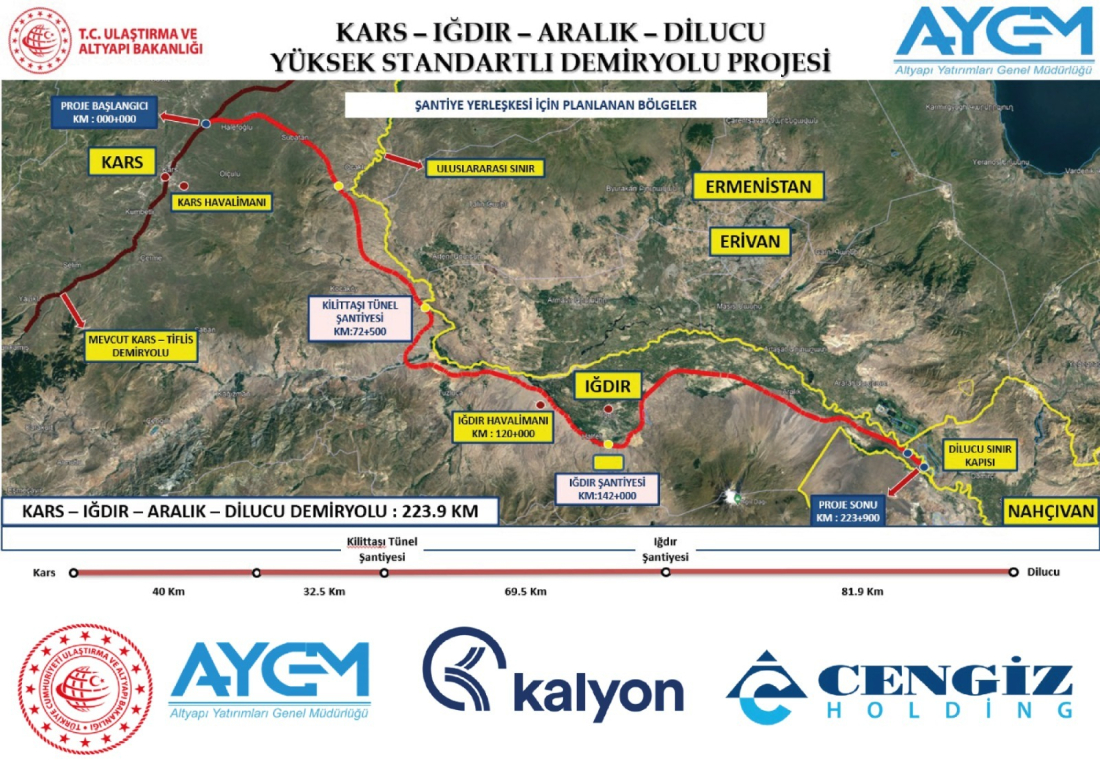
The Kars-Iğdır-Aralık-Dilucu-Sadarak-Nakhchivan-Julfa railway will form part of the Middle Corridor, positioning the Nakhchivan Autonomous Republic (NAR) as a key regional transit hub.
Starting from the 12th kilometre of the Kars-Tbilisi railway line, the Kars-Iğdır-Aralık-Dilucu segment will involve the construction of a 224-kilometre railway, including five stations, five tunnels, ten bridges, and supporting infrastructure.
The railway offers great advantages in terms of increasing the carrying capacity and shortening the transportation time. In addition, transportation will be approximately half as fast as sea transportation. Once the railway is operational, travel from Kars to the Dilucu border checkpoint with Azerbaijan will take just 85 minutes.
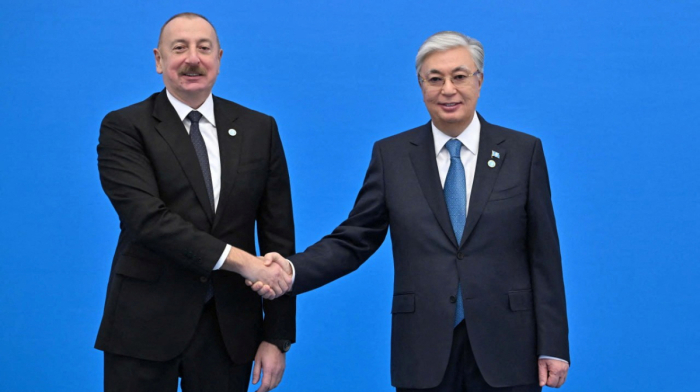
The project comes after President Ilham Aliyev and President Recep Tayyip Erdogan signed the "Protocol of Intent on the Kars-Nakhchivan railway project between the Republic of Azerbaijan and the Republic of Türkiye" in 2023.

The U.S.-Israeli war with Iran loomed over U.S. President Donald Trump's visit to China, as signs emerged that the conflict is causing a shift in alliances across the Middle East.
Iran’s Foreign Minister Abbas Araghchi said Tehran has “no trust” in the United States and will only consider negotiations if Washington shows seriousness. His remarks came as talks on Iran’s nuclear programme continued, with Trump and Xi also opposing Iran acquiring nuclear weapons.
Thousands of fans turned out in Iran's capital Tehran for a massive farewell ceremony on Wednesday night for their national football team, wishing them success before their departure for the World Cup 2026 matches co-hosted by the United States and Mexico.
Ukraine has stepped up attacks on Russian energy facilities in recent months, amid stalled progress in peace negotiations. The strikes have targeted refineries, processing plants, pipelines and export infrastructure, causing repeated disruptions across Russia’s energy sector.
Negotiations between Samsung Electronics and its workforce on Wednesday have broken down, officials said, raising fresh concerns over potential disruption to South Korea’s export-heavy economy.
By the time American shoppers began noticing higher prices on everything from trainers to televisions, the world's two largest economies were already deep in a trade war that left the world wondering how it would end.
The Strait of Hormuz remains a vital maritime chokepoint and serves as the primary artery linking the Persian Gulf to international energy markets. With approximately 20% of global oil and gas shipments transiting this waterway, it is the backbone of energy security for Asia, Europe, and beyond.
China’s exports grew faster than expected in April, as overseas buyers moved quickly to secure supplies amid fears that the conflict involving Iran could drive up global energy and transport costs.
Asian stocks surged to record highs on 7 May as investors priced in growing hopes of a potential Middle East peace deal, while oil prices eased and the U.S. dollar weakened amid shifting global risk sentiment.
You can download the AnewZ application from Play Store and the App Store.
What is your opinion on this topic?
Leave the first comment