Norway leads the EV revolution: 9 out of 10 cars sold in 2024 were electric, driving the nation closer to its goal of fully electric new car sales by 2025.
Nine out of ten new cars sold in Norway last year were powered by battery only, registration data showed on Thursday, placing the country within reach of its target of only adding cars that are electric on the road by 2025.
Fully electric vehicles accounted for 88.9% of new cars sold in 2024, up from 82.4% in 2023, data from the Norwegian Road Federation (OFV) showed. Top-selling brands were Tesla, followed by Volkswagen and Toyota.
"Norway will be the first country in the world to pretty much erase petrol and diesel engine cars from the new car market," said Christina Bu, head of the Norwegian EV association.
Oil-producing Norway penalises petrol and diesel cars with high taxes, while exempting EVs from import and value-added taxes to make them more attractive, although some levies were reintroduced in 2023.
The policy has worked because it has been consistent over time, maintained by governments of various political persuasion, experts said.
"Very often we see in other countries that someone puts tax incentives or exemptions and then they pull back again," Bu said.
Also helpful is the fact that Norway does not have an automaker lobby. "We are not a car-producing country ... so taxing cars highly in the past was simple," said Ulf Tore Hekneby, head of Norway's biggest car importer, Harald A. Moeller.
Having incentives, rather than banning petrol and diesel cars, was crucial too, said Bu. "That would (have) made people angry. People don't like being told what to do," she said.
The European Union has decided to ban sales of carbon-dioxide-emitting cars by 2035, but it may allow sales of cars that run on fuels made from captured CO2.
Norway's policies mean that fully electric cars last year overtook pure petrol cars on Norwegian roads. They accounted for more than 28% of all cars driven in the Nordic country as of December, according to Public Road Administration data.
"That's the big lesson: put together a broad package (of incentives) and make it predictable for (the) long-term," said deputy transport minister Cecilie Knibe Kroglund.
To be sure, while nearly all new buyers of cars in Norway have gone electric, some hold-outs remain. "The main buyers of ICE (internal combustion engine) cars in Norway are rental companies because many tourists are not familiar with EVs," said Hekneby.
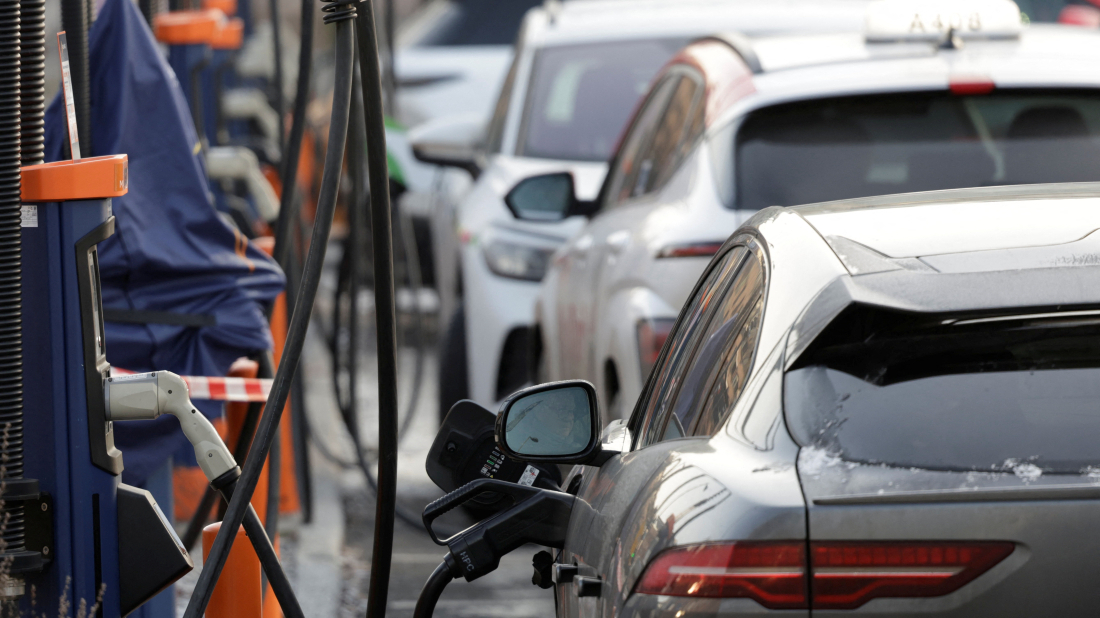
Still, the rising share of EVs on Norwegian roads means other sectors have to adapt. At fuel stations, more and more petrol pumps are replaced with fast electric chargers.
"Within the next three years we will have at least as many charging stalls as we have pumps for fuel," said Anders Kleve Svela, a senior manager at Circle K, Norway's largest fuel retailer.
"In just a couple of years more than 50% of all the cars in Norway will be electric ... We have to ramp up our charging park according to that," he added.
For drivers, switching to an EV means it can take a little longer to charge a car in winter due to the cold weather. "Sometimes I miss that I just can pump it full and drive off five minutes later," said Desire Andresen, 28, an in-home caregiver, charging her car at a Circle K station outside Oslo.
"But I'm more comfortable with an electric car ... It's better for the environment and the diesel cars produce so much smell."

















What is your opinion on this topic?
Leave the first comment