live Massive crowds attend Ali Khamenei funeral procession in week-long farewell
Massive crowds are gathering in the streets of Tehran on Monday for the funeral procession of Iran's slain former supreme leader, Ali Khamenei, as ...
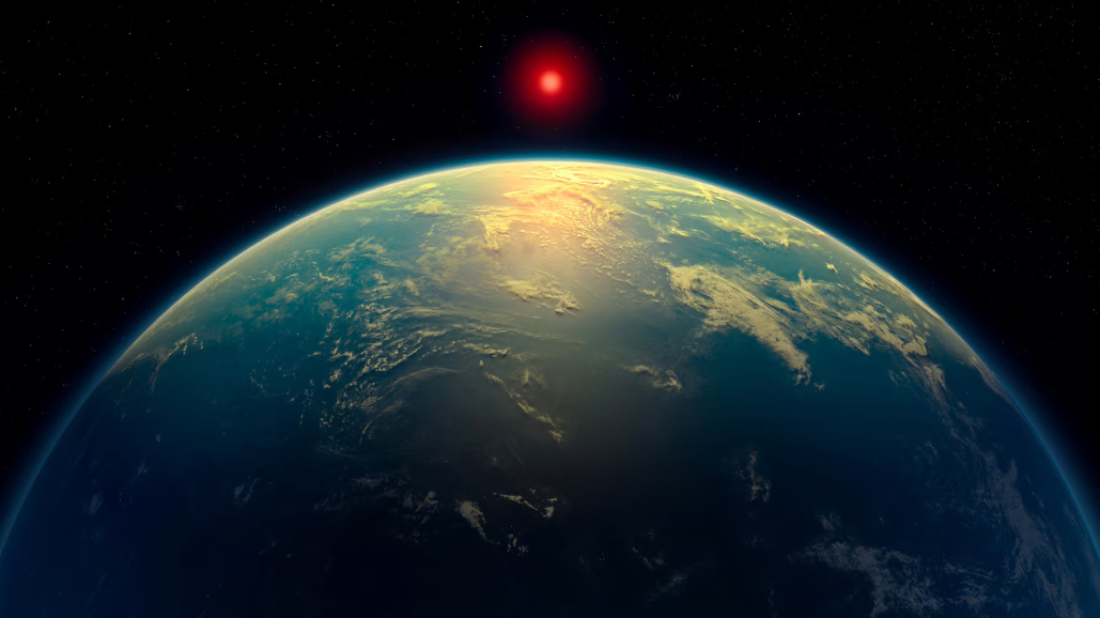
Scientists using the James Webb Telescope have detected potential biosignatures, gases linked to life, on exoplanet K2-18 b, marking a major step in the search for extraterrestrial life. While not confirmed, the findings offer a strong "maybe".
In what could be a major step in the search for extraterrestrial life, scientists using the James Webb Space Telescope have detected chemical signatures in the atmosphere of exoplanet K2-18 b that may indicate biological activity. The gases, dimethyl sulfide (DMS) and dimethyl disulfide (DMDS) are, on Earth, only produced by living organisms, mainly marine microbes like phytoplankton. While not a confirmation of life, researchers consider this a promising biosignature that warrants cautious optimism.
Astrophysicist Nikku Madhusudhan from the University of Cambridge, lead author of the study published in Astrophysical Journal Letters, called it a groundbreaking moment. He said the findings suggest it's now possible to detect signs of life on habitable planets using existing tools, marking the beginning of a new era in astrobiology.
K2-18 b is located about 124 light-years away in the Leo constellation, orbiting a small red dwarf star in the "habitable zone" where liquid water could exist. The planet is roughly 8.6 times the mass of Earth and is believed to be a "hycean world", possibly covered by oceans and with a hydrogen-rich atmosphere, ideal for microbial life.
Previous Webb observations found methane and carbon dioxide on the planet. Now, using different instruments and wavelengths, scientists have identified DMS or DMDS with 99.7% confidence, concentrations thousands of times higher than on Earth, which cannot easily be explained by non-biological processes.
Though researchers are excited, they emphasize that more observations and theoretical studies are necessary to rule out non-living chemical sources. Confirming these findings will require repeated measurements and rigorous testing.
Experts not involved in the study agree the data is compelling but urge careful validation. The long-standing question of whether we are alone in the universe may be closer to an answer, but for now, the evidence remains a strong "maybe".

The death toll from Venezuela's devastating twin earthquakes has risen to 3,342, according to the country's information ministry, as rescue teams continue searching affected areas and survivors face an uncertain recovery.
Mexico's national football team has returned luxury Rolex watches gifted by American content creator Stevewilldoit after concerns that they could conflict with FIFA's ethics rules.
Governments are tightening restrictions on teenagers’ use of social media amid growing concerns over mental health, online safety and platform design, but questions remain over enforcement and whether bans can meaningfully change behaviour.
President Donald Trump said Iran is keen to reach a deal with the United States, claiming Washington had paused engagement to allow funeral ceremonies for late Iranian Supreme Leader Ali Khamenei.
Thousands of mourners gathered in Tehran on Sunday as Iran held funeral prayers for Ayatollah Ali Khamenei and four members of his family on the second day of mass processions. Three of Khamenei's sons attended the ceremony, while his successor, Mojtaba Khamenei, made no public appearance.
Humanoid robots stumbled, collided and recovered as they battled for the RoboCup 2026 football title on Sunday (5 July), showcasing the latest advances in robotics and artificial intelligence at the world's largest competition of its kind.
India is investigating a data breach at Tata Electronics that exposed sensitive documents linked to Apple's unreleased iPhone 18 Pro, marking the government's first public comments on the incident.
Humanity’s return to the Moon is about far more than planting flags and collecting samples. Under NASA’s Artemis programme, the goal is to establish a lasting human presence, with lunar rovers set to play a vital role in making that vision possible.
American technology company Snap has launched its first augmented-reality (AR) glasses for consumers, marking a major push into wearable computing as tech firms race to redefine personal devices in the AI era.
The Canadian government has introduced a digital safety bill that would ban children under the age of 16 from using social media, unless platforms meet specific safety standards.
You can download the AnewZ application from Play Store and the App Store.
What is your opinion on this topic?
Leave the first comment