China has launched the world’s first experiment to study how artificial human embryos develop in space, marking a major step in understanding whether humans could one day reproduce beyond Earth.
Just this week, a Long March-7 rocket lifted off from the Wenchang Spacecraft Launch Site on China’s southern island of Hainan, carrying the Tianzhou-10 cargo spacecraft to the country’s Tiangong space station.
Among the payloads were artificial human embryos, ultra-thin solar cells and a greenhouse gas monitor. The embryo experiment is drawing the most attention - and for good reason. It marks the world’s first study of the development of artificial embryos in space.
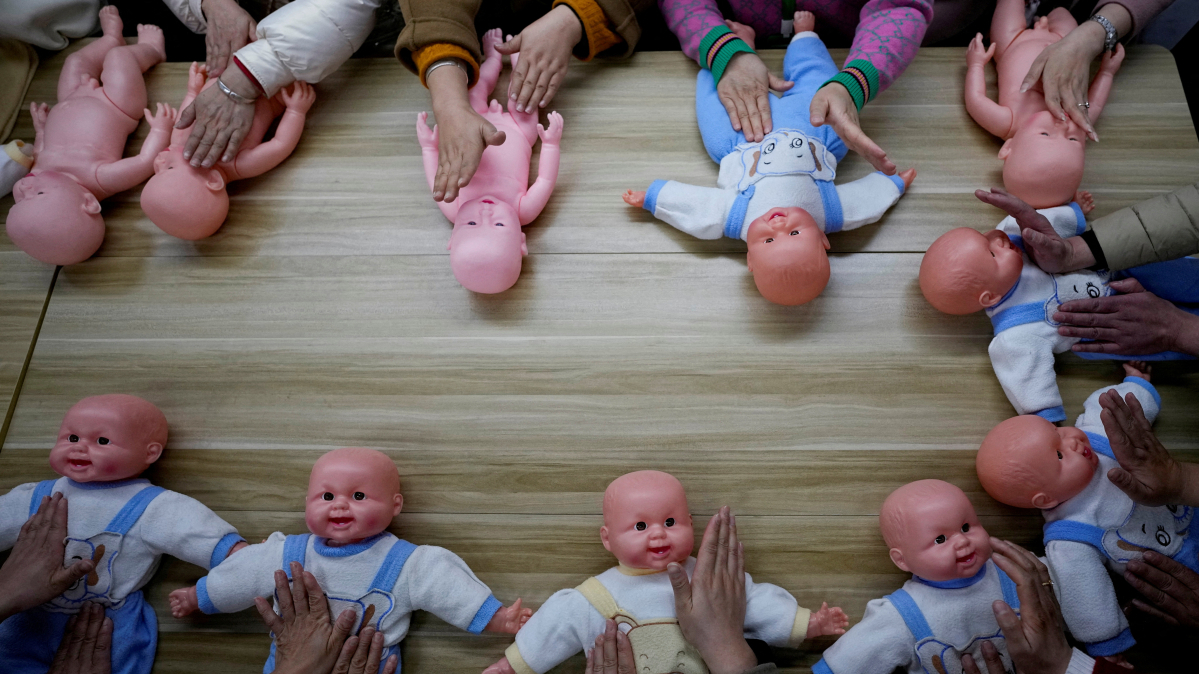
Before anyone imagines tiny babies floating in orbit, it helps to understand exactly what these embryos are. Artificial embryos are stem cell-based structures that resemble early-stage human embryos but cannot develop into living individuals.
They are used in research precisely because real human embryos are scarce and ethically sensitive. Think of them as highly accurate models: close enough to the real thing to tell scientists something meaningful, but not life forms in any complete sense.
Scientists focus on early stages of development
The study focuses on a critical developmental window equivalent to 14 to 21 days after fertilisation - the stage when the foundations of major organs begin to form. It is a brief but pivotal period, and almost nothing is known about how it unfolds outside Earth’s gravity.
During the mission, the artificial embryos will develop for five days aboard the space station under the supervision of taikonauts, while automated systems replace nutrient solutions daily to maintain stable growth conditions. After the experiment concludes, the samples will be frozen in orbit and returned to Earth for analysis.
The lead researcher, Yu Leqian, a professor at the State Key Laboratory of Stem Cell and Reproductive Biology at the Chinese Academy of Sciences, has been candid about what the team is trying to understand.
“This is our first attempt to answer the questions: Can humans survive and reproduce in space?” he said, adding that once the impact of microgravity on embryos is better understood, scientists may be able to develop technologies to reduce or counteract those effects.
Wider implications for human space exploration
The experiment does not stand alone. The Tianzhou-10 mission also carried zebrafish embryos and mouse embryos, creating a research chain spanning simpler to more complex life forms.
By comparing how embryos from different species develop under the same conditions - including real microgravity and cosmic radiation aboard a functioning space station - researchers hope to build a clearer picture of how the space environment affects the earliest stages of life.
This matters more than it might first appear. As humanity sets its sights on long-duration space missions and eventual interplanetary travel, understanding reproduction and development in space has become a critical scientific challenge.
Sending astronauts to Mars and back would take years. A permanent lunar base would require people to live off Earth for extended periods. Whether human biology - including the biology involved in starting new life - can function in those conditions is a question that cannot be answered from the ground.
China’s experiment will not answer it fully either. Five days of embryo development in orbit is a beginning, not a conclusion. But it is the first data point the world has ever gathered under real conditions that no Earth-based laboratory can replicate.
Whatever the results show when those frozen samples return home, the question of whether humans can truly live and reproduce beyond this planet has moved a little closer to an answer.



















What is your opinion on this topic?
Leave the first comment