Azerbaijani lawmakers, NGOs respond to U.S. Congress letter on peace process
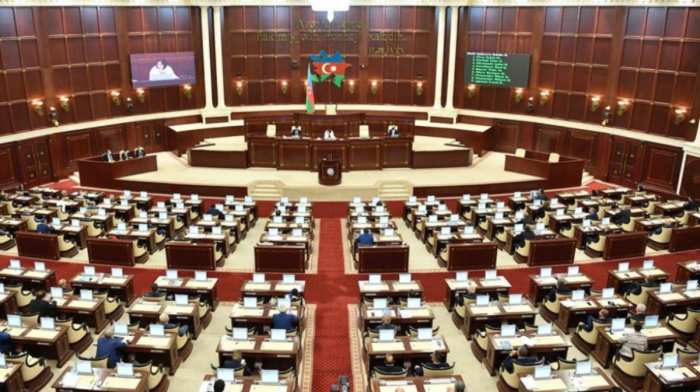
Members of Azerbaijan’s Milli Majlis and representatives of several non-governmental organisations have sent a letter to U.S. senators and me...
Chinese tech giants, including Alibaba-backed Ant Group (688688.SS) and e-commerce company JD.com have halted plans to issue stablecoins in Hong Kong after the government raised concerns about the increasing influence of privately controlled currencies, the Financial Times reported on Saturday.
The companies put their stablecoin initiatives on hold after receiving instructions from Chinese regulators, including the People’s Bank of China (PBOC) and the Cyberspace Administration of China (CAC), to delay their plans, according to sources cited by the FT.
In May, Hong Kong's legislature passed a stablecoin bill that established a licensing framework for issuers of fiat-backed stablecoins, providing regulatory clarity for future participants. Under this new framework, anyone wishing to issue stablecoins in Hong Kong—or those issuing stablecoins backed by Hong Kong dollars, whether inside or outside the city—must obtain a licence from the Hong Kong Monetary Authority (HKMA).
Ant Group had announced in June its intention to participate in the pilot stablecoin programme, and JD.com had also expressed interest in joining, according to the FT.
PBOC officials reportedly advised against joining the initial rollout of stablecoins due to concerns about permitting tech companies and brokerages to issue any form of currency, the FT added.
Reuters was unable to immediately verify the report. Ant Group, JD.com, the PBOC, and the CAC did not respond to requests for comment. A spokesperson for the HKMA told Reuters on Sunday via email that the authority does not comment on market rumours.
Stablecoins, a type of cryptocurrency designed to maintain a stable value, usually pegged to a fiat currency such as the US dollar, are commonly used by crypto traders to transfer funds between different tokens.

Leaders of countries from the Commonwealth of Independent States (CIS) have agreed to hold coordinated population censuses around 2030. They took the decision at the CIS Council of Heads of State meeting in Awaza, Turkmenistan on Friday, media reported.
The explosion at King Khalid International Airport in Riyadh on Saturday afternoon killed at least 12 people and injured a further 309, according to Saudi Arabia’s Civil Aviation Authority. The airport remains closed until further notice.
Russian President Vladimir Putin expressed surprise after Donald Trump mediated the Armenia-Azerbaijan peace agreement in 2025, the U.S. President said at a rally in New York state on Friday.
The United Nations has condemned a sharp rise in attacks on civilians in Ukraine, reporting that more than 100 people were killed and at least 429 injured in a single week as Russian strikes hit residential areas, passenger buses and critical infrastructure.
The U.S. has imposed sanctions on the International Criminal Court (ICC) on Friday (9 October) escalating tensions with European allies and potentially targeting companies that provide services to the tribunal. The move came hours after former ICC judge Navi Pillay won the Nobel Peace Prize.
Anthropic has announced that it is updating its usage policy to allow its AI agents to end conversations involving repeated abuse or cruel behaviour towards them, citing previous incidents.
Türkiye has banned children under 15 from using social media under new regulations published on Saturday. The new regulations prohibit firms from providing services to children “who have not reached the age of 15.”
Microsoft has introduced new tools to stop AI agents from accessing data without permission, alongside a Nvidia-powered Surface laptop that can run advanced AI directly on the device.
Picture three scenarios: a hospital that can spot a disease before the patient feels sick, a power grid that feeds thousands of data centres and a government network that is attacked daily. All three depend on artificial intelligence, and one question matters most: who is really in charge?
OpenAI and Anthropic told Australian parliament on Tuesday they would welcome laws requiring them to report data breaches carried out by their AI agents, acknowledging the decision to notify authorities was currently at their discretion.
You can download the AnewZ application from Play Store and the App Store.
What is your opinion on this topic?
Leave the first comment