China has successfully tested an experimental rocket recovery system using a net attached to an offshore platform, marking a major step in its efforts to develop reusable rockets and compete with U.S. space technology.
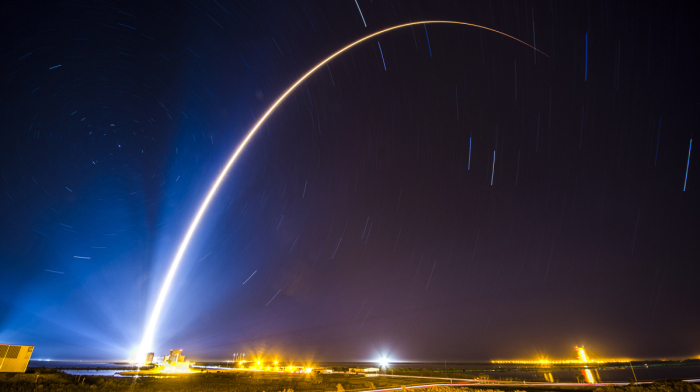
The test involved the Long March 10B rocket, which lifted off from the Hainan commercial space launch site in southern China on Friday, according to state broadcaster CCTV.
First successful orbital-class rocket recovery
Around six minutes after the booster separated from the rocket’s upper stage, the booster returned vertically and was captured by a net system installed on a sea platform.
The test represents China’s first successful recovery of an orbital-class rocket, bringing the country closer to developing reusable launch technology.
Chinese aerospace shares rose following the announcement, with companies including China Spacesat and China Satellite Communications reaching their daily trading limits.
China develops alternative to SpaceX technology
The Long March 10B has been compared with the Falcon 9 rocket developed by U.S. company SpaceX, which has become the global leader in reusable rocket technology.
Developed by the state-owned China Academy of Launch Vehicle Technology, the Long March 10B is designed for commercial space missions and can carry at least 16 tonnes of payload into low-Earth orbit.
However, unlike Falcon 9, which lands on deployable legs on a launch pad or drone ship, the Chinese system uses a different approach. The booster is equipped with “landing hooks” designed to catch a net attached to an offshore recovery platform.
Reusable rockets reshape global space competition
Reusable rocket technology has become a key area of competition in the global space industry because it can significantly reduce launch costs and increase launch frequency.
SpaceX successfully recovered a Falcon 9 booster from an orbital mission for the first time in December 2015. Since then, the company’s Falcon 9 fleet has expanded rapidly, carrying out around 150 launches a year, with boosters reused multiple times.
The ability to reuse the most expensive parts of a rocket has helped transform the commercial launch market.
China accelerates reusable rocket programme
China has spent nearly a decade developing reusable launch systems, progressing from early low-altitude hover tests to orbital-class booster recovery attempts.
The technology is seen as crucial for supporting China’s expanding commercial satellite industry and planned large-scale satellite constellations.
Private Chinese aerospace companies have also increased efforts to develop reusable rockets, with Beijing easing rules around initial public offerings to help space firms raise investment.
Previous recovery attempts by private company LandSpace and the state-owned China Aerospace Science and Technology Corporation failed to complete the final landing stage.
Technology could support future lunar missions
The Long March 10B is part of China’s broader Long March 10 rocket family, which is being developed to support the country’s crewed lunar exploration programme planned for before 2030.
Chinese officials said the latest test could provide valuable data and help validate technologies needed for future deep-space missions.
CCTV reported that China plans to reuse the Long March 10B booster for another launch before the end of the year, further testing the country’s progress towards a reusable rocket system.





















What is your opinion on this topic?
Leave the first comment