Shooter kills Canadian woman at Mexico’s Teotihuacan pyramids, 13 injured
A Canadian woman has been shot dead and 13 others injured in a shooting at the Teotihuacan pyramids on Monday, one of Mexico’s m...
The U.S. State Department stated that it aims to prevent the misuse of American universities and protect U.S. research from exploitation by the Chinese government.
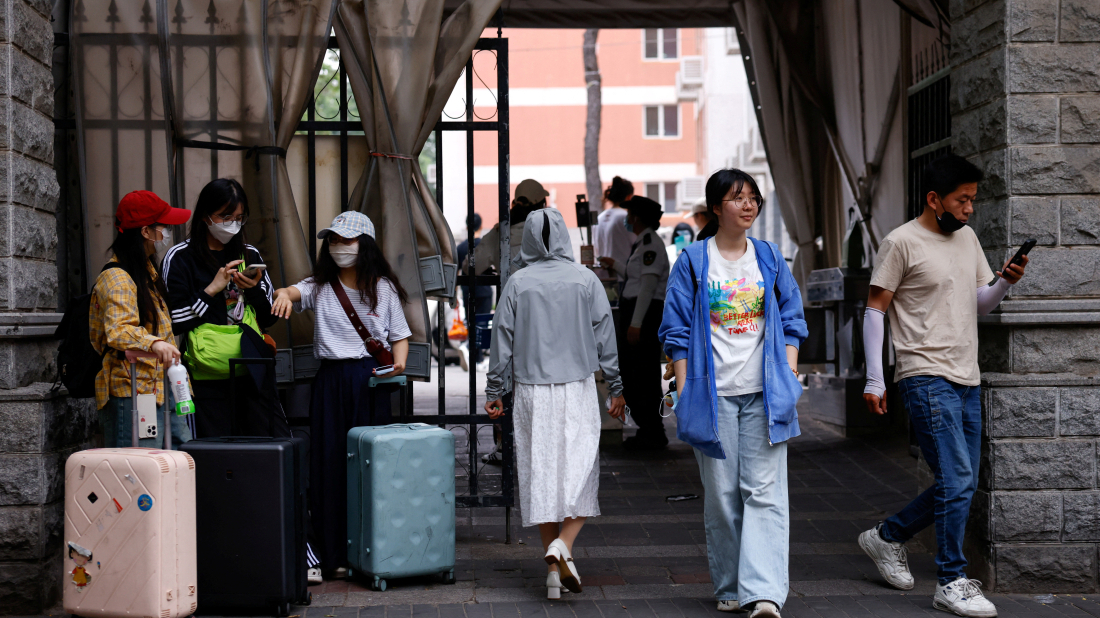
Lainey, a 24-year-old postgraduate student from Beijing, is among many Chinese students affected by the U.S. government's recent visa crackdown. She was preparing to start her PhD in sociology at the University of California but is now stuck in limbo, waiting for the visa process to resume. Like many others, she feels helpless and frustrated by the tightening policies.
This crackdown is part of broader immigration restrictions under the Trump administration and has added to rising tensions between the U.S. and China, especially in the context of an ongoing trade war. Chinese students make up a significant portion of international students in the U.S., especially in STEM fields, and contribute billions of dollars to the American economy.
Due to visa delays, students like Lainey are considering deferring their studies or looking at alternative destinations such as Europe, Hong Kong, or Singapore. Experts warn that the policy could have long-term effects, such as damaging the reputation of U.S. universities and causing a brain drain, as talented students choose other countries for their education and careers.
Chinese media have criticized the policy as discriminatory, with state outlets calling it a form of “educational witch-hunt” and comparing it to McCarthyism. Lainey says if delays persist for years, her perception of studying in the U.S. may change entirely. “If I can’t even get a visa,” she says, “I’ll have no choice but to go somewhere else.”

Iran accuses the United States of breaching a ceasefire after a commercial ship was seized in the Gulf of Oman, vowing retaliation, as Israel warns south Lebanon residents to avoid restricted areas.
Progessive Bulgaria, led by pro-Russian Eurosceptic Rumen Radev is on track to form Bulgaria’s next government, after official results showed a runaway victory for the coalition in the Balkan nation's parliamentary elections on Monday (20 April).
Secretly filmed footage from two UK laboratories has reignited debate over animal testing in drug development, after a former worker alleged that monkeys, dogs and other animals endured prolonged distress during safety trials for new medicines.
Blue Origin, the U.S. space company of billionaire Amazon founder Jeff Bezos, successfully reused and recovered a booster for its New Glenn rocket launched from Florida on Sunday (19 April), in the latest chapter of its intensifying rivalry with Elon Musk’s SpaceX.
A powerful 7.5 magnitude earthquake has struck off Japan’s north-eastern coast, triggering urgent tsunami warnings with waves of up to 3 metres expected, prompting residents to seek immediate safety.
A Canadian woman has been shot dead and 13 others injured in a shooting at the Teotihuacan pyramids on Monday, one of Mexico’s most visited tourist attractions.
Start your day informed with AnewZ Morning Brief. Here are the top news stories for the 21st of April, covering the latest developments you need to know
Japan on Tuesday unveiled its biggest overhaul of defence export rules in decades, scrapping restrictions on overseas arms sales and opening the way for exports of warships, missiles and other weapons.
Hungarian election winner Péter Magyar on Monday nominated András Kármán as finance minister, Anita Orbán as foreign minister and István Kapitány as economy and energy minister in his incoming government, as previously indicated.
Residents displaced by Hong Kong’s deadliest fire in decades have begun returning to their damaged homes, hoping to recover belongings that survived the blaze.
You can download the AnewZ application from Play Store and the App Store.
What is your opinion on this topic?
Leave the first comment