Hate speech against India’s Muslims and Christians up 74% in 2024
Hate speech targeting Muslims and Christians in India surged by 74% in 2024, driven by election-season rhetoric and unrest in neighboring Bangladesh, ...
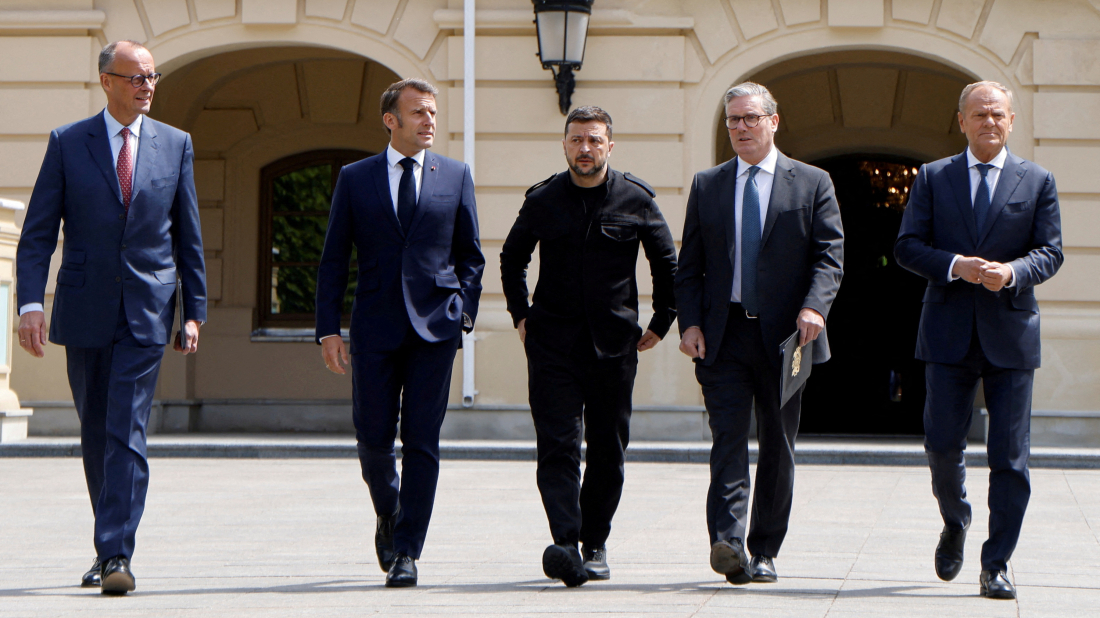
The EU and UK unveiled new sanctions targeting Russia’s shadow oil fleet and financial networks, acting independently of the US after talks failed to yield a Ukraine ceasefire.
The EU and UK imposed new sanctions on Russia, targeting oil tankers and financial firms helping Moscow evade existing restrictions. The move follows a failed phone call between Donald Trump and Vladimir Putin, which did not produce a ceasefire in Ukraine.
While European leaders had urged Washington to join, the latest measures were introduced without U.S. participation. The sanctions aim to crack down on Russia’s shadow fleet used to bypass the G7’s $60 oil price cap.
Ukrainian President Volodymyr Zelenskyy welcomed the move, calling sanctions a key tool in holding Russia accountable.
Russia and Ukraine held their first direct talks in over three years on Trump’s initiative, but they ended without a truce. Kyiv said it accepted Trump’s ceasefire plan, but Moscow demanded prior negotiations — a stance the EU says shows Putin’s unwillingness to end the war.
EU Commission President Ursula von der Leyen said a new sanctions package is underway to increase pressure on Moscow. Foreign ministers from France, Germany, and the UK also called for firm action, accusing Russia of prolonging the conflict.
Moscow dismissed Western pressure as ultimatums. Foreign Ministry spokesperson Maria Zakharova said Russia was ready for peace talks and placed the next step on Kyiv.
The new sanctions may also include lowering the oil price cap to further cut Russia’s revenue. Brussels and London say they still hope the U.S. will join in coordinated measures soon.

Scores of demonstrators gathered outside the Norwegian Nobel Institute in Oslo Tuesday (9 December) to protest against the awarding of this year’s Nobel Peace Prize to Venezuelan opposition leader Maria Corina Machado.
Authorities in Japan lifted all tsunami warnings on Tuesday following a strong 7.5-magnitude earthquake that struck off the northeastern coast late on Monday, injuring at least 30 people and forcing around 90,000 residents to evacuate their homes.
Pressure is mounting between Venezuela and the United States as both nations emphasise military preparedness and strategic positioning.
Tehran has protested to Washington because of the travel ban on its football team delegation as well as Iranian fans who would like to travel to the United States for the upcoming World Cup matches in 2026.
Paramount Skydance (PSKY.O) has launched a $108.4 billion hostile takeover bid for Warner Bros Discovery (WBD.O). The escalation follows a high-stakes battle that had appeared to end last week when Netflix secured a $72 billion deal for the studio giant’s assets.
Hate speech targeting Muslims and Christians in India surged by 74% in 2024, driven by election-season rhetoric and unrest in neighboring Bangladesh, according to a new report from the India Hate Lab, a Washington-based research organization.
At least 19 people were killed and 16 injured as two buildings collapased in Morocco's Fes city according to the state news agency.
Start your day informed with AnewZ Morning Brief: here are the top news stories for the 10th of December, covering the latest developments you need to know.
The world’s leading minds and voices will be honoured on Wednesday, 10 December, the anniversary of Alfred Nobel’s death, as Nobel Prizes are presented in Stockholm and Oslo.
Artillery fire and ground skirmishes have erupted this week along the disputed border between Thailand and Cambodia, shattering a fragile ceasefire and displacing tens of thousands of civilians in the worst outbreak of violence between the neighbours in years.
You can download the AnewZ application from Play Store and the App Store.
What is your opinion on this topic?
Leave the first comment