Haitians in Port-au-Prince are protesting against the escalating gang violence and insecurity that has forced thousands to flee their homes, demanding immediate action and the resignation of the transitional presidential council amid a growing humanitarian crisis.
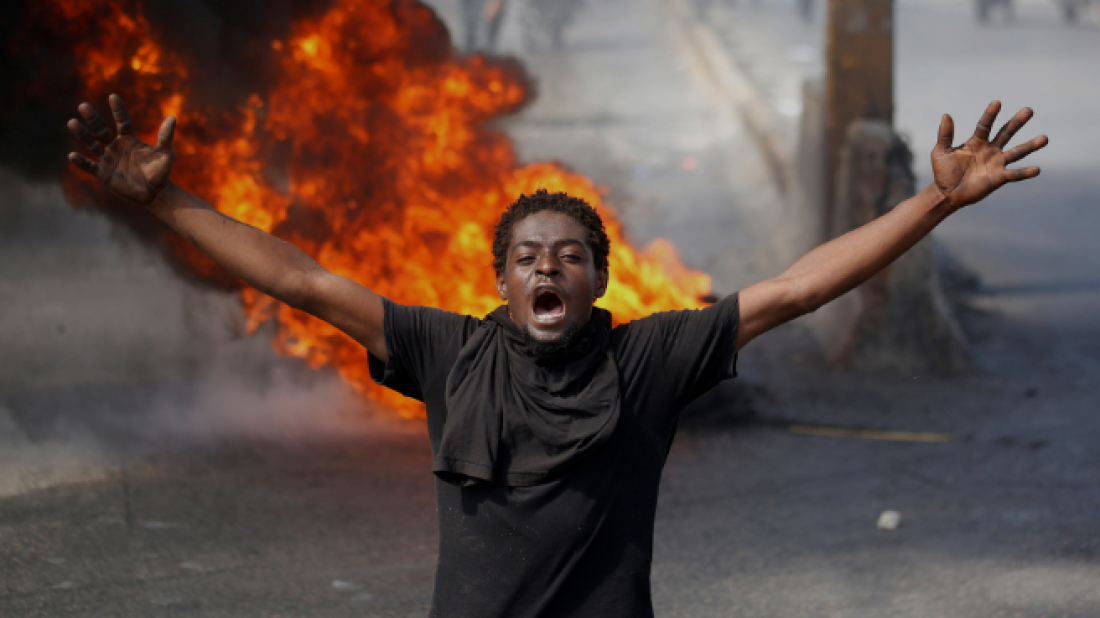
Haitians in the capital city of Port-au-Prince took to the streets on Wednesday (March 19) to protest the rising insecurity and violence that has plagued the country, particularly as gangs continue to tighten their grip on large portions of the city. The protests were sparked by the growing frustration among residents, including those displaced by the violence, who are demanding immediate action to address the deteriorating security situation.
As gangs such as the Viv Ansanm alliance escalate their attacks, residents in several neighborhoods have been forced to flee their homes, and the chaos has left many without refuge. Protesters set up barricades and marched through the streets, calling for urgent intervention and the resignation of members of the transitional presidential council. The escalating violence has also prompted widespread calls for the government to do more to protect the Haitian people.
At least two people were reported injured during the protest, as tensions flared between demonstrators and security forces. The protests highlight the deepening crisis in Haiti, where insecurity is now a daily threat for many. Gangs continue to control vast areas, making it nearly impossible for civilians to go about their daily lives without fear of being caught in the crossfire.
The violence has intensified in recent weeks, particularly following the government’s decision to target gang-controlled areas with drone strikes carrying explosives. This has only further fueled the conflict, as gang alliances retaliate with even more violence. The government’s attempts to combat the growing power of gangs have been met with resistance, with some questioning the effectiveness of their strategies.
Haiti’s government has repeatedly called for international support, especially from the United Nations, to address the country’s security crisis. In recent months, Haiti requested a formal U.N. peacekeeping mission to help bolster its understaffed and under-equipped police forces. However, this request has met opposition from Russia and China, who have raised concerns about sending peacekeeping forces into the country.
As discussions continue at the U.N. Security Council, there are hopes for a hybrid security support model, which would combine international efforts with local forces to stabilize the country. Unfortunately, the lack of contributions to the existing peacekeeping mission has left it severely under-resourced, further exacerbating the insecurity.
The humanitarian crisis caused by the ongoing violence is dire. In just a matter of weeks, over 42,000 Haitians have been displaced, and the number of internally displaced people in the country has surpassed 1 million. As the situation continues to worsen, the call for urgent action grows louder, with many demanding that international partners step up and provide the support Haiti desperately needs.
The people of Haiti are pleading for a solution to the violence that has forced them from their homes and disrupted their lives. As the protests continue, the world watches to see whether international support will arrive in time to prevent further suffering.












What is your opinion on this topic?
Leave the first comment