Russian intelligence accuses UK, France of plotting to arm Ukraine with nuclear weapons
The Foreign Intelligence Serrvixe of the Russian Federation (SVR) on Tuesday (25 February) accused the United Kingdom and France of actively working t...
DISA Global Solutions, a major U.S.-based provider of employee screening services, has confirmed a data breach that compromised the personal information of more than 3.3 million individuals, according to filings with state attorneys general.
DISA, which conducts background checks, drug and alcohol testing, and other employment verifications for more than 55,000 enterprises - including a third of the Fortune 500 - discovered the cyber incident on April 22, 2024. An internal investigation later revealed that a hacker had infiltrated the company’s network on February 9, 2024, remaining undetected for over two months before the breach was identified.
In a letter sent to affected individuals, DISA acknowledged that the attacker “procured some information” from its systems. However, the company noted it “could not definitively conclude the specific data procured,” indicating that available logs and other forensic data did not provide a full account of the information exfiltrated.
Separate filings with the Massachusetts attorney general confirmed that the stolen data included highly sensitive details such as Social Security numbers, financial account information (including credit card numbers), and government-issued identification documents. More than 360,000 Massachusetts residents were reportedly affected by the breach.
DISA’s services involve the collection of a wide range of personal and sensitive data, including applicants’ work history, educational background, criminal records, and credit history, making the potential fallout of the breach particularly concerning. It is not yet clear who was behind the cyberattack or how the breach occurred, and the delay in notifying affected individuals has also raised questions.
The incident underscores the ongoing cybersecurity challenges faced by companies handling large volumes of personal data, as well as the risks posed by increasingly sophisticated cyberattacks. DISA has not yet provided further details on remedial measures or plans to prevent similar breaches in the future.

Further Iran-U.S. nuclear talks are scheduled in Geneva on Thursday (26 February) as diplomacy resumes over Tehran’s nuclear programme following earlier mediation efforts. But will the talks move Iran-U.S. negotiations closer to a deal, and what should be expected from the meeting?
Iran has signed a secret €500 million arms deal with Russia to rebuild air defences, weakened during last year’s war with Israel, the Financial Times has reported. The agreement, signed in December in Moscow, will see Russia deliver 500 Verba launch units and 2,500 9M336 missiles over three years.
A British national was among at least 19 people killed when a passenger bus plunged off a mountain highway into the Trishuli river in Nepal before dawn on Monday (23 February), authorities said. A New Zealander and a Chinese national were among those injured.
Seven people were killed after gunmen ambushed a police patrol in Kohat, a district in Pakistan’s north-west near the Afghan border, on Tuesday, in an attack that comes amid rising militant violence and heightened tensions between Pakistan and Afghanistan.
Four years after Russia launched its full-scale invasion of Ukraine on 24 February 2022, the war is no longer defined by shock but by scale.
The Foreign Intelligence Serrvixe of the Russian Federation (SVR) on Tuesday (25 February) accused the United Kingdom and France of actively working to provide Ukraine with nuclear weapons.
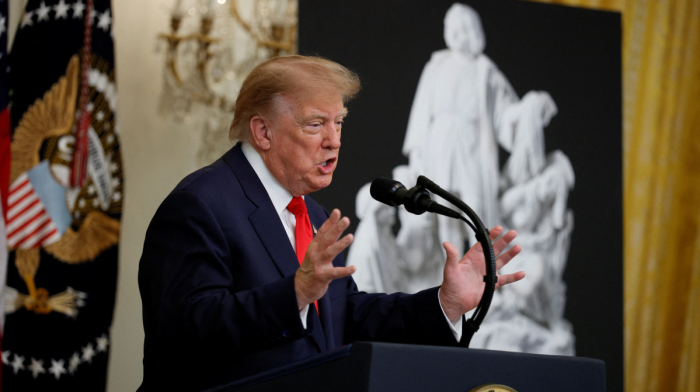
President Donald Trump delivered the first State of the Union address of his second term to Congress on Wednesday (25 February), declaring that America’s “golden age” had begun and that the country was experiencing a “turnaround for the ages.”
German Chancellor Friedrich Merz is heading to Beijing on for his first official visit as chancellor, aiming to strengthen political and economic dialogue with China before tackling pressing international crises.
Ukrainian President Volodymyr Zelenskyy has suggested that Hungarian Prime Minister Viktor Orbán should block financial support to Russia rather than Ukraine, as Budapest opposes the European Union’s 20th sanctions package against Moscow.
The Secretary-General of the United Nations, António Guterres, has called for an immediate, full and unconditional ceasefire in Ukraine, describing the conflict as “a stain on our collective conscience”.
You can download the AnewZ application from Play Store and the App Store.
What is your opinion on this topic?
Leave the first comment