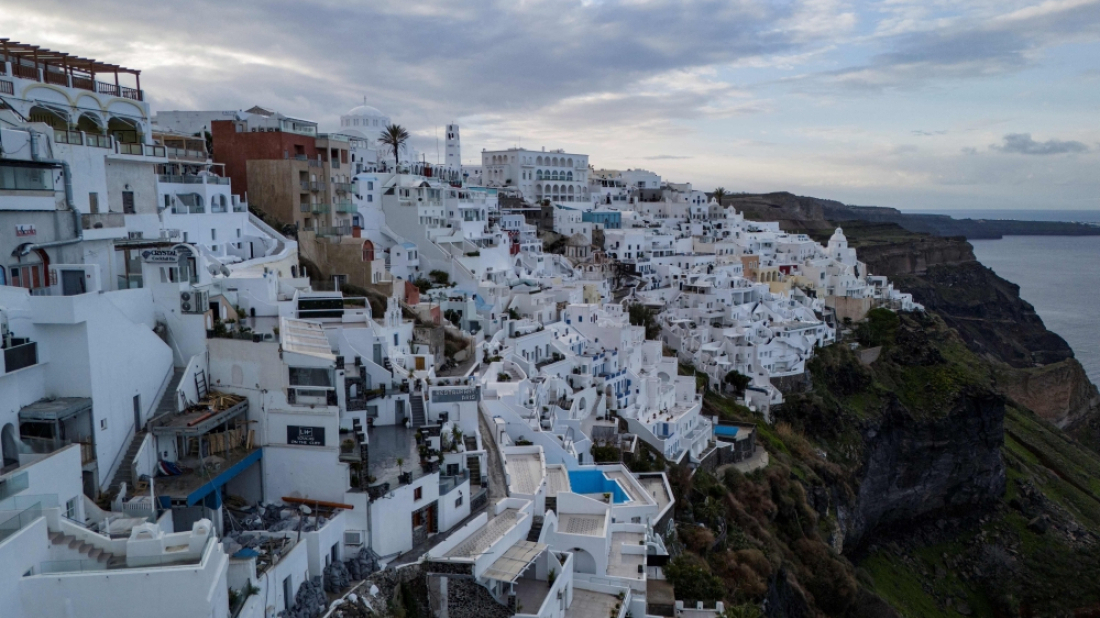
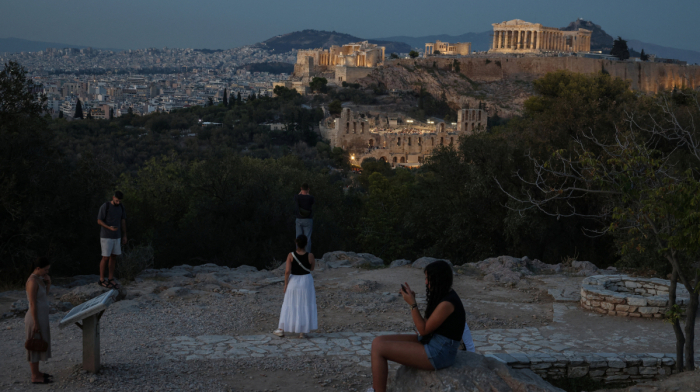
On Greece’s iconic Santorini island, hotel owner Yiannis Constantinou is preparing for tourists who may never arrive. A wave of earthquakes—tens of thousands of minor tremors—has put the island’s tourism sector on hold.
“The bookings have come to a halt,” says Constantinou. “There aren’t major cancellations, just the usual ones we expect each year. But the pace of new bookings has stopped. Everyone is waiting to see what happens—both us and the tourists.”
The ongoing seismic activity has led authorities to declare a state of emergency. While no major damage has been reported, thousands of residents and workers have left by plane and ferry. Among them are frightened hotel staff, forcing Constantinou to search for replacements.
Despite the uncertainty, he remains hopeful. “We can’t just sit idly by—that would be worse,” he says. “So we’re here, preparing the rooms. If no one comes… well, maybe we’ll take a vacation ourselves.”
With Orthodox Easter in late April—one of Greece’s busiest travel periods—business owners are anxiously watching the clock.
A Struggling Tourism Industry
The crisis extends beyond hotels. Vangelis Philitsis, who runs a horseback riding club, says the situation is unbearable.
Since the start of the year, he has had only two customers—American tourists who arrived on February 20. “I asked if they were afraid, and they said no. ‘There are volcanoes everywhere,’ they told me.”
His family, who also runs hotels, temporarily relocated to Athens, but Philitsis refused to leave. “Things are getting really tight. We were waiting for it to stop, but if this continues another month, we’re finished.”
A Chain Reaction Across the Aegean
Evangelos Fousteris, Vice President of the Santorini Trade Association, warns that the crisis on Santorini could have a ripple effect across Greece.
“Santorini is a flagship of Greek tourism,” he says. “If visitors remove Santorini from their itinerary, they might cancel their entire trip.”
Adding to the uncertainty, businesses are struggling to find staff. Workers who usually migrate to the island for seasonal jobs are opting for other destinations, fearing they could lose their livelihoods if the tremors persist.
No End in Sight
Seismologists say the quakes have started to diminish in strength and frequency, but there is no way to predict when they will stop. However, experts assure there is “no chance” of a volcanic eruption from Santorini’s active craters.
For now, business owners and residents remain in a tense “wait and see” mode—hoping the ground settles before the tourist season slips away.












What is your opinion on this topic?
Leave the first comment