Trump slams NATO; U.S. counterterror head quits; Israel claims Iran security chief killed - Day 18 of Iran war
President Donald Trump said NATO is making a “very foolish mistake” by refusing to help the U.S. as Israel Katz claimed Ali Larijani wa...
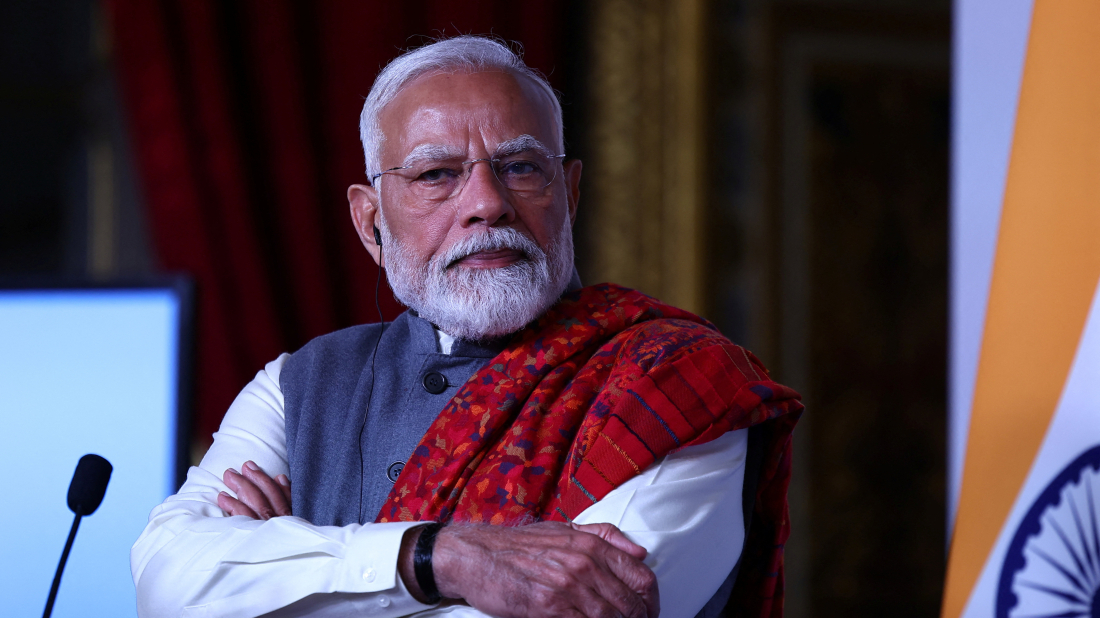
Indian Prime Minister Narendra Modi met with U.S. President Donald Trump on Thursday, aiming to secure trade concessions and strengthen ties amid rising tariff tensions. Modi’s visit comes as Trump pushes for reciprocal tariffs, targeting countries with high duties on U.S. imports, including India.
Trump welcomed Modi to the White House, hours after unveiling a new tariff roadmap that could impact Indian exports. Trump has previously criticized India’s trade policies, calling the country a “very big abuser” and citing high tariffs as a barrier to U.S. business.
Modi’s delegation arrived with proposed trade concessions, including increased purchases of U.S. liquefied natural gas, combat vehicles, and jet engines. Indian officials are also exploring tariff reductions in sectors like electronics, medical equipment, and chemicals, as well as potential deals on U.S. agricultural exports and nuclear energy investment.
The leaders also discussed defense cooperation, with Trump officials highlighting energy and security partnerships as key to balancing trade deficits.
Modi’s visit comes amid growing scrutiny of billionaire Gautam Adani, who faces U.S. bribery charges, and concerns over an alleged Indian intelligence plot to assassinate a Sikh activist in the U.S., a claim India denies.
The China factor remains critical, as both nations view Beijing’s military expansion with caution. Modi is wary of Trump striking a China trade deal that could sideline India, while Trump sees India as a key counterweight to Beijing.
Modi also met with Elon Musk, whose Starlink project is eyeing the Indian market, and Tulsi Gabbard, Trump’s Director of National Intelligence, to discuss counterterrorism and cybersecurity.
With a $45.6 billion trade deficit, U.S.-India relations face tough negotiations, as both sides navigate a complex mix of economic and geopolitical stakes.

The other evening, I was fuelling my car at a petrol station in Kenya’s capital. It was one of those small moments most motorists barely notice. The attendant filled the tank, I glanced at the pump price, paid, and drove off.
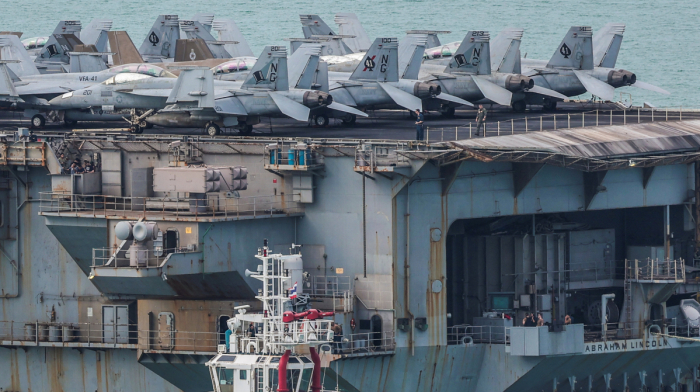
President Trump called on countries to assist in reopening the Strait of Hormuz, while Starmer said the UK is working with allies to restore navigation and stabilise oil markets. It comes as a strike near Iraq’s western border killed several Hashed al-Shaabi fighters, raising regional tensions.
President Donald Trump said NATO is making a “very foolish mistake” by refusing to help the U.S. as Israel Katz claimed Ali Larijani was killed in Israeli strikes.
Kazakhstan has adopted a new constitution that could allow President Kassym-Jomart Tokayev to stay in power beyond 2029. The Central Election Commission confirmed that 87.15% of voters backed the constitution in a referendum held on Sunday (17 March).
The World Health Organization (WHO) has released $2m in emergency funding to support health responses in Lebanon, Iraq and Syria as escalating regional conflict strains hospitals, raises displacement and increases pressure on already fragile health systems.
U.S. President Donald Trump on Tuesday (17 March) announced that he is postponing a highly anticipated trip to Beijing to meet Chinese President Xi Jinping, citing the war with Iran as the main disruption to efforts to ease tensions between the world’s two largest economies.
A series of severe storms, blizzards and tornadoes on Monday disrupted life across much of the U.S., leaving more than 12,500 flights delayed or cancelled and forcing schools, federal offices and communities to take emergency precautions.
China’s international trade representative has said Beijing and Washington have reached a “preliminary consensus” on some key issues following their latest round of talks in Paris, offering a cautious sign of progress in a relationship long marked by tension and uncertainty.
Chile’s newly inaugurated president, José Antonio Kast, has taken his first major step on immigration, launching plans for a fortified barrier along the country’s northern border just days after entering office.
A Russian drone attack damaged industrial, port, and energy infrastructure in Ukraine's southern Odesa region overnight. The strikes disrupted power supplies in several settlements, prompting local authorities to switch critical facilities to backup power generators.
You can download the AnewZ application from Play Store and the App Store.
What is your opinion on this topic?
Leave the first comment