Georgia's Bochorishvili highlights security concerns at OSCE Ministerial Council meeting
Georgian Foreign Minister Maka Bochorishvili is participating in the 32nd OSCE Ministerial Council holding from 3rd to 5th December in Vienna....
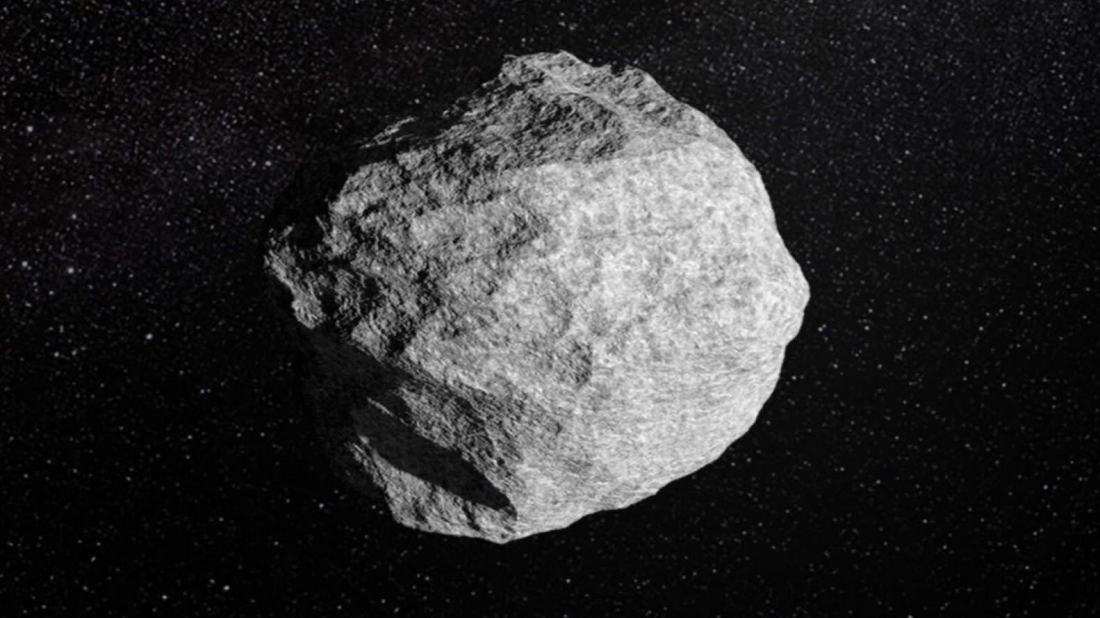
The risk of an asteroid impact on Earth has doubled within a week, though there are currently no plans to build a deflection spacecraft for the 90-metre-wide space rock.
The asteroid, designated 2024 YR4, was first detected two days after it passed Earth on Christmas Day 2024 by a telescope in Chile. Latest calculations indicate a 2.3% chance of impact on December 22, 2032, nearly double the 1.2% risk estimated last week.
Monitoring the Threat
Any impact probability above 1% for an asteroid larger than 50 meters prompts a global expert discussion. NASA and the European Space Agency (ESA) have placed 2024 YR4 at the top of their asteroid risk registers.
NASA estimates that 2024 YR4 weighs nearly a quarter of a million tonnes and could explode with the force of 2.2 million tonnes of TNT, equivalent to 150 times the Hiroshima atomic bomb.
Potential Impact Locations
While the UK is not at risk, potential impact zones include:
- Western African cities such as Lagos and Accra
- Mumbai, India
- South American countries, including Venezuela and Colombia
If it were to strike, the asteroid could flatten a city, causing local devastation. A similar-sized asteroid impacted Siberia in 1908, flattening 1,000 square miles of forest.
Future Observations and Risk Assessment
Astronomers will continue tracking the asteroid until it disappears from view in May, refining predictions about its trajectory and potential threat. While ongoing observations have increased the estimated risk, officials anticipate that further analysis will likely reduce the probability to zero.
Currently, the 2.3% risk is comparable to randomly drawing the ace of spades from a full deck or rolling two sixes with two dice, meaning the likelihood of an actual impact remains low.

Chinese scientists have unveiled a new gene-editing therapy that they say could lead to a functional cure for HIV, making it one of the most promising developments in decades of global research.
For nearly three decades following the dissolution of the Soviet Union, the international system was defined by a singular, overwhelming reality: American unipolarity.
As the year comes to an end, a new initiative bringing civil society actors and regional analysts from Armenia and Azerbaijan together is steadily gaining ground.
Uzbekistan has reopened its border with Afghanistan for the first time since 2021, the country’s Chamber of Commerce and Industry announced on Tuesday.
Faced with mounting public outrage following one of the deadliest environmental disasters in the nation’s recent history, the Indonesian government has pledged to investigate and potentially shut down mining operations found to have contributed to the catastrophic flooding on Sumatra.
Britain has imposed new sanctions on Russia, targeting the entire GRU military intelligence agency, which was highlighted in a UK public inquiry into the 2018 poisoning of Dawn Sturgess, caused by the nerve agent Novichok.
Afghanistan’s foreign minister, Amir Khan Muttaqi, has said distanced the Afghan government from recent incidents involving Afghan nationals on U.S. soil.
Russia has warned that any "illegal action" by the European Union regarding its frozen assets will provoke "the harshest reaction," with Moscow already preparing its response.
Families of 153 Chinese passengers aboard the missing MH370 flight are once again hopeful as a fresh search for the plane is announced.
Residents of Darfur are being systematically held for ransom by the Sudanese paramilitary force that overran a city in late October, with witnesses, aid workers, and researchers reporting killings and beatings of those whose families cannot pay.
You can download the AnewZ application from Play Store and the App Store.
What is your opinion on this topic?
Leave the first comment