The AnewZ Opinion section provides a platform for independent voices to share expert perspectives on global and regional issues. The views expressed are solely those of the authors and do not represent the official position of AnewZ
Saudi Arabia narrowed the room for agreement. Türkiye and Australia had the responsibility to find what room remained. Europe had something to offer in return. A deal was possible, though never assured.
Of all the words missing from the final Antalya draft, two mattered most: “fossil fuels”. The text set a 2035 ambition for carbon capture at gigatonne scale, yet could not name the fuels whose use governments had agreed in Dubai to reduce. On 22 November, COP31 closed without an overarching political agreement. The last comparable failure was Copenhagen in 2009, when the conference could only take note of the accord put before it.
Saudi Arabia bears the clearest responsibility for the omission. Riyadh held its position as roughly 130 countries backed restoring the transition language. Delegates told Reuters that Saudi, Chinese and Russian officials repeatedly visited the presidency’s offices while others struggled to get meetings. Türkiye denied granting preferential treatment. Yet calling this a Gulf veto overlooks an awkward fact: the UAE had brokered the Dubai compromise, which accommodated both a transition away from fossil fuels and carbon capture in hard-to-abate sectors.
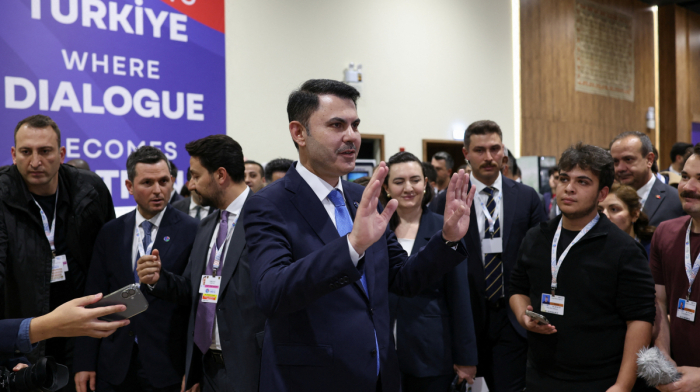
As a former Turkish diplomat, I believe the Turkish presidency’s diplomatic handling deserves scrutiny. Murat Kurum’s task was to recognise when the broad pact had become unattainable and use his political authority to broker a narrower one. A small-island negotiator told Reuters that a promised meeting with the chairs had again been cancelled. Whatever the pressures on the diary, a presidency asking vulnerable countries to compromise must hear what their ministers can defend at home. Ankara showed too little diplomatic skill at that moment.
Australia’s Chris Bowen also had a duty to act. Under the partnership agreement, he held authority to lead the negotiations in consultation with Türkiye. My criticism is of his apparent passivity in the closing phase. Once the Saudi and European positions were clear, I would have expected the negotiating chair to put a choice to both, with Kurum ready to call capitals. Whatever private efforts were made, the Sunday draft left one side’s priority intact and the other’s absent. Both chairs own that outcome.
Europe had room to move. Its refusal to weaken Dubai was defensible, particularly for island states whose interests it shared. But the proposal it backed also sought to remove the carbon-capture reference. I would have asked Europe to accept independently verified capture in sectors such as cement, and Riyadh to accept the transition wording it had already lived with since Dubai. Then I would have brought vulnerable-country ministers in to negotiate the finance terms. Russia’s resistance and Washington’s absence made agreement harder. The bargain was still worth testing earlier.
What would a deal have delivered?
At the IEA and later at BG Group, I learned to ask what an agreement would change in an investment decision. Fossil fuels supplied 79 per cent of global energy demand in 2025, against 82 per cent a decade earlier. Phasing them out will take decades. That makes the next decision more urgent: a coal plant granted a twenty-year extension today can outlast every minister who attended Antalya.
Before the next COP, major economies should publish five-year schedules for reducing unabated fossil fuel use. Name the plants to be retired, the replacement capacity, the grid connections and the provision for workers. Assign a minister responsibility. Report annually on electricity delivered and absolute emissions. For poorer countries, bring concessional lenders in before the closure date is announced. A utility cannot retire reliable capacity against a promise that somebody will eventually finance its replacement.
Adaptation requires grants on a scale treasuries can plan around. UNEP puts international public adaptation finance from developed to developing countries at $28.2–31.7bn in 2024. Its previous assessment estimated developing countries’ annual needs in 2035 at $310–365bn. Wealthy governments and Gulf development funds could begin with projects chosen by the least developed countries themselves. For each, publish the amount committed, the date the money reached the recipient and what it paid for.
My verdict is that Riyadh did most to narrow the text, the two chairs failed to turn what remained into a bargain, and Europe could have offered a concession without surrendering its principle. The next summit should open with those parties financing a first group of coal retirements and adaptation grants. Ministers could then negotiate from experience: what it cost to close a plant, whether the lights stayed on and when the promised money arrived.











What is your opinion on this topic?
Leave the first comment