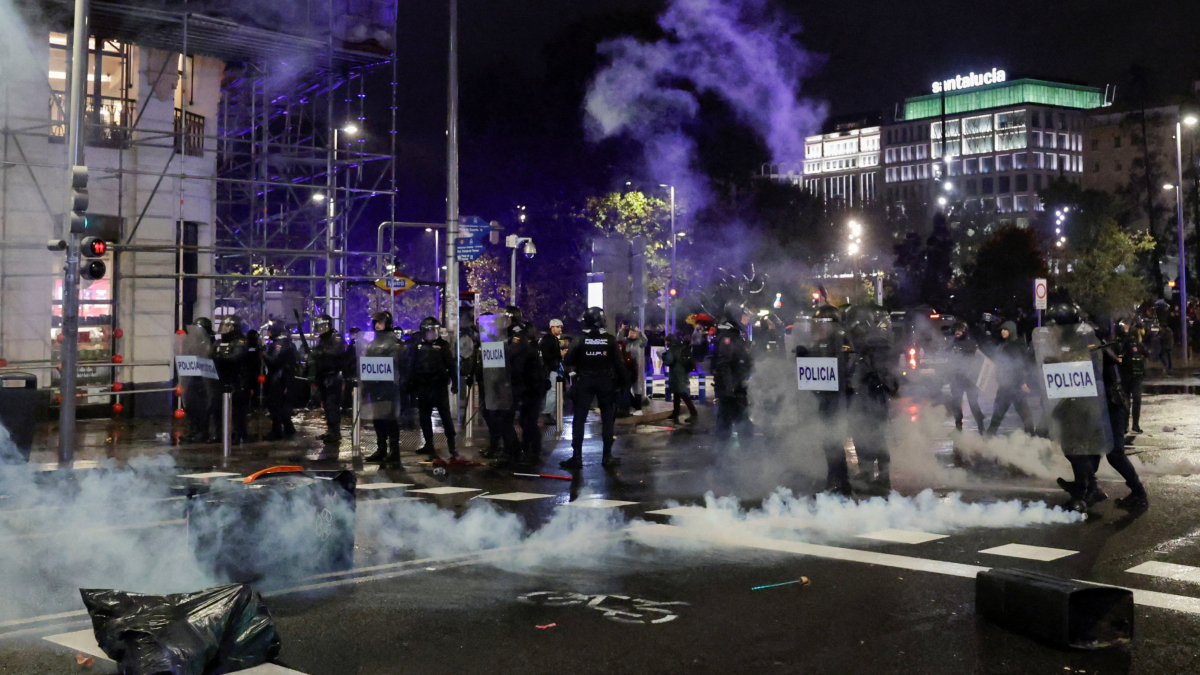
Clashes broke out between protesters and police in Barcelona as tens of thousands of people took to the streets across Spain for the country’s first general strike in 14 years, demanding action on rising living costs and the housing crisis.
The nationwide strike, organised by Spain’s two main trade unions, UGT and CC OO, caused widespread disruption to transport and public services on Wednesday, just weeks before the country’s parliamentary elections on 29 November.
Around 120,000 people joined demonstrations in Madrid, while more than 50,000 gathered in Barcelona, where tensions escalated as groups of masked individuals set fire to rubbish bins and smashed shop windows.
Police responded with tear gas, while the Interior Ministry reported dozens of arrests following incidents across the country.
The strike was driven by growing frustration over housing affordability and rising living costs, with rental prices increasing significantly in major Spanish cities.
Public anger intensified following the September eviction of 87-year-old Maricarmen Abascal from her Madrid apartment, where she had lived for seven decades. She died in hospital several weeks later.
According to property portal Idealista, the average monthly rent for a 50-square-metre apartment in Madrid reached €1,170 ($1,295) in October, compared with Spain’s average gross monthly salary of approximately €2,460 ($2,718).
This means renting such an apartment would consume nearly half the average gross salary, significantly exceeding the 30 per cent affordability benchmark commonly used by housing experts.
Wednesday’s demonstrations also disrupted traffic on major roads around Madrid and Barcelona, while reports emerged of attacks on estate agency offices.
Union leaders welcomed the turnout, with UGT head Pepe Álvarez describing participation as “massive”, while CC OO leader Unai Sordo called it “very significant”.
Strike adds pressure ahead of elections
The protests come at a politically sensitive time for Socialist Prime Minister Pedro Sánchez, who called snap parliamentary elections last month after lawmakers rejected his proposed housing reforms.
Sánchez and members of his government have expressed support for the strike, encouraging workers to demand more affordable housing. “Your eight-hour day. Your pension. Your public healthcare… These were collective conquests,” Sánchez wrote on social media, highlighting the role of previous labour movements in securing workers’ rights.
However, the opposition conservative People’s Party (PP) accused the government of using the demonstrations for political advantage ahead of the election.
PP leader Alberto Núñez Feijóo dismissed the general strike as “nonsense” and criticised the unions, while party spokesman Miguel Tellado accused the government of exploiting the protests to influence voters.
The PP is leading in opinion polls ahead of the 29 November vote, with housing affordability and the cost of living emerging as major election issues.
The strike highlights growing public dissatisfaction over economic pressures, placing housing policy at the centre of Spain’s political debate as voters prepare to head to the polls.
Read more:













What is your opinion on this topic?
Leave the first comment