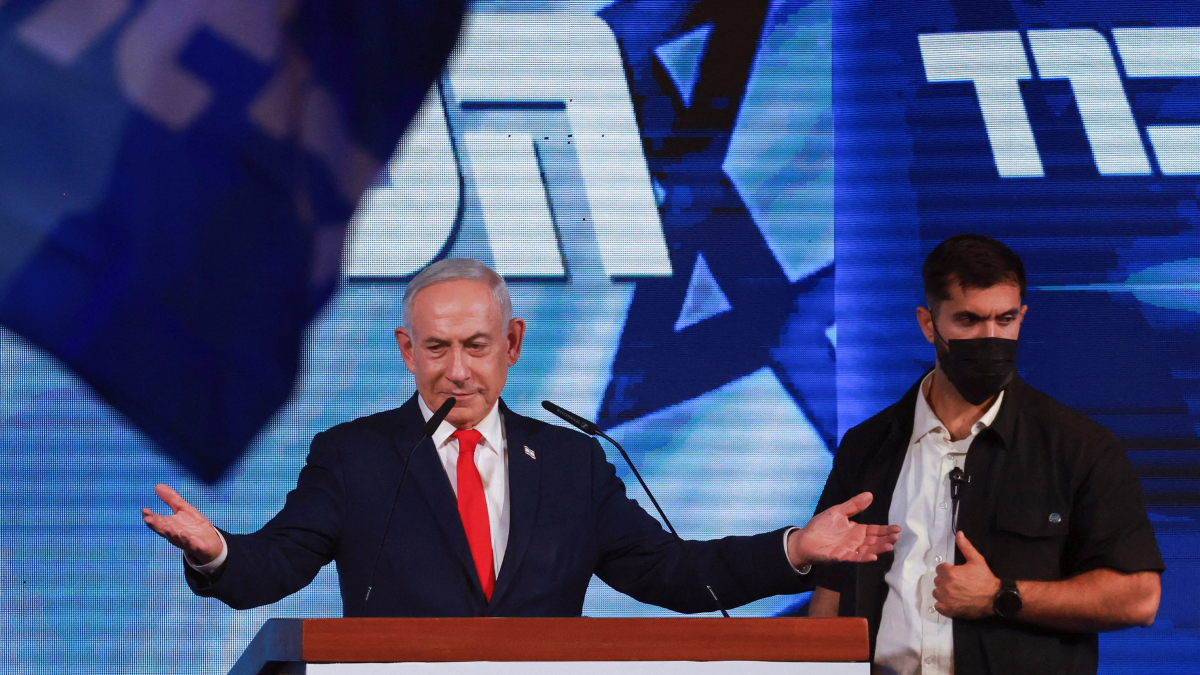
Israeli Prime Minister Benjamin Netanyahu looks set to remain in office as caretaker prime minister after his right-wing bloc performed better than expected in the parliamentary elections, despite falling short of a majority.
With nearly 86 per cent of votes counted on Wednesday, Israel’s three main broadcasters projected that Netanyahu’s bloc of right-wing, far-right and ultra-Orthodox parties would secure 53 seats in the 120-seat parliament, ahead of the 48 seats projected for opposition leader Gadi Eisenkot’s bloc.
Parties representing Arab Israelis were projected to win a record 19 seats, potentially playing a decisive role in coalition negotiations.
However, Eisenkot faces significant challenges in forming a government without their support, which many Jewish political leaders have been reluctant to accept.
The results remain preliminary, with vote counting still underway. Eisenkot’s opposition bloc, which includes parties ranging from the centre-left to the hard right, performed below expectations after pre-election polls suggested a close contest.
Despite losing his parliamentary majority, Netanyahu is expected to remain caretaker prime minister while coalition negotiations take place, potentially until another election next year if no government can be formed.
Under Israel’s political system, a caretaker government retains many of the powers of a regular administration, although it is expected to exercise greater restraint in certain areas.
Legal experts say such governments formally hold the same powers as elected administrations but have a greater duty to limit discretionary decisions. These powers include decisions relating to national security and the ongoing conflict with Iran.
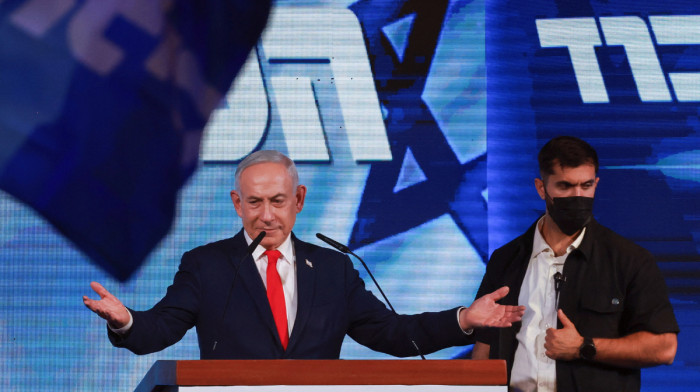
Addressing supporters of his Likud party, Netanyahu called for the formation of “a strong, right-wing national government”. He also highlighted Israel’s military operations and raised the possibility of renewed joint action against Iran alongside U.S. President Donald Trump.
Netanyahu described the situation as a “singular historical opportunity” for Israel and the United States to eliminate what he called the Iranian threat “once and for all”.
Trump, who had publicly urged Israeli voters to support Netanyahu, praised the election performance, saying the Israeli leader had done “very well” and claiming his endorsement had “helped him a lot”.
Opposition raises concerns over political use of security
Eisenkot acknowledged that Netanyahu would remain caretaker prime minister but warned against the potential use of national security matters for political purposes.
“I call on the heads of the security establishment and the civil service: Netanyahu is a caretaker prime minister, without a mandate or the people’s trust,” Eisenkot said. “Stand firm in the face of any attempt to challenge you.”
Netanyahu’s office has previously rejected accusations that he is using the conflict with Iran for political gain and did not immediately respond to a request for comment.
Israeli markets react to political uncertainty
The prospect of a caretaker government without a parliamentary majority also weighed on Israeli financial markets. The Israeli shekel weakened by approximately 1.6 per cent to 3.10 against the U.S. dollar, while Tel Aviv’s benchmark TA-35 and TA-125 stock indexes fell by more than 3 per cent.
The preliminary results leave Israel facing uncertainty over the formation of its next government, with coalition negotiations likely to determine whether Netanyahu can secure another term or the country heads towards another election.
Read more:














What is your opinion on this topic?
Leave the first comment